


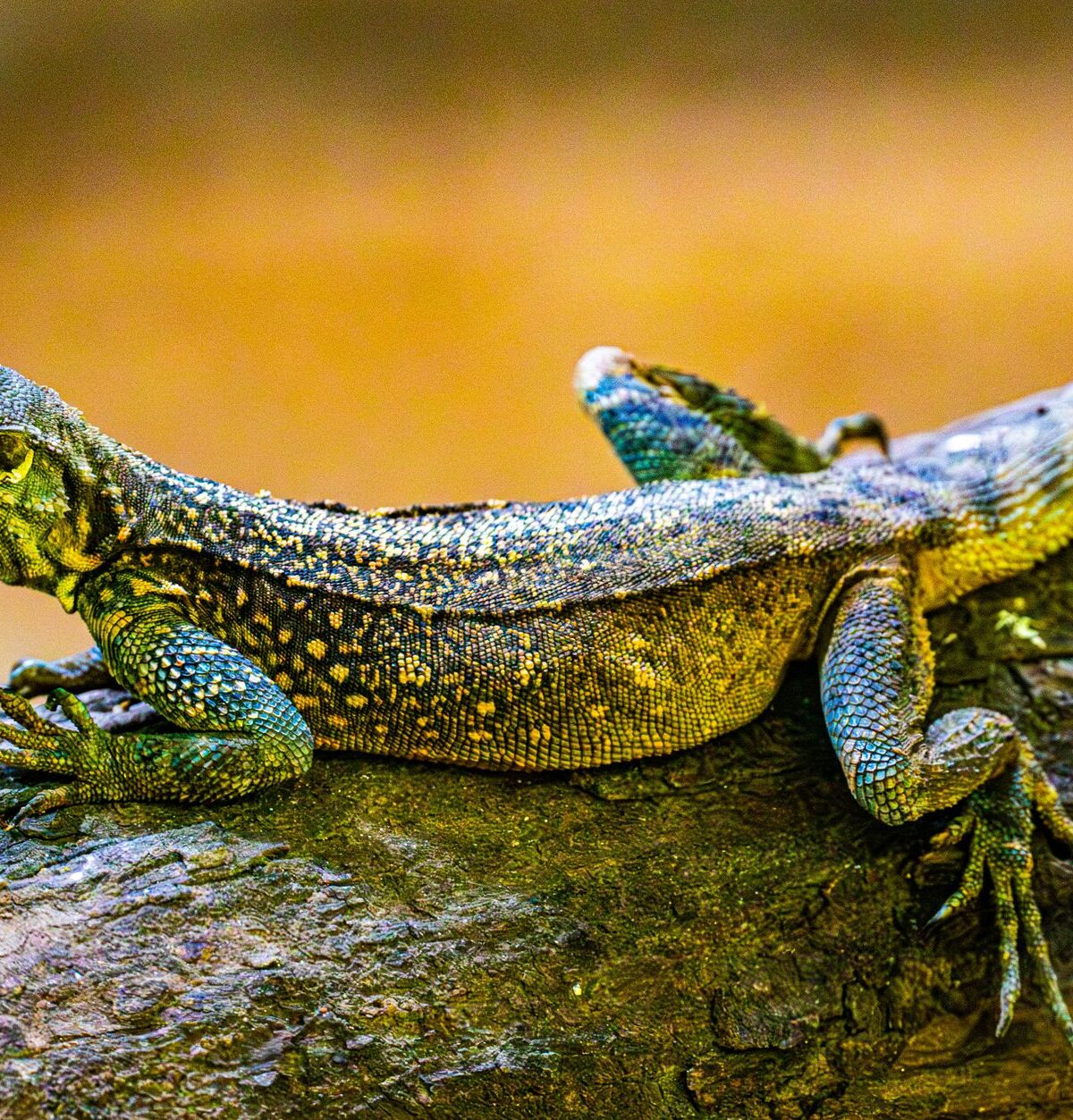
PHILIPPINE SAILFIN LIZARD
Hydrosaurus pustulatus
DESCRIPTION
Philippine Sailfin Lizard (Hydrosaurus pustulatus) is a large, semi-aquatic lizard known for its distinctive sail-like crest along its back, which is more pronounced in males. These lizards exhibit a vibrant coloration, often featuring shades of green and brown, which helps them blend into their natural habitat. They are primarily found near water bodies and are excellent swimmers, using their long tails to propel themselves through the water while foraging for food.
FUN FACTS
- Philippine Sailfin Lizards are remarkable swimmers, often diving into water to escape threats, and can hold their breath for several minutes
- They are also known for their unique mating displays, where males will exhibit their colorful crests to attract females and establish dominance over territory
QUICK INFO
Lifespan10-15 years in the wild, up to 20 years in captivi
Average Weight1-2 kg
Average Length0.6-1.2 m
Diet TypeOmnivore
Social Structuresolitary
Activity PatternDiurnal
Breeding SeasonSpring to early summer
- Habitat
- Philippine Sailfin Lizards inhabit tropical forests and riverine environments, often found near streams and lakes. They prefer areas with abundant vegetation for cover and basking.
- Biomes
- Tropical Rainforest, Freshwater
- Native Range
- This species is native to the Philippines, particularly found on the islands of Luzon, Mindanao, and some smaller islands.
- Continent
- Asia
- Countries
- Philippines
- Diet
- They primarily feed on a variety of plant materials, insects, and small aquatic animals. Their diet can vary based on availability and habitat.
- Diet Type
- Omnivore
- Favorite Food
- leaves, fruits, insects
- Social Structure
- solitary
- Activity Pattern
- Diurnal
- Group Size
- 1-3
- Territorial
- 0
 VU
VU
 LC
LC
1-2 kg
Weight
0.6-1.2 m
Length
- Coloration
- Typically green or brown with lighter spots or stripes, aiding in camouflage.
- Sexual Dimorphism
- Males are generally larger and have more pronounced crests than females.
- Lifespan
- 10-15 years in the wild, up to 20 years in captivi
- Offspring per Birth
- 5-15 eggs
- Sexual Maturity
- 2-3 years
- Breeding Season
- Spring to early summer
LC
Least Concern
IUCN Red List Status
- Population Status
- The population is currently stable, but habitat loss poses a potential threat.
- Wild Population Estimate
- Unknown
- Population Trend
- Stable
- Endangered
- 0
- Threats
- Main threats include habitat destruction due to deforestation and pollution of water bodies. Additionally, they face pressure from the pet trade.
- Predators
- Birds of prey, snakes, and larger mammals may prey on juvenile lizards.
- Defense Mechanisms
- They can escape into the water quickly and are adept at climbing trees to evade predators.
- Found in Zoos
- Uncommon