


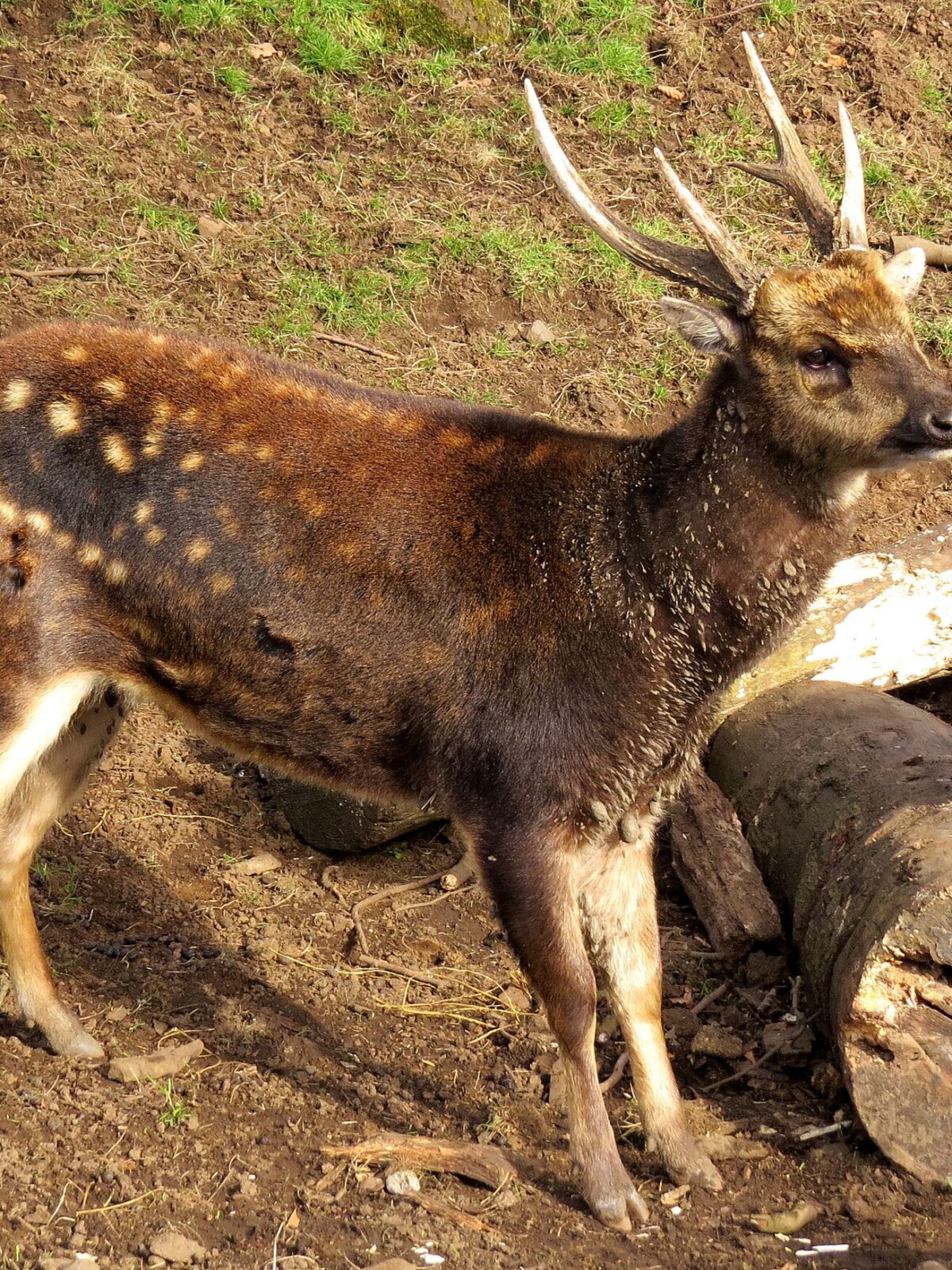
PHILIPPINE SPOTTED DEER
DESCRIPTION
Philippine Spotted Deer, also known as Philippine Deer, is a medium-sized deer species characterized by its spotted coat, which provides excellent camouflage in its natural habitat. They exhibit a graceful build with long legs and a slender body, typically displaying a reddish-brown coloration with white spots. These deer are primarily found in forested areas and are known for their shy and elusive behavior, often being more active during dawn and dusk.
FUN FACTS
- Philippine Spotted Deer are known for their unique vocalizations, which include a range of grunts and whistles used for communication among group members
- | These deer play a crucial role in their ecosystem by helping to disperse seeds through their diet, contributing to forest regeneration and biodiversity
QUICK INFO
Lifespan10-15 years in the wild, up to 20 years in captivi
Average Weight50-90 kg
Average Length1.2-1.8 m
Diet TypeHerbivore
Social StructureThey typically form small groups, often consisting of females and their young, while males may be more solitary, especially outside of the breeding season.
Activity PatternCrepuscular
Breeding SeasonYear-round, with peaks during the rainy season
- Habitat
- They inhabit tropical and subtropical forests, often preferring areas with dense undergrowth for cover. These deer are also found in grasslands adjacent to forested regions.
- Biomes
- Tropical Rainforest, Subtropical Forest
- Native Range
- Endemic to the Philippines, specifically found on the islands of Mindanao and the Visayas.
- Continent
- Asia
- Countries
- Philippines
- Diet
- Philippine Spotted Deer are herbivores, primarily feeding on leaves, fruits, and grasses. They are known to graze on a variety of vegetation, adapting their diet based on seasonal availability.
- Diet Type
- Herbivore
- Favorite Food
- leaves, fruits, grasses
- Social Structure
- They typically form small groups, often consisting of females and their young, while males may be more solitary, especially outside of the breeding season.
- Activity Pattern
- Crepuscular
- Group Size
- 2-10
- Territorial
- 0
50-90 kg
Weight
1.2-1.8 m
Length
0.8-1.0 m at shoulder
Height (Shoulder)
- Coloration
- Reddish-brown with white spots
- Sexual Dimorphism
- Males are generally larger and have antlers, while females are smaller and lack antlers.
- Lifespan
- 10-15 years in the wild, up to 20 years in captivi
- Gestation Period
- 210 days
- Offspring per Birth
- 1
- Sexual Maturity
- 1-2 years
- Breeding Season
- Year-round, with peaks during the rainy season
EN
Endangered
IUCN Red List Status
- Population Status
- The population is currently declining due to habitat loss and hunting pressures.
- Wild Population Estimate
- Less than 10,000
- Population Trend
- Decreasing
- Endangered
- 1
- Threats
- Main threats include habitat destruction due to deforestation and hunting for bushmeat. Additionally, competition with domestic livestock for food resources poses a significant risk to their survival.
- Conservation Program
- Various local conservation efforts are in place, including habitat restoration and anti-poaching initiatives.
- Predators
- Main predators include large carnivores such as the Philippine Eagle and feral dogs. They are also vulnerable to human hunting.
- Defense Mechanisms
- They rely on their excellent camouflage and agility to evade predators, often freezing in place when threatened.
- Found in Zoos
- Uncommon