


PHILIPPINE TREE VIPER
Trimeresurus flavomaculatus
DESCRIPTION
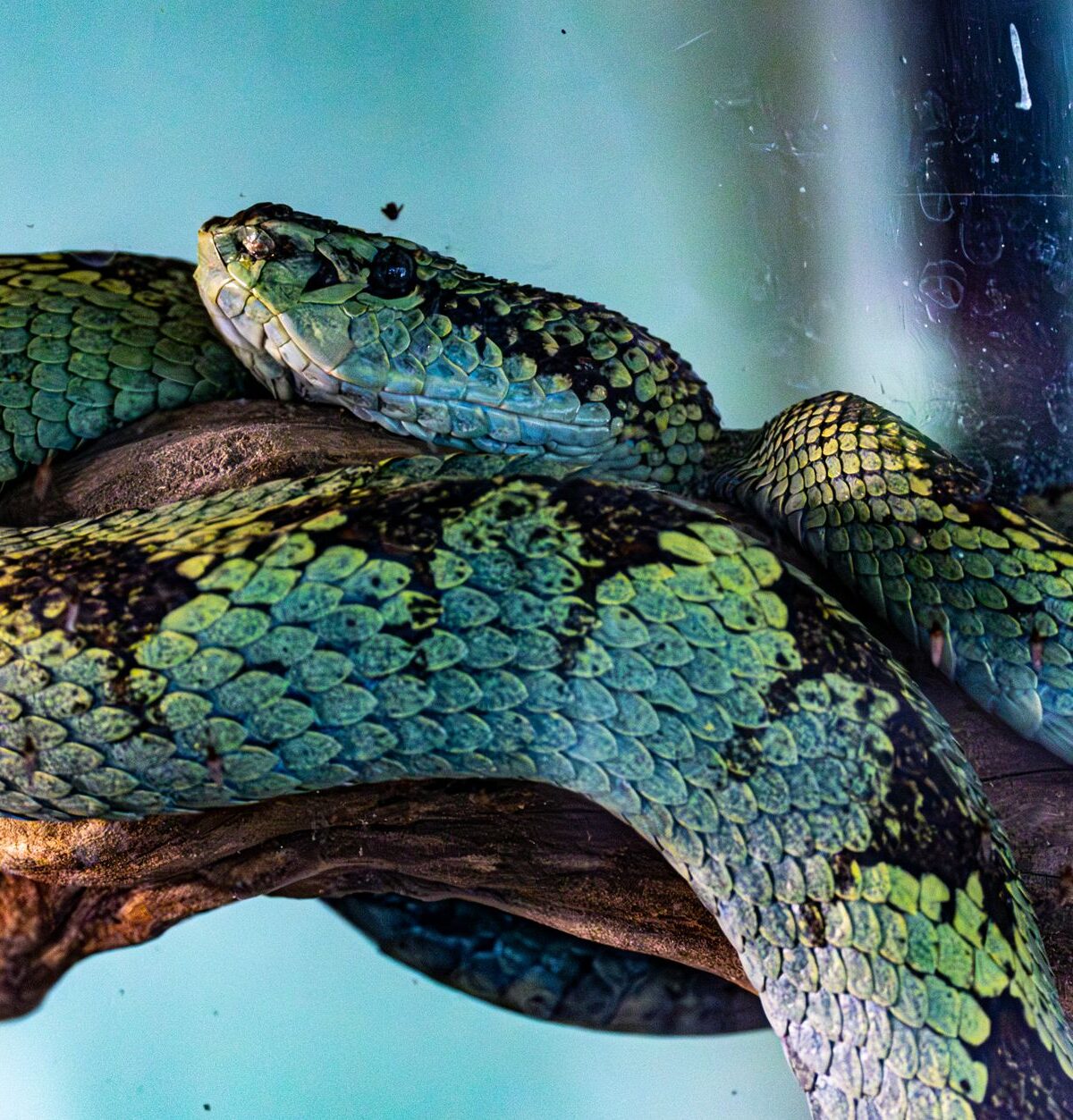
Philippine Tree Viper (Trimeresurus flavomaculatus) is a strikingly colored snake known for its vibrant green and yellow markings. This arboreal species is often found in trees and shrubs, where it uses its excellent camouflage to ambush prey. It is primarily nocturnal, exhibiting a behavior of being more active during the night, which aids in its hunting strategy.
FUN FACTS
- The Philippine Tree Viper is known for its impressive ability to blend into its surroundings, making it a master of camouflage in the lush forests of the Philippines
- Additionally, its venom is hemotoxic, which means it can cause significant tissue damage to its prey, allowing for easier consumption.| This species has a unique method of hunting, often hanging from branches and striking at prey that comes too close, showcasing its agility and precision
- Its vibrant coloration not only serves as camouflage but also plays a role in attracting mates during the breeding season
QUICK INFO
Lifespan10-15 years in the wild, up to 20 in captivity
Average Weight0.5-1 kg
Average Length0.8-1.2 m
Diet TypeCarnivore
Social Structuresolitary
Activity PatternNocturnal
Breeding SeasonSpring (March-May)
- Habitat
- This species inhabits tropical forests and is often found in the canopy layer. It prefers humid environments where it can easily blend into the foliage.
- Biomes
- Tropical Rainforest
- Native Range
- The Philippine Tree Viper is native to the Philippines, particularly on the islands of Luzon and Mindanao.
- Continent
- Asia
- Countries
- Philippines
- Diet
- The Philippine Tree Viper primarily feeds on small mammals, birds, and lizards. It uses its venom to immobilize prey before consumption.
- Diet Type
- Carnivore
- Favorite Food
- small mammals, birds, lizards
- Social Structure
- solitary
- Activity Pattern
- Nocturnal
- Group Size
- 1
- Territorial
- 1
 VU
VU
0.5-1 kg
Weight
0.8-1.2 m
Length
- Coloration
- vibrant green with yellow or white markings
- Sexual Dimorphism
- females are generally larger than males
- Lifespan
- 10-15 years in the wild, up to 20 in captivity
- Offspring per Birth
- 3-15
- Sexual Maturity
- 2-3 years
- Breeding Season
- Spring (March-May)
LC
Least Concern
IUCN Red List Status
- Population Status
- The population is currently stable, but habitat loss poses a potential threat.
- Wild Population Estimate
- unknown
- Population Trend
- Stable
- Endangered
- 0
- Threats
- Main threats include habitat destruction due to deforestation and human encroachment. Additionally, they are sometimes hunted for their skin.
- Predators
- Birds of prey, larger snakes, and mammals such as mongooses.
- Defense Mechanisms
- The Philippine Tree Viper relies on its camouflage to avoid detection and can deliver a venomous bite if threatened.
- Found in Zoos
- Uncommon