


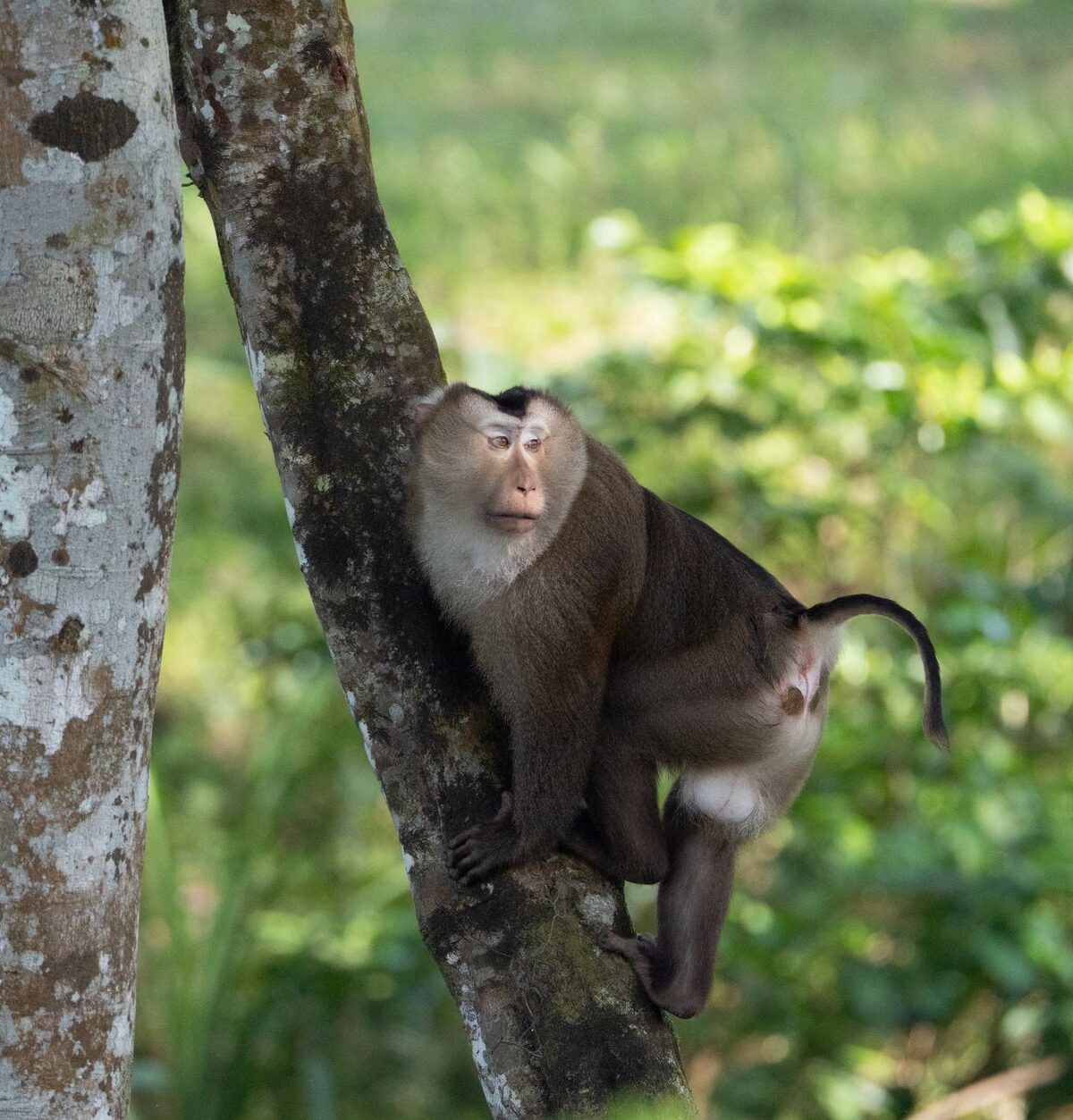
PIG-TAILED MACAQUE
Macaca nemestrina
DESCRIPTION
Pig-tailed Macaque (Macaca nemestrina) is commonly known as the Sunda Pig-tailed Macaque and is characterized by its distinctive pig-like tail and robust body. This species exhibits a range of colors from brown to gray, with a lighter face and a tuft of hair on the head. They are highly social animals, often found in groups, and are known for their intelligence and adaptability to various environments.
FUN FACTS
- Pig-tailed Macaques are known for their remarkable problem-solving abilities, often using tools to access food
- They have also been observed engaging in complex social interactions, showcasing their intelligence and adaptability in both wild and captive environments
QUICK INFO
Lifespan20-30 years in the wild, up to 40 in captivity
Average Weight8-12 kg
Average Length50-70 cm
Diet TypeOmnivore
Social StructureThey live in groups, typically consisting of 10-30 individuals, with a clear hierarchy among members.
Activity PatternDiurnal
Breeding SeasonYear-round, with peaks depending on the region
- Habitat
- Pig-tailed Macaques inhabit tropical rainforests, mangroves, and secondary forests. They are often found near water sources, which are crucial for their daily activities.
- Biomes
- Tropical Rainforest, Mangrove
- Native Range
- They are native to Southeast Asia, primarily found in countries like Indonesia, Malaysia, and Thailand.
- Continent
- Asia
- Countries
- Indonesia, Malaysia, Thailand, Brunei, Myanmar
- Diet
- They are omnivorous, feeding on a variety of fruits, seeds, leaves, and small invertebrates. Their diet can vary significantly based on the availability of food sources in their habitat.
- Diet Type
- Omnivore
- Favorite Food
- fruits, seeds, leaves
- Social Structure
- They live in groups, typically consisting of 10-30 individuals, with a clear hierarchy among members.
- Activity Pattern
- Diurnal
- Group Size
- 10-30
- Territorial
- 1
 VU
VU
 LC
LC
8-12 kg
Weight
50-70 cm
Length
- Coloration
- brown to gray with a lighter face
- Sexual Dimorphism
- Males are generally larger than females, with more pronounced facial features.
- Lifespan
- 20-30 years in the wild, up to 40 in captivity
- Gestation Period
- 165 days
- Offspring per Birth
- 1
- Sexual Maturity
- 3-4 years
- Breeding Season
- Year-round, with peaks depending on the region
LC
Least Concern
IUCN Red List Status
- Population Status
- The population is currently stable, but habitat loss poses a significant threat.
- Wild Population Estimate
- 50,000-100,000
- Population Trend
- Stable
- Endangered
- 0
- Threats
- Main threats include habitat destruction due to logging and agricultural expansion, as well as hunting for bushmeat. These factors have led to localized declines in certain areas.
- Predators
- Large birds of prey, snakes, and occasionally large carnivores like tigers may prey on young or vulnerable individuals.
- Defense Mechanisms
- They use vocalizations and group cohesion to deter predators, and can also display aggressive behaviors if threatened.
- Compatible Animals
- Other macaque species, various primates
- Found in Zoos
- Common