


PINE SNAKE
Pituophis melanoleucus
DESCRIPTION
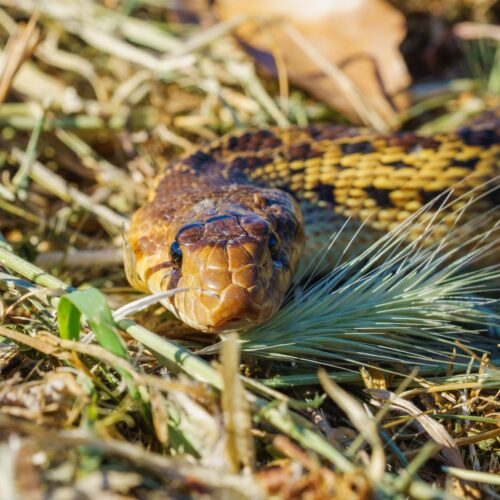
Pine Snake (Pituophis melanoleucus) is a large, non-venomous snake known for its distinctive coloration and pattern. It typically exhibits a light background color with dark blotches, which helps it blend into its sandy or pine forest habitats. This species is known for its burrowing behavior, often creating or utilizing burrows made by other animals, and it is primarily active during the day, although it can also be seen at dusk.
FUN FACTS
- Pine Snakes are known for their impressive ability to burrow into the ground, which helps them escape predators and regulate their body temperature
- They can also produce a loud hissing sound by expelling air through their throat, which serves as a warning to potential threats
- | These snakes are often mistaken for venomous species due to their size and coloration, but they are completely harmless to humans
- Their unique adaptations, such as their burrowing behavior and ability to constrict prey, make them fascinating subjects of study in herpetology
QUICK INFO
Lifespan15-20 years in the wild, up to 30 in captivity
Average Weight1.5-3 kg
Average Length1.5-2.4 m
Diet TypeCarnivore
Social Structuresolitary, typically found alone except during mating season
Activity PatternDiurnal
Breeding SeasonSpring (April-June)
- Habitat
- Pine Snakes inhabit a variety of environments, including pine forests, sandy areas, and scrublands. They prefer habitats with loose, sandy soil that allows for easy burrowing.
- Biomes
- Temperate Forest, Grassland
- Native Range
- The Pine Snake is native to the southeastern United States, ranging from New Jersey to Florida and west to Louisiana.
- Continent
- North America
- Countries
- United States
- Diet
- Pine Snakes primarily feed on small mammals, birds, and occasionally reptiles. They are known to constrict their prey before consumption.
- Diet Type
- Carnivore
- Favorite Food
- small mammals, birds
- Social Structure
- solitary, typically found alone except during mating season
- Activity Pattern
- Diurnal
- Group Size
- 1
- Territorial
- 0
 VU
VU

1.5-3 kg
Weight
1.5-2.4 m
Length
- Coloration
- light tan or gray with dark brown or black blotches
- Sexual Dimorphism
- males are generally smaller than females
- Lifespan
- 15-20 years in the wild, up to 30 in captivity
- Offspring per Birth
- 6-24
- Sexual Maturity
- 3-4 years
- Breeding Season
- Spring (April-June)
LC
Least Concern
IUCN Red List Status
- Population Status
- The population of Pine Snakes is currently stable, although habitat loss poses a potential threat.
- Wild Population Estimate
- unknown
- Population Trend
- Stable
- Endangered
- 0
- Threats
- Main threats include habitat destruction due to urban development and agriculture. Additionally, they are sometimes killed out of fear or misunderstanding.
- Predators
- birds of prey, larger snakes, mammals such as raccoons and foxes
- Defense Mechanisms
- Pine Snakes can hiss loudly and may strike when threatened, using their size and strength to deter predators.
- Found in Zoos
- Uncommon