


PINK NECKED FRUIT DOVE
DESCRIPTION
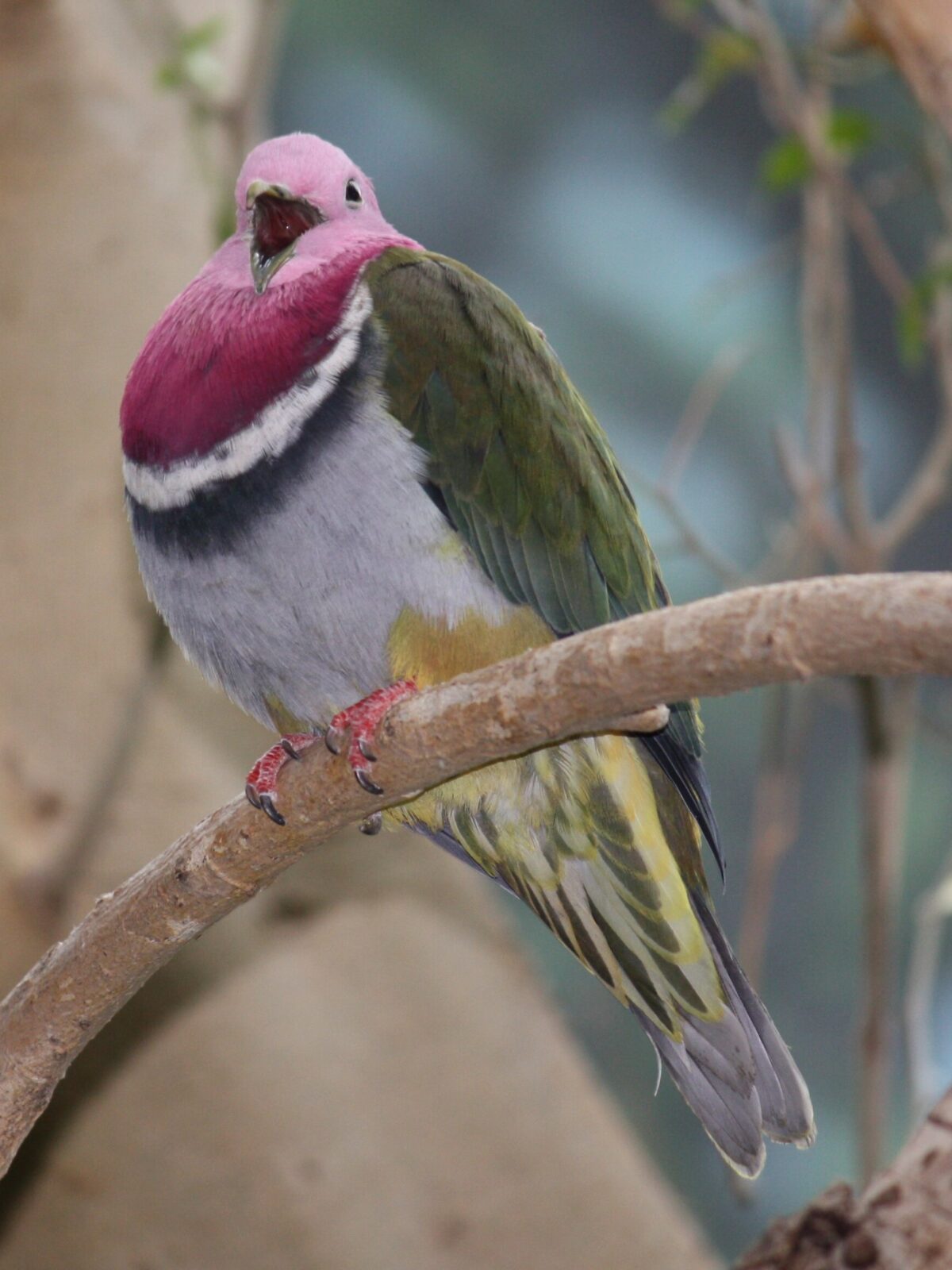
Also called the Pink-necked Dove, the Pink Necked Fruit Dove is a medium-sized dove characterized by its striking pink neck and greenish-yellow body. This species is known for its gentle demeanor and is often found in pairs or small groups, foraging for food in the canopy of tropical forests. Its vibrant plumage and soft cooing calls make it a favorite among birdwatchers and nature enthusiasts.
FUN FACTS
- The Pink Necked Fruit Dove is known for its unique courtship display, where males puff out their chests and perform a series of cooing calls to attract females
- This species is also a vital part of its ecosystem, as it helps in the dispersal of seeds from the fruits it consumes, promoting forest regeneration
QUICK INFO
Lifespan10-15 years in the wild, up to 20 years in captivi
Average Weight150-200 g
Average Length25-30 cm
Diet TypeHerbivore
Social StructureTypically found in pairs or small groups, this species exhibits a loose social structure.
Activity PatternDiurnal
Breeding SeasonYear-round, with peaks during the rainy season
- Habitat
- This dove inhabits tropical and subtropical forests, often favoring areas with abundant fruiting trees. It is typically found in the canopy layer, where it can easily access its food sources.
- Biomes
- Tropical Rainforest
- Native Range
- The Pink Necked Fruit Dove is native to the islands of Southeast Asia, particularly in Indonesia and the Philippines.
- Continent
- Asia
- Countries
- Indonesia, Philippines
- Diet
- The Pink Necked Fruit Dove primarily feeds on fruits, seeds, and berries found in its forest habitat. It plays a crucial role in seed dispersal, contributing to the health of its ecosystem.
- Diet Type
- Herbivore
- Favorite Food
- Fruits and berries
- Social Structure
- Typically found in pairs or small groups, this species exhibits a loose social structure.
- Activity Pattern
- Diurnal
- Group Size
- 2-10
- Territorial
- 0
 LC
LC
 VU
VU
150-200 g
Weight
25-30 cm
Length
- Coloration
- The dove has a greenish-yellow body with a distinctive pink neck and a slightly darker crown.
- Sexual Dimorphism
- Males and females are similar in appearance, but males may have slightly brighter coloration.
- Lifespan
- 10-15 years in the wild, up to 20 years in captivi
- Offspring per Birth
- 1-2
- Sexual Maturity
- 6-12 months
- Breeding Season
- Year-round, with peaks during the rainy season
LC
Least Concern
IUCN Red List Status
- Population Status
- The population of the Pink Necked Fruit Dove is currently stable, but habitat loss poses a potential threat.
- Wild Population Estimate
- Unknown
- Population Trend
- Stable
- Endangered
- 0
- Threats
- The main threats to the Pink Necked Fruit Dove include habitat destruction due to deforestation and urbanization. Additionally, hunting for the pet trade can impact local populations.
- Predators
- Snakes, birds of prey, and larger mammals may prey on the Pink Necked Fruit Dove.
- Defense Mechanisms
- The dove relies on its camouflage and ability to remain still among the leaves to avoid detection by predators.
- Compatible Animals
- Other doves, small parrots
- Found in Zoos
- Uncommon