


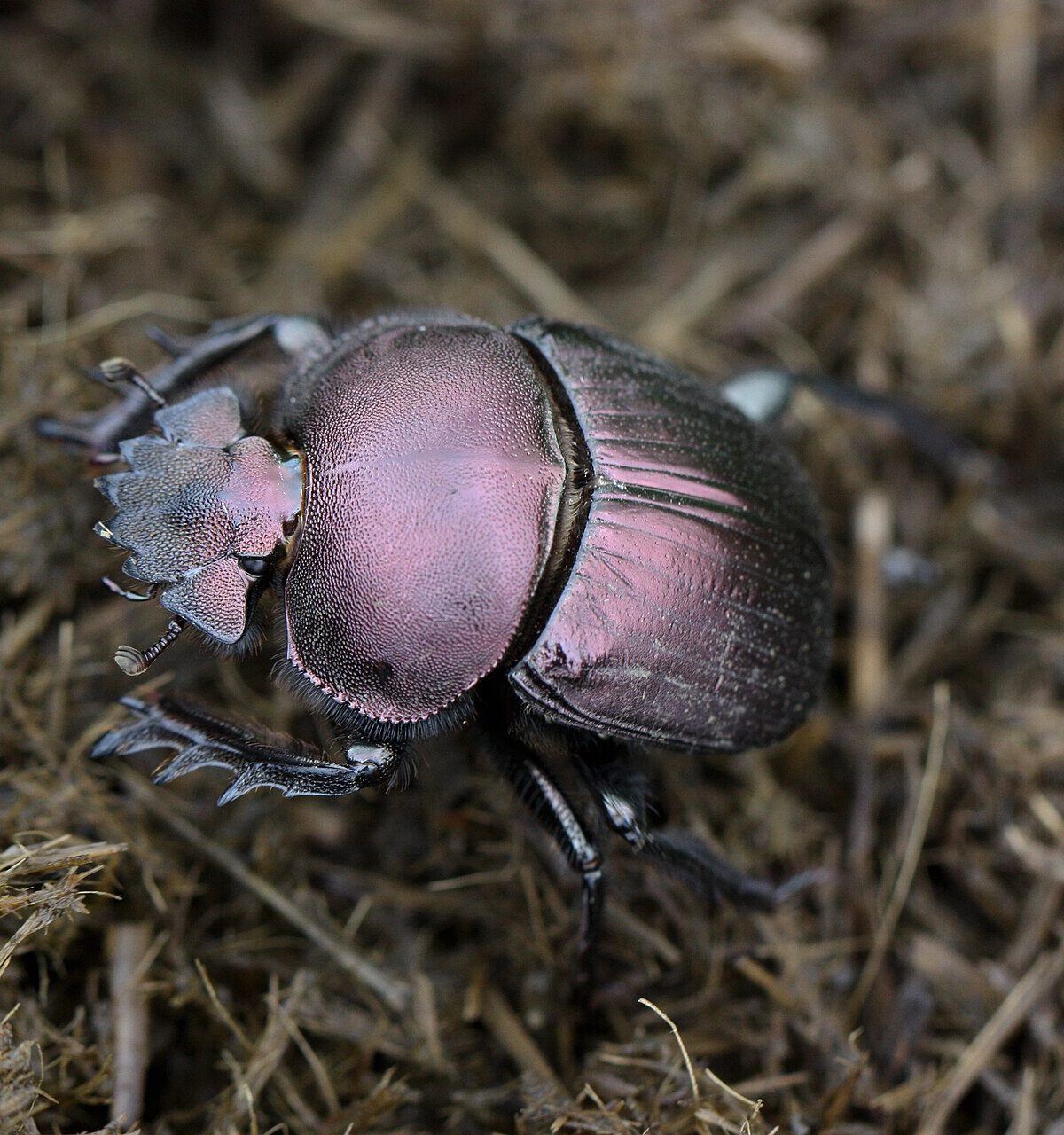
PLUM DUNG BEETLE
Anachalcos convexus
DESCRIPTION
Plum Dung Beetle (Anachalcos convexus) is a small, robust beetle known for its distinctive convex shape and shiny, dark coloration. This species plays a crucial role in the ecosystem by recycling nutrients through its dung-feeding habits, which helps to enrich the soil. They are often found in areas with abundant animal waste, where they exhibit fascinating behaviors such as rolling and burying dung to create breeding chambers.
FUN FACTS
- Plum Dung Beetles are remarkable for their ability to roll dung balls that can be several times their own weight, showcasing their strength and determination
- Additionally, they play a vital role in their ecosystems by breaking down waste, which helps to control parasites and promote soil health
QUICK INFO
Lifespan1-3 years
Average Length1-2 cm
Diet TypeOmnivore
Social Structuresolitary, occasionally found in pairs during mating
Activity PatternDiurnal
Breeding SeasonSpring to early summer
- Habitat
- These beetles thrive in open grasslands and pastures where herbivores are present. They prefer moist environments that facilitate the decomposition of dung.
- Biomes
- Grassland, Savanna
- Native Range
- Anachalcos convexus is native to various regions in Africa and parts of the Mediterranean.
- Continent
- Africa, Europe
- Countries
- South Africa, Namibia, Botswana, Spain, Italy
- Diet
- Plum Dung Beetles primarily feed on the dung of herbivorous animals, which provides them with essential nutrients. They also consume decaying organic matter, contributing to nutrient cycling in their habitat.
- Diet Type
- Omnivore
- Favorite Food
- animal dung
- Social Structure
- solitary, occasionally found in pairs during mating
- Activity Pattern
- Diurnal
- Group Size
- 1-2
- Territorial
- 0
 VU
VU

1-2 cm
Length
- Coloration
- shiny black to dark brown
- Lifespan
- 1-3 years
- Offspring per Birth
- up to 10
- Sexual Maturity
- 1 year
- Breeding Season
- Spring to early summer
LC
Least Concern
IUCN Red List Status
- Population Status
- The population status of Anachalcos convexus is not well-documented, but they are generally considered common in suitable habitats.
- Population Trend
- Stable
- Endangered
- 0
- Threats
- Habitat loss due to agricultural expansion and pesticide use poses a threat to their populations. Additionally, climate change may impact their habitat and food sources.
- Predators
- Birds, small mammals, and other insects are known to prey on Plum Dung Beetles.
- Defense Mechanisms
- They can burrow quickly into the ground to escape predators.
- Found in Zoos
- Rare