


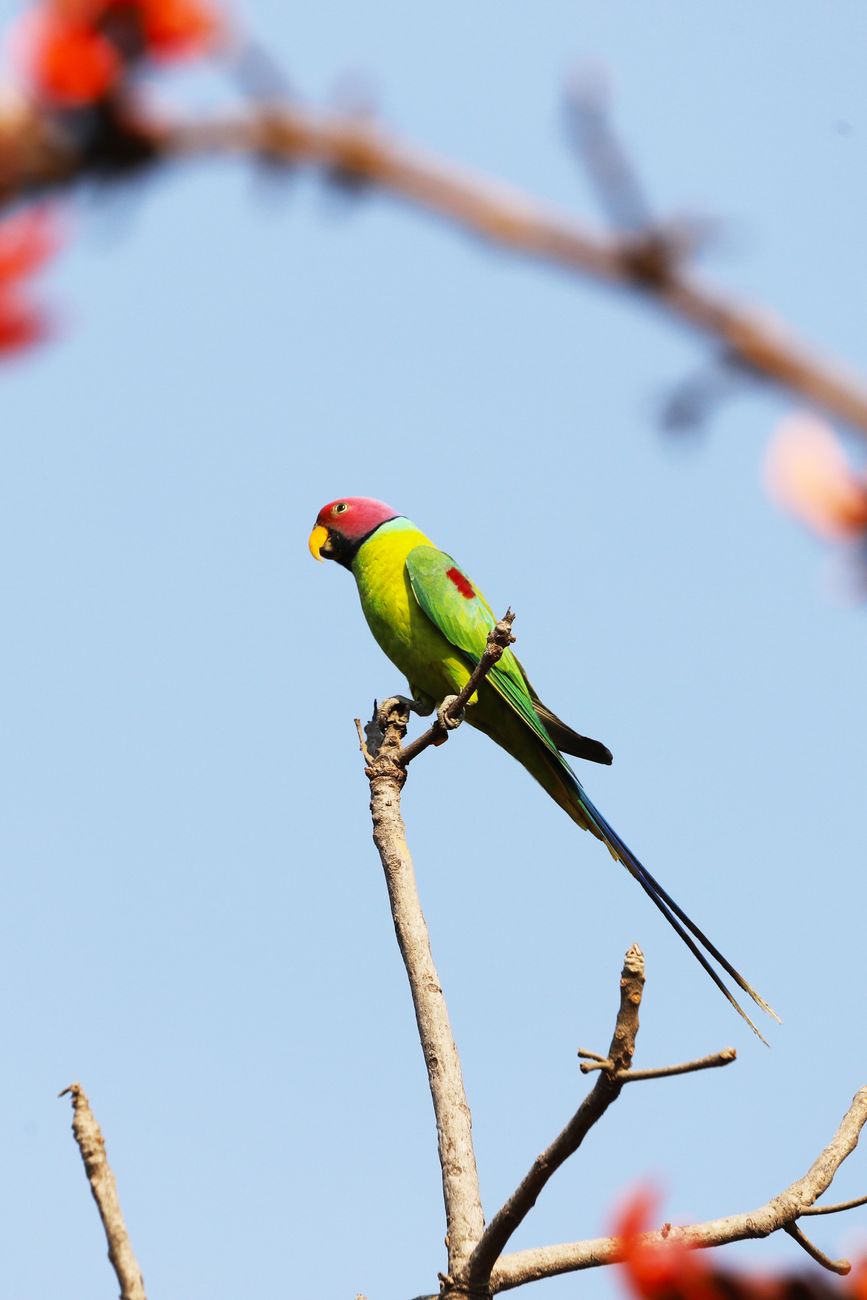
PLUM-HEADED PARAKEET
Psittacula cyanocephala
DESCRIPTION
Plum-headed Parakeet (Psittacula cyanocephala) is a striking bird known for its vibrant plumage and distinctive head coloration. Males exhibit a beautiful plum-headed crown that is a deep plum color, contrasting with their green body and blue nape, while females are generally less colorful. These parakeets are social and often found in flocks, displaying playful behavior as they interact with one another and their environment.
FUN FACTS
- Plum-headed Parakeets are known for their impressive vocal abilities, often mimicking sounds and human speech, making them popular pets
- Additionally, they have a unique courtship display where males perform aerial acrobatics to attract females, showcasing their agility and vibrant colors
QUICK INFO
Lifespan15-20 years in the wild, up to 30 in captivity
Average Weight100-150 g
Average Length30-35 cm
Diet TypeHerbivore
Social StructureThey are typically found in small to large flocks, showcasing a group social structure that enhances their foraging efficiency and protection from predators.
Activity PatternDiurnal
Breeding SeasonSpring (March-May)
- Habitat
- Plum-headed Parakeets inhabit a variety of environments, including forests, woodlands, and urban areas. They prefer areas with abundant trees for nesting and foraging.
- Biomes
- Tropical Rainforest, Savanna, Urban
- Native Range
- This species is native to the Indian subcontinent, particularly found in India, Nepal, and parts of Bangladesh.
- Continent
- Asia
- Countries
- India, Nepal, Bangladesh
- Diet
- They primarily feed on seeds, fruits, and nuts, often foraging in trees and shrubs. Their diet can vary based on seasonal availability of food sources.
- Diet Type
- Herbivore
- Favorite Food
- seeds, fruits, nuts
- Social Structure
- They are typically found in small to large flocks, showcasing a group social structure that enhances their foraging efficiency and protection from predators.
- Activity Pattern
- Diurnal
- Group Size
- 5-30
- Territorial
- 0
 LC
LC
100-150 g
Weight
30-35 cm
Length
- Coloration
- Males have a vibrant plum-colored head, green body, and blue nape, while females are generally more subdued in color.
- Sexual Dimorphism
- Males are more colorful with a plum-colored head, while females have a greenish head.
- Lifespan
- 15-20 years in the wild, up to 30 in captivity
- Offspring per Birth
- 3-5
- Sexual Maturity
- 1-2 years
- Breeding Season
- Spring (March-May)
LC
Least Concern
IUCN Red List Status
- Population Status
- The population is currently stable, with no immediate threats to their numbers.
- Wild Population Estimate
- 100,000+
- Population Trend
- Stable
- Endangered
- 0
- Threats
- Main threats include habitat loss due to deforestation and capture for the pet trade. However, they are currently not facing significant population declines.
- Predators
- Common predators include birds of prey, snakes, and larger mammals that may prey on their eggs or young.
- Defense Mechanisms
- They use their agility and ability to fly quickly to evade predators, often taking to the treetops for safety.
- Compatible Animals
- Other parakeets, small parrots, finches
- Found in Zoos
- Common