


POISON DART FROG
Dendrobatidae spp.
DESCRIPTION
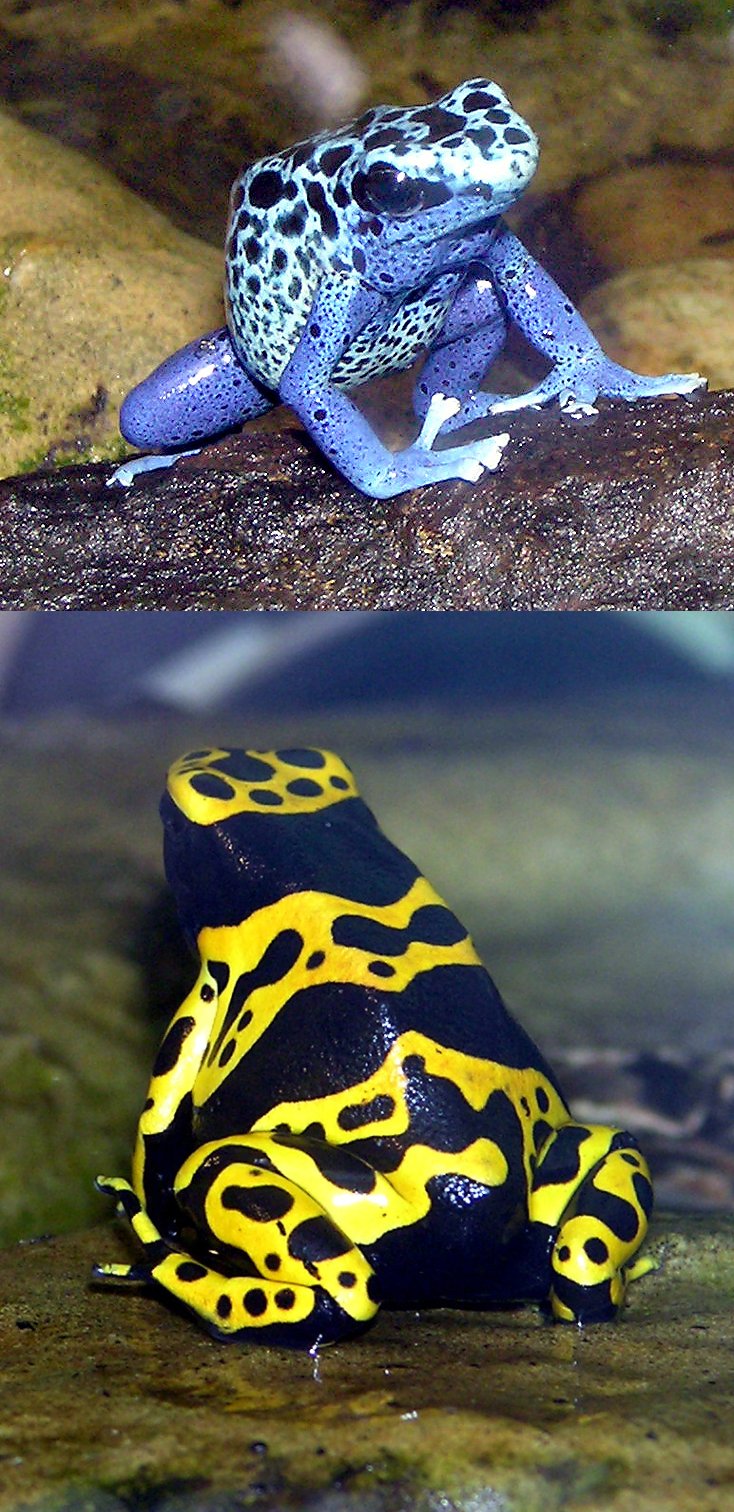
Poison dart frogs are small, brightly colored amphibians known for their vibrant hues, which can range from yellow to blue. These colors serve as a warning to potential predators about their toxicity, which is derived from their diet in the wild. They are primarily found in tropical rainforests and are known for their unique mating calls and parental care, where males often guard the eggs until they hatch.
FUN FACTS
- Poison dart frogs are named for the indigenous people of South America who used their toxic secretions to poison the tips of blow darts for hunting
- Interestingly, the toxicity of these frogs is not inherent; it is acquired from their diet of specific ants and other small invertebrates in the wild
- | The vibrant colors of poison dart frogs serve not only as a warning to predators but also play a role in their mating rituals, as brighter colors can attract potential mates
- Some species exhibit a range of colors and patterns, making them a popular subject for both researchers and amphibian enthusiasts
QUICK INFO
Lifespan4-15 years in the wild, up to 20 years in captivit
Average Weight2-5 g
Average Length2-6 cm
Diet TypeInsectivore
Social StructureThey are typically solitary or found in pairs during the breeding season.
Activity PatternDiurnal
Breeding SeasonVaries by species, often during the rainy season
- Habitat
- Poison dart frogs inhabit humid tropical rainforests, often near water sources such as streams or ponds. They require moist environments to thrive and reproduce.
- Biomes
- Tropical Rainforest
- Native Range
- These frogs are native to Central and South America, particularly in regions from Nicaragua to Brazil.
- Continent
- North America, South America
- Countries
- Nicaragua, Costa Rica, Panama, Colombia, Ecuador, Brazil
- Diet
- Poison dart frogs primarily feed on small invertebrates, particularly ants and termites. Their diet is crucial for acquiring the toxic compounds that make them unpalatable to predators.
- Diet Type
- Insectivore
- Favorite Food
- ants, termites
- Social Structure
- They are typically solitary or found in pairs during the breeding season.
- Activity Pattern
- Diurnal
- Group Size
- 1-2
- Territorial
- 1
 VU
VU
 LC
LC
2-5 g
Weight
2-6 cm
Length
- Coloration
- Brightly colored with patterns that can include spots or stripes.
- Sexual Dimorphism
- Males are usually smaller and more brightly colored than females.
- Lifespan
- 4-15 years in the wild, up to 20 years in captivit
- Offspring per Birth
- 1-12
- Sexual Maturity
- 1-2 years
- Breeding Season
- Varies by species, often during the rainy season
EN
Endangered
IUCN Red List Status
- Population Status
- Some species are common, while others are threatened or endangered due to habitat loss.
- Wild Population Estimate
- Unknown
- Population Trend
- Decreasing
- Endangered
- 1
- Threats
- Main threats include habitat destruction due to deforestation and pollution. Climate change also poses a risk to their delicate ecosystems.
- Conservation Program
- Various local and international conservation efforts are in place to protect their habitats.
- Predators
- Birds, snakes, and some mammals are known to prey on poison dart frogs.
- Defense Mechanisms
- Their bright coloration serves as a warning to potential predators about their toxicity.
- Found in Zoos
- Common