


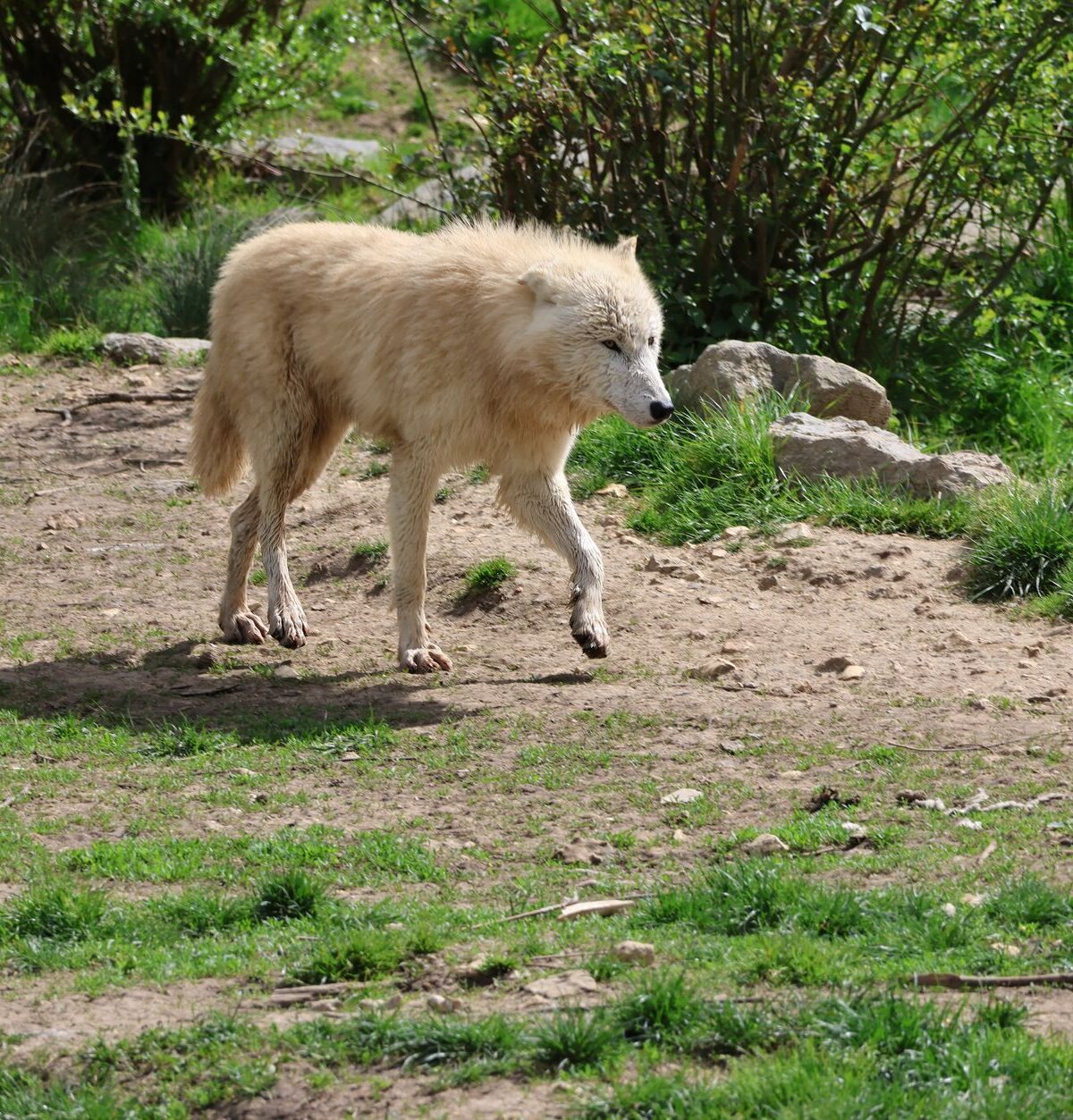
POLAR WOLF
Canis lupus arctos
DESCRIPTION
Polar Wolf (Canis lupus arctos), also known as the Arctic Wolf, is a subspecies of the gray wolf that inhabits the Arctic regions of North America and Greenland. These wolves are well-adapted to their cold environments, featuring a thick, white coat that provides insulation against frigid temperatures. They are social animals that typically live in packs, which aids in hunting and raising their young in the harsh Arctic landscape.
FUN FACTS
- Polar Wolves have a unique adaptation that allows them to thrive in extreme cold; their fur is not only thick but also has a hollow structure that traps air for insulation
- Additionally, they have a keen sense of smell and hearing, which helps them locate prey even under deep snow
- | Unlike many other wolf species, Polar Wolves have a more limited diet due to their harsh environment, often relying heavily on caribou herds during migration seasons
- Their social structure is also fascinating, as they often exhibit strong family bonds, with older siblings helping to care for the pups
QUICK INFO
Lifespan7-10 years in the wild, up to 15 years in captivit
Average Weight32-45 kg
Average Length1.2-1.5 m
Diet TypeCarnivore
Social StructureThey typically live in packs, which can range from 2 to 15 individuals, allowing for cooperative hunting and protection of the young.
Activity PatternDiurnal
Breeding SeasonLate winter to early spring (February-April)
- Habitat
- Polar Wolves inhabit tundra and coastal regions, where they can find sufficient prey and shelter. Their habitat is characterized by extreme cold, ice, and snow, which influences their hunting and social behaviors.
- Biomes
- Tundra, Arctic
- Native Range
- They are found in the Arctic regions of North America, including parts of Canada and Greenland.
- Continent
- North America
- Countries
- Canada, Greenland
- Diet
- Polar Wolves primarily hunt caribou, muskoxen, and other large mammals, but they also scavenge when necessary. Their diet can vary based on the availability of prey in their habitat.
- Diet Type
- Carnivore
- Favorite Food
- caribou, muskoxen
- Social Structure
- They typically live in packs, which can range from 2 to 15 individuals, allowing for cooperative hunting and protection of the young.
- Activity Pattern
- Diurnal
- Group Size
- 2-15
- Territorial
- 1
32-45 kg
Weight
1.2-1.5 m
Length
- Coloration
- Thick, white to grayish fur that blends in with the snowy environment.
- Sexual Dimorphism
- Males are generally larger than females.
- Lifespan
- 7-10 years in the wild, up to 15 years in captivit
- Gestation Period
- 63 days
- Offspring per Birth
- 2-5
- Sexual Maturity
- 2-3 years
- Breeding Season
- Late winter to early spring (February-April)
LC
Least Concern
IUCN Red List Status
- Population Status
- The population of Polar Wolves is currently stable, but they are affected by climate change and habitat loss.
- Wild Population Estimate
- Unknown, but believed to be in the thousands
- Population Trend
- Stable
- Endangered
- 0
- Threats
- Main threats include climate change, which affects their habitat and prey availability, and human encroachment. Additionally, they face risks from hunting and trapping in some areas.
- Predators
- Humans are the primary threat, but Polar Wolves have few natural predators due to their position at the top of the food chain.
- Defense Mechanisms
- They rely on their pack structure for defense and can be aggressive when protecting their territory or young.
- Found in Zoos
- Uncommon