


PONY
Equus caballus
DESCRIPTION
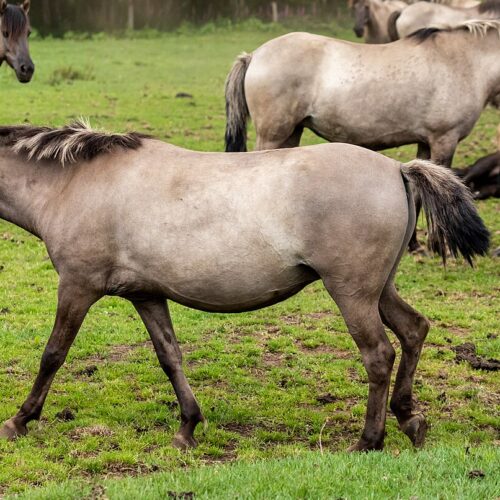
Pony is a small horse, typically characterized by its stocky build and thick mane. They have a variety of coat colors and patterns, often with a dense, shaggy coat that helps them withstand colder climates. Ponies are known for their friendly and intelligent nature, making them popular as companion animals and for riding, especially among children.
FUN FACTS
- Ponies have been used for various purposes throughout history, including as working animals in agriculture and as companions for children
- Their smaller size and gentle temperament make them ideal for teaching young riders the basics of horseback riding
- | There are many different breeds of ponies, each with unique characteristics and traits
- For example, the Shetland pony is known for its strength and resilience, while the Welsh pony is celebrated for its beauty and versatility in various equestrian disciplines
QUICK INFO
Lifespan20-30 years
Average Weight200-400 kg
Average Length1.2-1.5 m
Diet TypeHerbivore
Social Structuregroup — Ponies typically live in herds, which provide social interaction and protection.
Activity PatternDiurnal
Breeding SeasonSpring (April-June)
- Habitat
- Ponies are adaptable and can thrive in various habitats, including grasslands, forests, and even mountainous regions. They are often found in domesticated settings, such as farms and stables.
- Biomes
- Grassland, Temperate Forest, Savanna
- Native Range
- Ponies are native to various regions around the world, including Europe, Asia, and North America, with specific breeds originating from different areas.
- Continent
- Europe, Asia, North America
- Countries
- United Kingdom, United States, Iceland, Mongolia
- Diet
- Ponies are herbivores, primarily grazing on grasses and other vegetation. They may also consume hay and grains when grass is not available.
- Diet Type
- Herbivore
- Favorite Food
- grass, hay
- Social Structure
- group — Ponies typically live in herds, which provide social interaction and protection.
- Activity Pattern
- Diurnal
- Group Size
- 2-20
- Territorial
- 0
 LC
LC
LC
LC
200-400 kg
Weight
1.2-1.5 m
Length
1.2 m at shoulder
Height (Shoulder)
- Coloration
- varied, including solid colors, pinto, and appaloosa patterns
- Lifespan
- 20-30 years
- Gestation Period
- 11 months
- Offspring per Birth
- 1
- Sexual Maturity
- 1-2 years
- Breeding Season
- Spring (April-June)
LC
Least Concern
IUCN Red List Status
- Population Status
- Ponies are generally not endangered, with many breeds having stable populations.
- Wild Population Estimate
- unknown
- Population Trend
- Stable
- Endangered
- 0
- Threats
- Main threats include habitat loss and overbreeding, which can lead to genetic issues in some pony breeds. Additionally, ponies may face challenges from changing agricultural practices.
- Predators
- wolves, mountain lions, humans
- Defense Mechanisms
- Ponies rely on their speed and agility to escape predators, as well as their strong herd instincts for protection.
- Compatible Animals
- horses, goats, sheep
- Found in Zoos
- Uncommon