


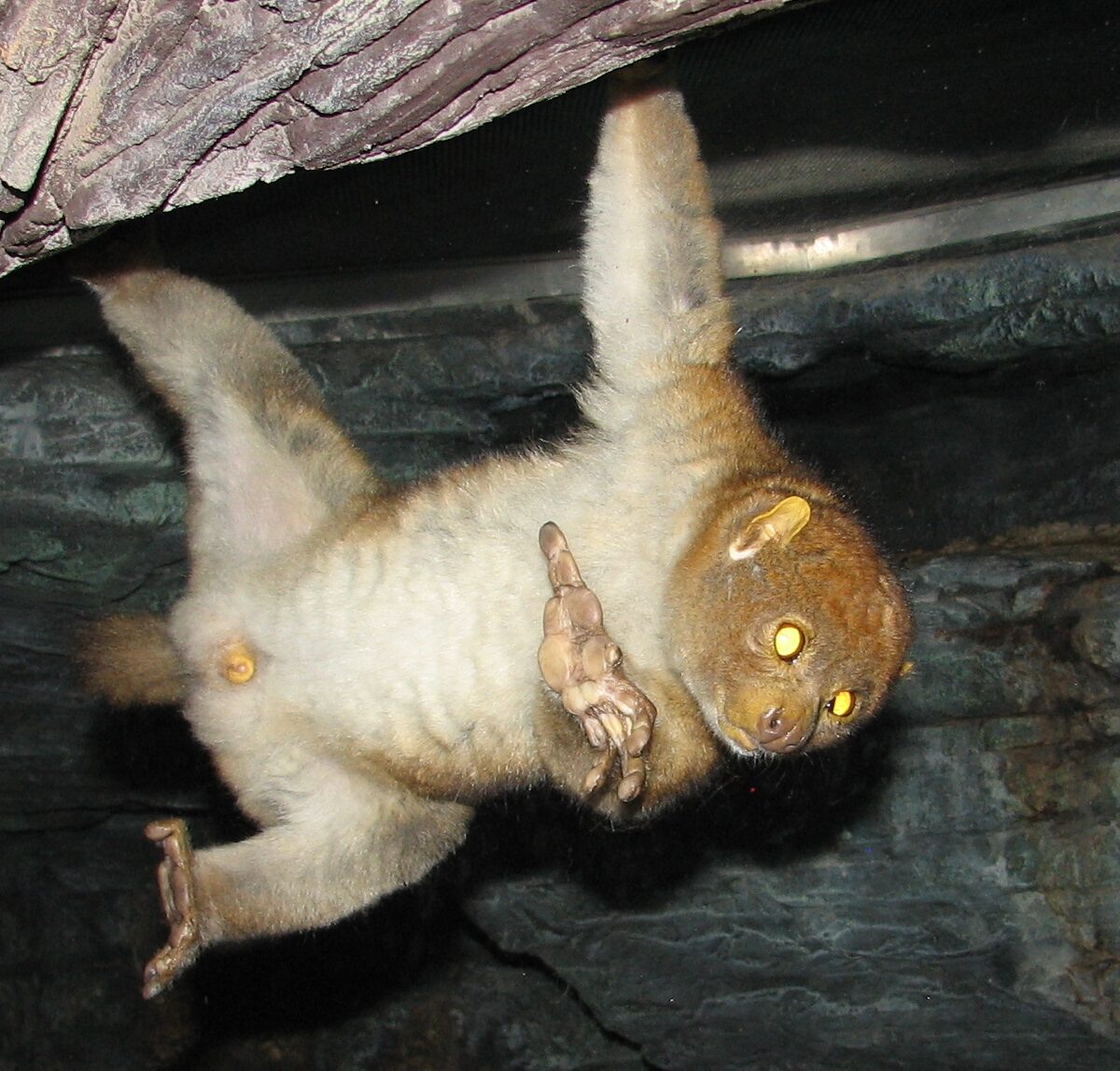
POTTO
DESCRIPTION
Potto is a slow-moving, nocturnal primate native to the tropical forests of Central and West Africa. It has a distinctive appearance with a round head, large eyes, and a stout body covered in dense, soft fur that ranges in color from gray to brown. Potto is known for its unique behavior of moving slowly and deliberately through the trees, using its strong limbs to grasp branches and navigate its arboreal habitat.
FUN FACTS
- Pottos have a unique adaptation in their wrists that allows them to rotate their hands backward, which aids in climbing and grasping branches
- Additionally, they have a specialized diet that allows them to consume toxic fruits that many other animals cannot eat, showcasing their unique ecological niche.|Pottos are known for their slow and deliberate movements, which not only help them avoid predators but also conserve energy
- This slow pace is a stark contrast to the more agile and fast-moving primates found in their habitats
QUICK INFO
Lifespan15-20 years in the wild, up to 30 in captivity
Average Weight1.5-2.5 kg
Average Length40-50 cm
Diet TypeOmnivore
Social Structuresolitary, occasionally pairs
Activity PatternNocturnal
Breeding Seasonyear-round
- Habitat
- Pottos inhabit dense tropical rainforests and secondary forests, where they can find ample food and cover. They are arboreal, spending most of their time in the trees, which provides them with protection from ground predators.
- Biomes
- Tropical Rainforest
- Native Range
- Pottos are found in the tropical forests of Central and West Africa, including countries like Nigeria, Cameroon, and the Democratic Republic of the Congo.
- Continent
- Africa
- Countries
- Nigeria, Cameroon, Democratic Republic of the Congo, Gabon, Republic of the Congo
- Diet
- Pottos primarily feed on fruits, leaves, and flowers, but they also consume insects and small vertebrates. Their diet is largely frugivorous, relying heavily on the availability of ripe fruits in their environment.
- Diet Type
- Omnivore
- Favorite Food
- fruits, leaves
- Social Structure
- solitary, occasionally pairs
- Activity Pattern
- Nocturnal
- Group Size
- 1-2
- Territorial
- 0
 LC
LC
 VU
VU
1.5-2.5 kg
Weight
40-50 cm
Length
- Coloration
- gray to brown fur with a soft texture
- Sexual Dimorphism
- males are slightly larger than females
- Lifespan
- 15-20 years in the wild, up to 30 in captivity
- Gestation Period
- approximately 5 months
- Offspring per Birth
- 1
- Sexual Maturity
- 2-3 years
- Breeding Season
- year-round
VU
Vulnerable
IUCN Red List Status
- Population Status
- Pottos are currently classified as vulnerable due to habitat loss and hunting pressures.
- Wild Population Estimate
- unknown
- Population Trend
- Decreasing
- Endangered
- 1
- Threats
- The main threats to Pottos include deforestation for agriculture and logging, as well as hunting for bushmeat. These pressures have led to a decline in their populations across their native range.
- Predators
- snakes, birds of prey, and larger mammals such as leopards
- Defense Mechanisms
- Pottos have a unique defense mechanism where they can emit a strong odor from their scent glands to deter predators.
- Found in Zoos
- Uncommon