


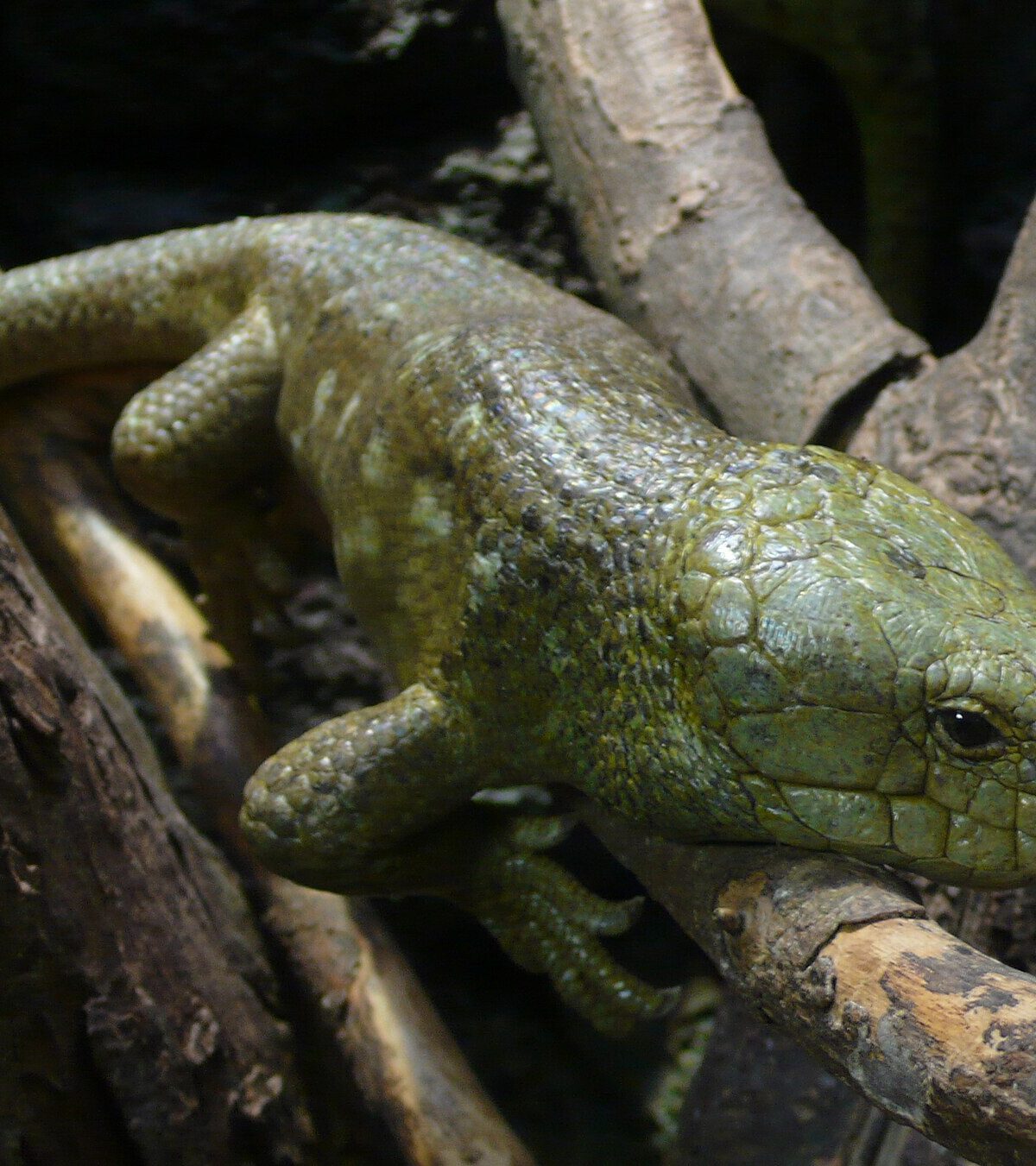
PREHENSILE-TAILED SKINK
DESCRIPTION
Prehensile-Tailed Skink is a large, arboreal lizard known for its distinctive prehensile tail, which it uses to grasp branches and aid in climbing. This skink has a robust body with smooth, shiny scales that can vary in color from green to brown, providing excellent camouflage in its forest habitat. Behaviorally, it is primarily diurnal and is often seen basking in the sun or foraging for food among the foliage.
FUN FACTS
- Prehensile-Tailed Skinks are unique among lizards for their ability to use their tails like an extra limb, which aids in climbing and grasping branches
- They are also known for their social behavior during the breeding season, where males will engage in displays to attract females, showcasing their vibrant colors and agility.| These skinks have a fascinating reproductive strategy, as they give birth to live young rather than laying eggs, which is relatively rare among lizards
- This adaptation may help ensure higher survival rates for the offspring in their arboreal environment
QUICK INFO
Lifespan10-15 years in the wild, up to 20 in captivity
Average Length30-40 cm
Diet TypeHerbivore
Social Structuresolitary, occasionally seen in pairs during breeding
Activity PatternDiurnal
Breeding SeasonSpring (September-November)
- Habitat
- These skinks inhabit tropical and subtropical forests, often found in trees and shrubs where they can easily navigate their environment. They prefer areas with dense vegetation that provides cover and food sources.
- Biomes
- Tropical Rainforest, Subtropical Forest
- Native Range
- The Prehensile-Tailed Skink is native to the islands of New Guinea and surrounding areas.
- Continent
- Oceania
- Countries
- Papua New Guinea, Indonesia
- Diet
- Prehensile-Tailed Skinks are primarily herbivorous, feeding on a variety of leaves, fruits, and flowers. They may occasionally consume insects or other small invertebrates.
- Diet Type
- Herbivore
- Favorite Food
- leaves, fruits, flowers
- Social Structure
- solitary, occasionally seen in pairs during breeding
- Activity Pattern
- Diurnal
- Group Size
- 1-2
- Territorial
- 0
 VU
VU
 LC
LC
30-40 cm
Length
- Coloration
- green to brown with smooth, shiny scales
- Sexual Dimorphism
- males tend to be larger than females
- Lifespan
- 10-15 years in the wild, up to 20 in captivity
- Offspring per Birth
- 1-2
- Sexual Maturity
- 2-3 years
- Breeding Season
- Spring (September-November)
LC
Least Concern
IUCN Red List Status
- Population Status
- The population status is currently stable, but habitat loss poses a potential threat.
- Wild Population Estimate
- unknown
- Population Trend
- Stable
- Endangered
- 0
- Threats
- Main threats include habitat destruction due to logging and land conversion for agriculture. Additionally, they may be affected by the pet trade.
- Predators
- birds of prey, snakes, and larger reptiles
- Defense Mechanisms
- They can drop their tails as a defense mechanism to escape predators, allowing them to flee while the tail distracts the attacker.
- Found in Zoos
- Uncommon