


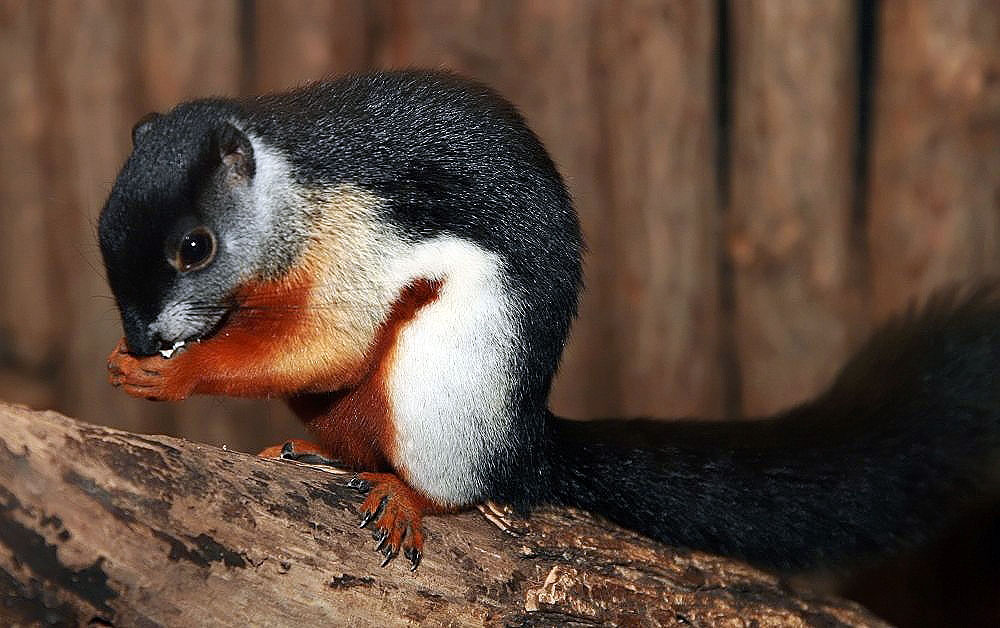
PREVOST'S SQUIRREL
Callosciurus prevostii
DESCRIPTION
Prevost's Squirrel, also known as the Malayan Squirrel, is a medium-sized rodent characterized by its striking coloration, which typically features a mix of gray, brown, and black fur with a distinctive white stripe along its sides. These squirrels are primarily arboreal, spending most of their time in trees, where they are agile climbers and can often be seen leaping between branches. They are known for their vocalizations and can be quite social, often seen foraging in pairs or small groups.
FUN FACTS
- Prevost's Squirrel is known for its impressive jumping ability, which allows it to leap distances of up to 10 times its body length
- This skill is essential for navigating the complex canopy of its forest habitat
- | These squirrels play a crucial role in their ecosystem as seed dispersers, helping to maintain the health of their forest environments by spreading seeds from the fruits they consume
QUICK INFO
Lifespan5-10 years in the wild, up to 15 years in captivit
Average Weight400-600 g
Average Length25-30 cm
Diet TypeHerbivore
Social StructureThey are generally social animals, often seen in pairs or small groups, but can also be solitary.
Activity PatternDiurnal
Breeding SeasonYear-round, with peaks during the rainy season
- Habitat
- Prevost's Squirrel inhabits tropical and subtropical forests, often favoring areas with dense canopy cover. They are typically found in both primary and secondary forests.
- Biomes
- Tropical Rainforest, Subtropical Forest
- Native Range
- This species is native to Southeast Asia, particularly found in countries like Malaysia, Thailand, and Indonesia.
- Continent
- Asia
- Countries
- Malaysia, Thailand, Indonesia, Myanmar
- Diet
- Prevost's Squirrel primarily feeds on fruits, nuts, and seeds, but they also consume flowers and bark. Their diet varies seasonally based on food availability.
- Diet Type
- Herbivore
- Favorite Food
- fruits, nuts, seeds
- Social Structure
- They are generally social animals, often seen in pairs or small groups, but can also be solitary.
- Activity Pattern
- Diurnal
- Group Size
- 2-6
- Territorial
- 0
 VU
VU
 LC
LC
400-600 g
Weight
25-30 cm
Length
- Coloration
- They have a mix of gray and brown fur with a distinctive white stripe along the sides and a black belly.
- Lifespan
- 5-10 years in the wild, up to 15 years in captivit
- Gestation Period
- 60-65 days
- Offspring per Birth
- 2-4
- Sexual Maturity
- 1 year
- Breeding Season
- Year-round, with peaks during the rainy season
LC
Least Concern
IUCN Red List Status
- Population Status
- The population is currently stable, but habitat loss poses a potential threat.
- Wild Population Estimate
- Unknown
- Population Trend
- Stable
- Endangered
- 0
- Threats
- Main threats include habitat destruction due to logging and agricultural expansion. Additionally, they may face predation from larger birds of prey and snakes.
- Predators
- Birds of prey, snakes, and larger mammals such as civets.
- Defense Mechanisms
- They use their agility to escape predators and can also emit loud alarm calls to warn others of danger.
- Found in Zoos
- Uncommon