


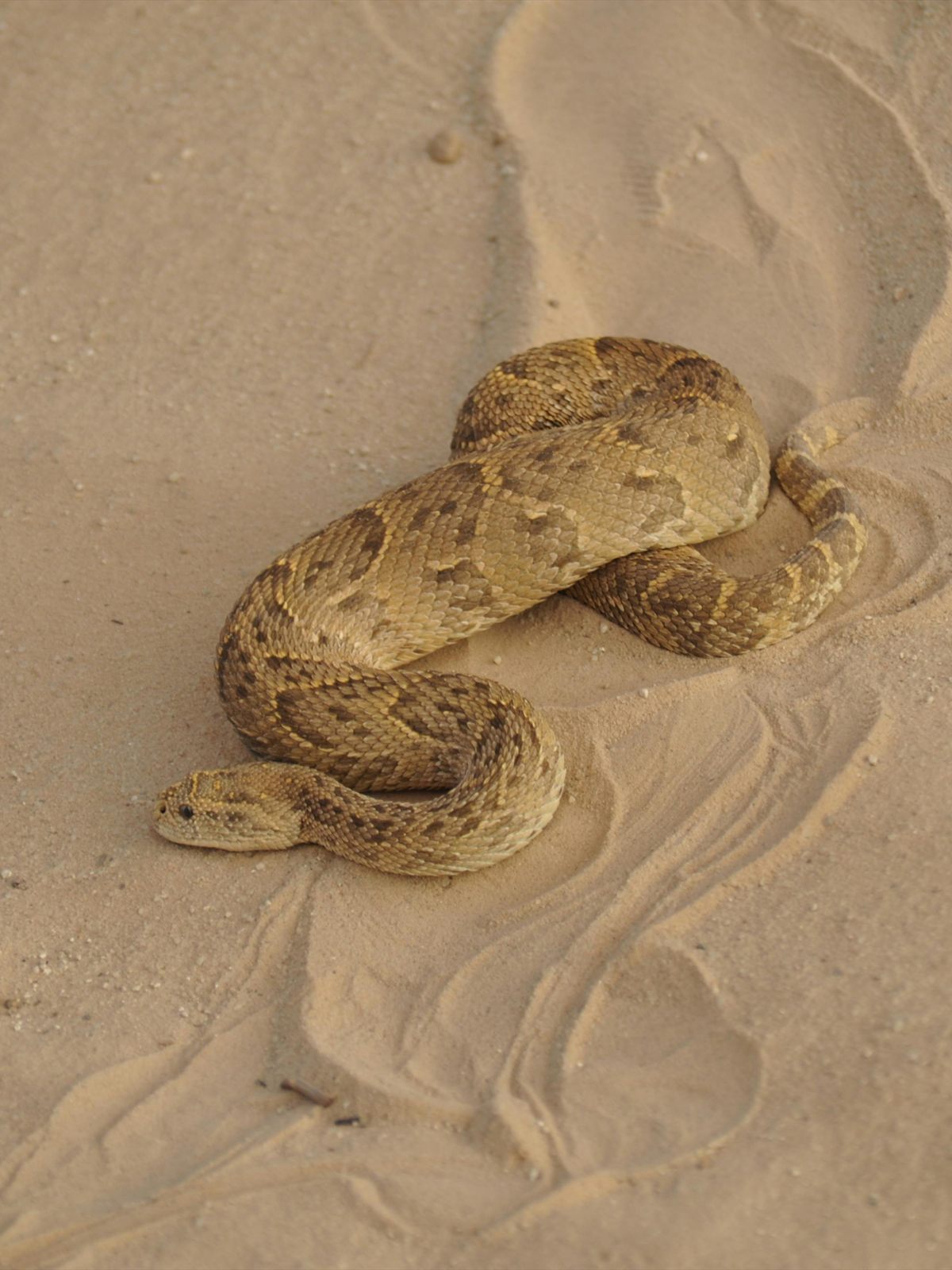
PUFF ADDER
DESCRIPTION
The Puff Adder is a large, heavy-bodied snake known for its distinctive triangular head and robust build. Its coloration typically features a pattern of brown, yellow, and black, which provides excellent camouflage in its natural habitat. Puff Adders are primarily terrestrial and are known for their ambush hunting strategy, lying in wait for prey to come close before striking with remarkable speed.
FUN FACTS
- Puff Adders are responsible for more snakebite fatalities in Africa than any other species, primarily due to their wide distribution and proximity to human populations
- Despite their dangerous reputation, they play a crucial role in controlling rodent populations in their ecosystems
- | The Puff Adder's venom is hemotoxic, meaning it destroys blood cells and can cause severe tissue damage
- Interestingly, they have a unique method of hunting; they can strike with incredible speed and accuracy, often catching prey that is much larger than their head
QUICK INFO
Lifespan10-15 years in the wild, up to 20 years in captivi
Average Weight1-2 kg
Average Length0.9-1.2 m
Diet TypeCarnivore
Social Structuresolitary, typically found alone except during mating season
Activity PatternNocturnal
Breeding SeasonSpring (September-November)
- Habitat
- Puff Adders inhabit a variety of environments, including savannas, grasslands, and scrublands. They prefer areas with ample cover, such as dense vegetation or rocky outcrops, which aid in their ambush hunting.
- Biomes
- Savanna, Grassland, Scrubland
- Native Range
- The Puff Adder is native to sub-Saharan Africa, found in a wide range of countries across the continent.
- Continent
- Africa
- Countries
- South Africa, Namibia, Botswana, Zimbabwe, Mozambique, Tanzania, Kenya, Uganda, Democratic Republic of the Congo
- Diet
- Puff Adders primarily feed on small mammals, birds, and occasionally reptiles. They are ambush predators, using their camouflage to surprise unsuspecting prey.
- Diet Type
- Carnivore
- Favorite Food
- small mammals, birds
- Social Structure
- solitary, typically found alone except during mating season
- Activity Pattern
- Nocturnal
- Group Size
- 1
- Territorial
- 0
 VU
VU
1-2 kg
Weight
0.9-1.2 m
Length
- Coloration
- brown, yellow, and black patterns for camouflage
- Sexual Dimorphism
- males are generally smaller than females
- Lifespan
- 10-15 years in the wild, up to 20 years in captivi
- Offspring per Birth
- 10-30
- Sexual Maturity
- 2-3 years
- Breeding Season
- Spring (September-November)
LC
Least Concern
IUCN Red List Status
- Population Status
- The population is currently stable, but local declines may occur due to habitat loss and persecution.
- Wild Population Estimate
- unknown
- Population Trend
- Stable
- Endangered
- 0
- Threats
- Main threats include habitat destruction and human persecution due to fear of their venomous bite. They are often killed on sight by people who mistakenly believe they pose a significant threat.
- Predators
- birds of prey, larger snakes, and mammals such as mongooses
- Defense Mechanisms
- Puff Adders can deliver a painful venomous bite and will hiss and puff up to deter threats.
- Found in Zoos
- Uncommon