


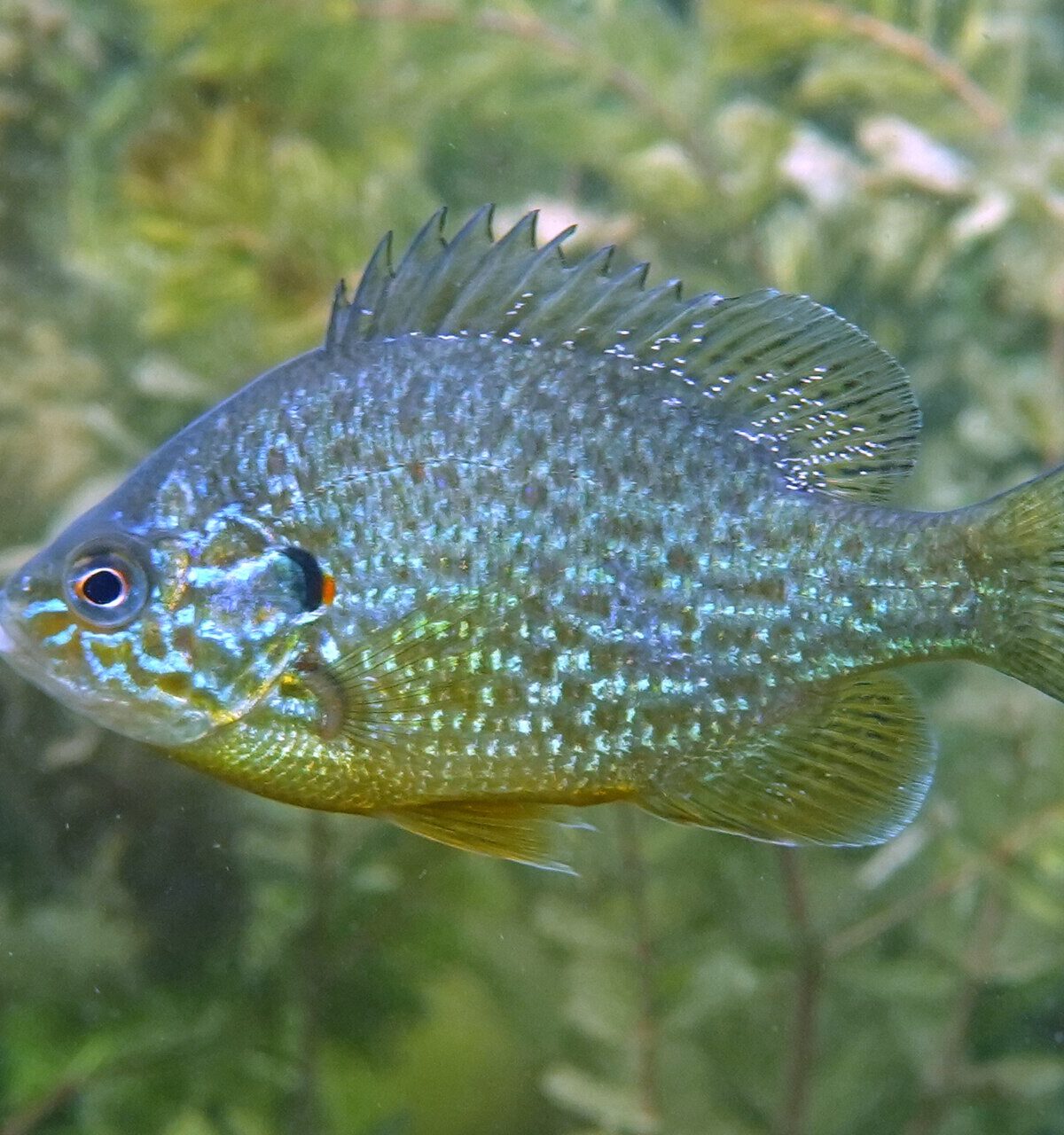
PUMPKINSEED SUNFISH
DESCRIPTION
Also called Lepomis gibbosus, the Pumpkinseed Sunfish is a small, colorful freshwater fish known for its distinctive flattened body and vibrant coloration. It typically exhibits a greenish or bluish back with orange or red spots, and its most notable feature is the bright orange or yellow spot at the base of its dorsal fin. Pumpkinseed Sunfish are often found in shallow waters of lakes and ponds, where they exhibit a variety of behaviors including nesting and territorial displays during the breeding season.
FUN FACTS
- Pumpkinseed Sunfish are named for their pumpkin-like shape and bright colors, which make them a favorite among anglers and aquarium enthusiasts
- They are also known for their unique nesting behavior, where males create circular nests in shallow waters and attract females to lay eggs, showcasing their vibrant colors during this time.| These fish are capable of producing a variety of sounds, including grunts and pops, which they use for communication, especially during the breeding season
- Their ability to adapt to different environments has allowed them to thrive in various freshwater habitats across North America
QUICK INFO
Lifespan5-6 years in the wild, up to 10 years in captivity
Average Weight0.5-1 kg
Average Length15-25 cm
Diet TypeOmnivore
Social Structuregroup — they often form small schools or groups, especially outside of the breeding season.
Activity PatternDiurnal
Breeding SeasonSpring to early summer (May-July)
- Habitat
- This species thrives in warm, shallow waters of lakes, ponds, and slow-moving rivers. They prefer areas with abundant vegetation, which provides cover and breeding sites.
- Biomes
- Freshwater, Temperate Forest
- Native Range
- Native to North America, particularly in the eastern and central United States and parts of Canada.
- Continent
- North America
- Countries
- United States, Canada
- Diet
- Pumpkinseed Sunfish primarily feed on insects, small crustaceans, and plant matter. They are opportunistic feeders and will consume a variety of food items available in their habitat.
- Diet Type
- Omnivore
- Favorite Food
- insects, small crustaceans
- Social Structure
- group — they often form small schools or groups, especially outside of the breeding season.
- Activity Pattern
- Diurnal
- Group Size
- 5-30
- Territorial
- 1
 LC
LC

 LC
LC
0.5-1 kg
Weight
15-25 cm
Length
- Coloration
- greenish or bluish back with orange or red spots and a bright orange or yellow spot at the base of the dorsal fin.
- Sexual Dimorphism
- Males are typically more colorful and larger than females, especially during the breeding season.
- Lifespan
- 5-6 years in the wild, up to 10 years in captivity
- Offspring per Birth
- 100-1000
- Sexual Maturity
- 1-2 years
- Breeding Season
- Spring to early summer (May-July)
LC
Least Concern
IUCN Red List Status
- Population Status
- The population of Pumpkinseed Sunfish is generally stable, with no significant declines reported.
- Wild Population Estimate
- Not specifically estimated, but considered abundant in suitable habitats.
- Population Trend
- Stable
- Endangered
- 0
- Threats
- Main threats include habitat destruction due to pollution and development, as well as competition with invasive species. However, they are not currently facing significant threats.
- Predators
- Largemouth Bass, Northern Pike, birds such as herons and kingfishers, and larger fish species.
- Defense Mechanisms
- They use their coloration for camouflage among vegetation and can quickly dart away to escape predators.
- Compatible Animals
- Other sunfish species, small catfish, and various freshwater invertebrates
- Found in Zoos
- Uncommon