


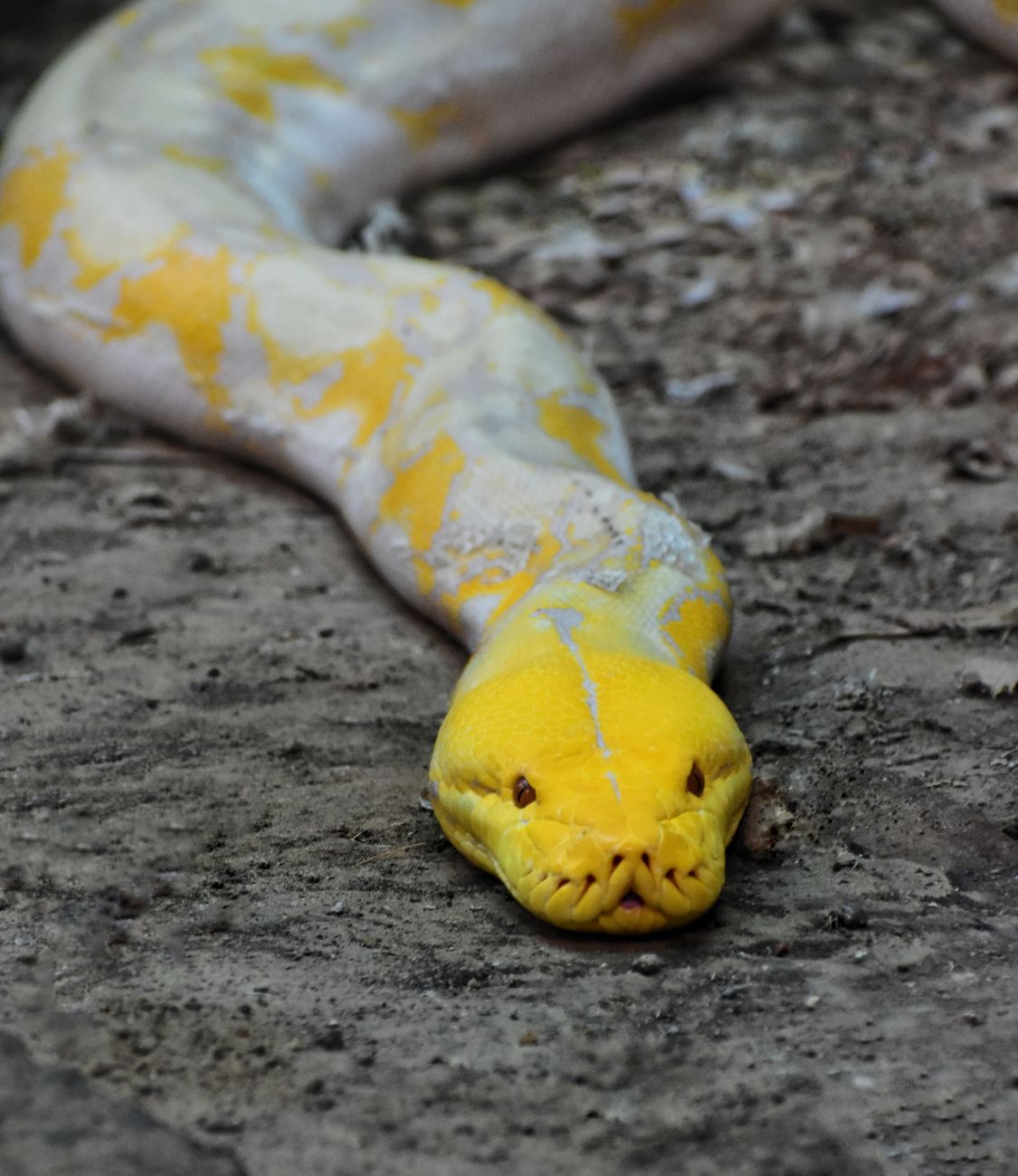
PURPLE ALBINO RETICULATED PYTHON
Malayopython reticulatus
DESCRIPTION
Purple Albino Reticulated Python (Malayopython reticulatus) is a striking morph of the reticulated python, known for its unique purple and yellow coloration. This large snake can reach impressive lengths, often exceeding 3 meters, and is recognized for its intricate patterning that aids in camouflage within its natural habitat. Typically found in Southeast Asia, these pythons are both terrestrial and arboreal, showcasing a versatile behavior that allows them to thrive in various environments.
FUN FACTS
- The Purple Albino Reticulated Python is a popular choice among reptile enthusiasts due to its stunning coloration and unique appearance
- Unlike typical reticulated pythons, this morph lacks the dark pigmentation, making it a striking visual specimen
- | Reticulated pythons are among the longest snakes in the world, with some individuals recorded at lengths exceeding 6 meters
- Their ability to grow to such sizes is attributed to their diet and habitat, which provide ample opportunities for hunting and growth
QUICK INFO
Lifespan20-30 years in captivity
Average Weight50-90 kg
Average Length3-6 m
Diet TypeCarnivore
Social Structuresolitary, typically only coming together for breeding
Activity PatternNocturnal
Breeding SeasonSpring (March-May)
- Habitat
- Purple Albino Reticulated Pythons inhabit tropical rainforests, grasslands, and wetlands. They are often found near water sources, which provide both hydration and hunting opportunities.
- Biomes
- Tropical Rainforest, Wetlands
- Native Range
- Southeast Asia, including countries like Indonesia, Malaysia, and the Philippines.
- Continent
- Asia
- Countries
- Indonesia, Malaysia, Philippines, Thailand, Myanmar
- Diet
- They primarily consume mammals and birds, using constriction to subdue their prey. Their diet can include small to medium-sized animals, depending on their size.
- Diet Type
- Carnivore
- Favorite Food
- Rodents, birds, small mammals
- Social Structure
- solitary, typically only coming together for breeding
- Activity Pattern
- Nocturnal
- Group Size
- 1
- Territorial
- 0
 VU
VU
 VU
VU
50-90 kg
Weight
3-6 m
Length
- Coloration
- Purple and yellow with intricate patterns
- Sexual Dimorphism
- Females are generally larger than males.
- Lifespan
- 20-30 years in captivity
- Gestation Period
- 60-70 days
- Offspring per Birth
- 15-30
- Sexual Maturity
- 2-3 years
- Breeding Season
- Spring (March-May)
LC
Least Concern
IUCN Red List Status
- Population Status
- The population is currently stable, but habitat loss poses a potential threat.
- Wild Population Estimate
- Unknown
- Population Trend
- Stable
- Endangered
- 0
- Threats
- Main threats include habitat destruction due to deforestation and hunting for the pet trade. These factors can lead to localized declines in certain areas.
- Predators
- Large birds of prey, crocodiles, and larger mammals may prey on juvenile pythons.
- Defense Mechanisms
- They can camouflage effectively within their environment and may also use constriction as a means of defense against threats.
- Found in Zoos
- Uncommon