


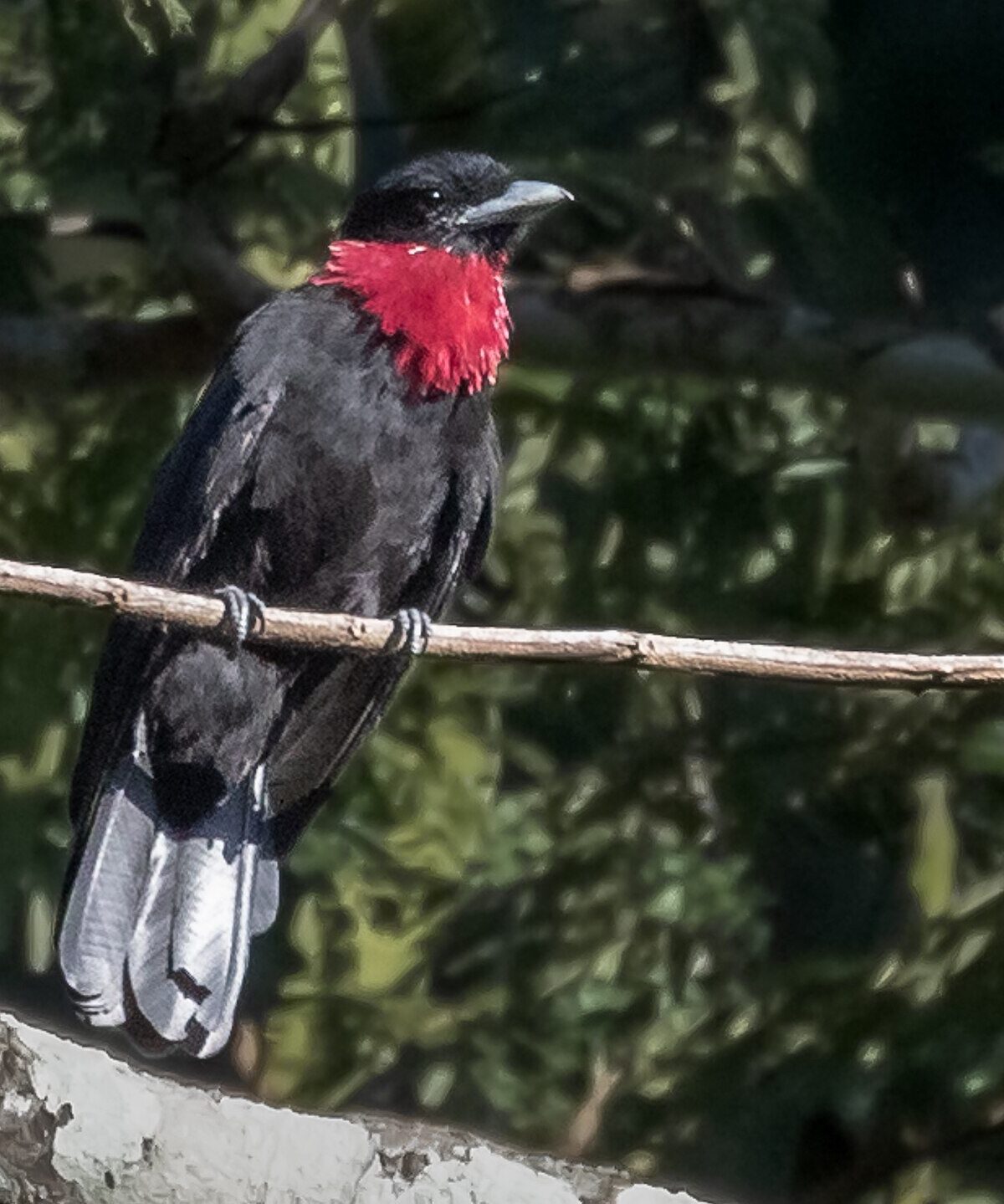
PURPLE-THROATED FRUITCROW
Querula purpurata
DESCRIPTION
Purple-throated Fruitcrow (Querula purpurata) is commonly known as the Purple-throated Cotingas. This striking bird is characterized by its vibrant purple throat and contrasting black body, making it a visually stunning species. It is often found in the canopy of tropical rainforests, where it plays a crucial role in seed dispersal and maintaining the health of its ecosystem.
FUN FACTS
- The Purple-throated Fruitcrow is known for its unique vocalizations, which can be heard from great distances in the rainforest
- These calls are not only used for communication but also play a role in attracting mates during the breeding season
- | This species is an important seed disperser in its ecosystem, helping to maintain the diversity of plant life in the rainforests where it resides
- By consuming fruits and excreting the seeds, it contributes to the growth of new plants, which is vital for the health of its habitat
QUICK INFO
Lifespan10-15 years in the wild
Average Weight150-200 g
Average Length25-30 cm
Diet TypeOmnivore
Social StructureTypically solitary or in pairs, they may form small groups during feeding.
Activity PatternDiurnal
Breeding SeasonVaries by region, typically during the rainy season.
- Habitat
- This species inhabits tropical rainforests, often favoring areas with abundant fruiting trees. It is typically found in the upper canopy, where it can easily access its food sources.
- Biomes
- Tropical Rainforest
- Native Range
- The Purple-throated Fruitcrow is native to the lowland rainforests of Central and South America, particularly in countries like Colombia and Ecuador.
- Continent
- South America
- Countries
- Colombia, Ecuador
- Diet
- The Purple-throated Fruitcrow primarily feeds on fruits, particularly those from various trees in its habitat. It also consumes insects and other small invertebrates, contributing to its omnivorous diet.
- Diet Type
- Omnivore
- Favorite Food
- Fruits, insects
- Social Structure
- Typically solitary or in pairs, they may form small groups during feeding.
- Activity Pattern
- Diurnal
- Group Size
- 1-2
- Territorial
- 1
 LC
LC
 DD
DD
150-200 g
Weight
25-30 cm
Length
- Coloration
- Black body with a striking purple throat and yellowish underparts.
- Sexual Dimorphism
- Males are more vibrantly colored than females, who are generally duller.
- Lifespan
- 10-15 years in the wild
- Offspring per Birth
- 1-2
- Sexual Maturity
- 1-2 years
- Breeding Season
- Varies by region, typically during the rainy season.
LC
Least Concern
IUCN Red List Status
- Population Status
- The population is currently stable, but habitat loss poses a potential threat.
- Wild Population Estimate
- Unknown
- Population Trend
- Stable
- Endangered
- 0
- Threats
- Main threats include habitat destruction due to deforestation and agricultural expansion. These activities reduce their natural habitat and food sources.
- Predators
- Snakes, raptors, and larger birds of prey are known to prey on Purple-throated Fruitcrows.
- Defense Mechanisms
- They rely on their agility and ability to fly quickly through the canopy to evade predators.
- Found in Zoos
- Uncommon