


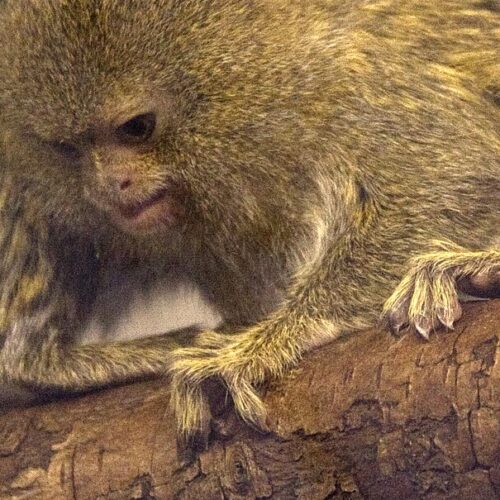
PYGMY MARMOSET
Cebuella pygmaea
DESCRIPTION
The pygmy marmoset is the smallest monkey species in the world, measuring about 4.6 to 6.3 inches in body length, with a tail that can be longer than its body. Its fur is predominantly brownish or grayish with lighter underparts, and it has distinctive white ear tufts. These tiny primates are known for their agile movements and are often seen leaping between branches in their rainforest habitat.
FUN FACTS
- Pygmy marmosets have a unique adaptation that allows them to feed on tree sap, which is a critical part of their diet
- They have specialized teeth that can create small holes in the bark of trees to access the sap
- | These tiny monkeys are known for their incredible agility and can leap distances of up to 5 meters between branches
- Their small size and quick movements make them difficult to spot in the wild, adding to their charm and intrigue
QUICK INFO
Lifespan5-10 years in the wild, up to 15 years in captivit
Average Weight100-150 g
Average Length12-15 cm
Diet TypeOmnivore
Social StructureThey typically live in family groups consisting of a breeding pair and their offspring.
Activity PatternDiurnal
Breeding SeasonYear-round, with peaks depending on local conditions
- Habitat
- Pygmy marmosets inhabit the dense, humid tropical rainforests of South America. They are often found in the understory and lower canopy layers of the forest.
- Biomes
- Tropical Rainforest
- Native Range
- They are native to the western Amazon Basin, particularly in countries like Colombia, Ecuador, Peru, and Brazil.
- Continent
- South America
- Countries
- Colombia, Ecuador, Peru, Brazil
- Diet
- Pygmy marmosets primarily feed on insects, fruits, and tree sap. They have specialized teeth that allow them to gouge holes in trees to access the sap.
- Diet Type
- Omnivore
- Favorite Food
- insects, tree sap, fruits
- Social Structure
- They typically live in family groups consisting of a breeding pair and their offspring.
- Activity Pattern
- Diurnal
- Group Size
- 2-10
- Territorial
- 1
 VU
VU
 LC
LC
100-150 g
Weight
12-15 cm
Length
- Coloration
- Brownish-gray fur with lighter underparts and white ear tufts.
- Lifespan
- 5-10 years in the wild, up to 15 years in captivit
- Gestation Period
- 140 days
- Offspring per Birth
- 1-3
- Sexual Maturity
- 1-2 years
- Breeding Season
- Year-round, with peaks depending on local conditions
LC
Least Concern
IUCN Red List Status
- Population Status
- The population is currently stable, but habitat loss poses a threat.
- Wild Population Estimate
- Unknown
- Population Trend
- Stable
- Endangered
- 0
- Threats
- Main threats include habitat destruction due to logging and agricultural expansion. They are also sometimes captured for the pet trade.
- Predators
- Birds of prey, snakes, and larger mammals such as felids.
- Defense Mechanisms
- They use their agility to escape predators and can also emit loud calls to alert others of danger.
- Found in Zoos
- Common