


PYGMY SLOW LORIS
Nycticebus pygmaeus
DESCRIPTION
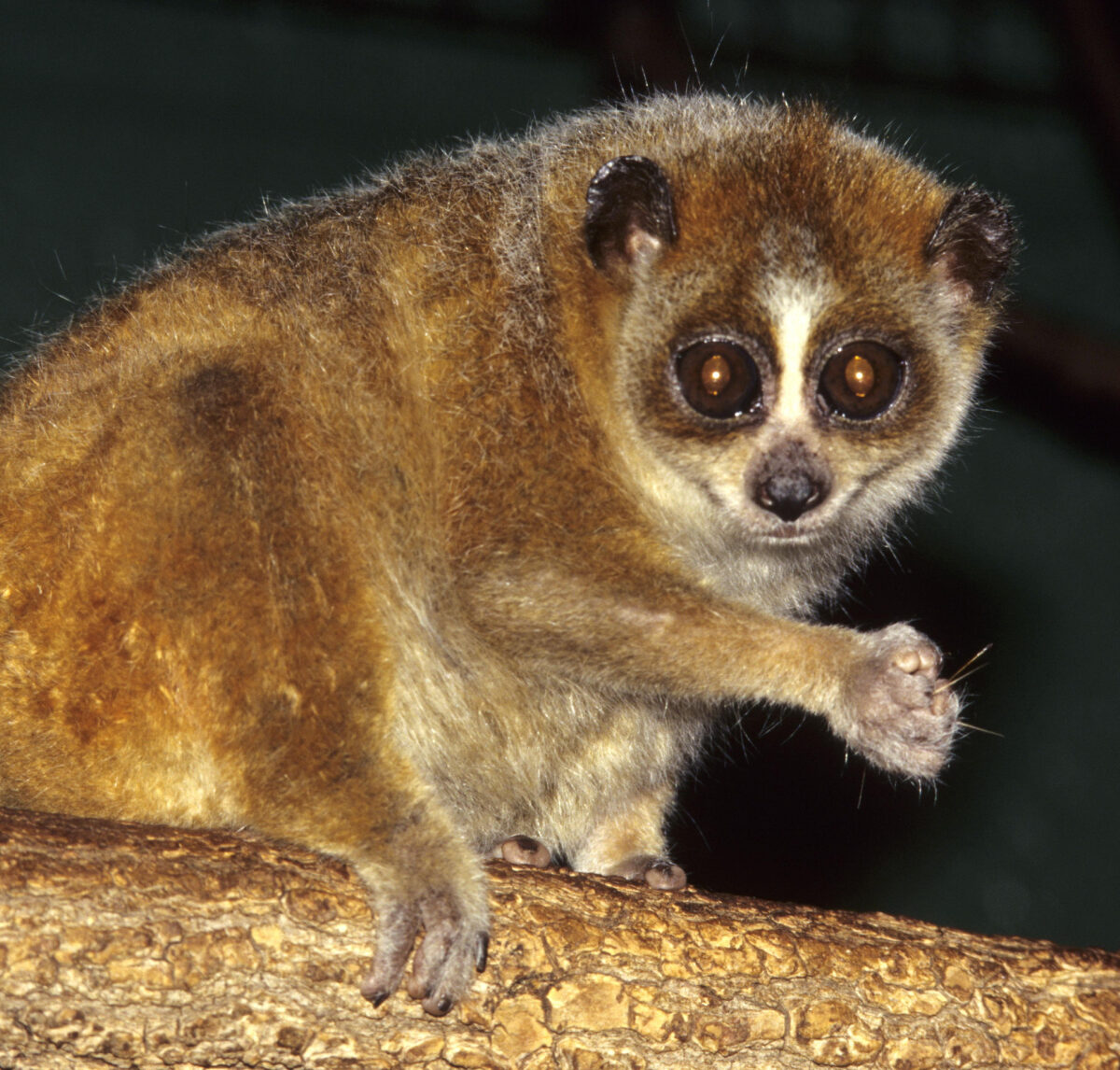
The pygmy slow loris is a small primate known for its large, round eyes and a distinctive, slow-moving gait. Its fur is soft and dense, typically exhibiting a grayish-brown coloration with lighter underparts. This nocturnal creature is arboreal, spending most of its time in trees, where it uses its strong grip to navigate branches and forage for food.
FUN FACTS
- Pygmy slow lorises have a unique ability to rotate their heads almost 180 degrees, allowing them to survey their surroundings without moving their bodies
- This adaptation is particularly useful for spotting predators and prey
- | Unlike many other primates, pygmy slow lorises have a slow metabolism, which allows them to conserve energy while foraging at night
- This slow pace is a key survival strategy in their natural habitat
QUICK INFO
Lifespan10-15 years in the wild, up to 20 years in captivi
Average Weight0.5-1 kg
Average Length20-25 cm
Diet TypeOmnivore
Social Structuresolitary, occasionally seen in pairs
Activity PatternNocturnal
Breeding SeasonYear-round, with peaks during wet seasons
- Habitat
- Pygmy slow lorises inhabit tropical and subtropical forests, often found in dense vegetation that provides ample cover and food sources. They prefer areas with a high density of trees and shrubs, which facilitate their arboreal lifestyle.
- Biomes
- Tropical Rainforest, Subtropical Forest
- Native Range
- The pygmy slow loris is native to Southeast Asia, particularly in regions of Vietnam, Cambodia, and Laos.
- Continent
- Asia
- Countries
- Vietnam, Cambodia, Laos
- Diet
- Pygmy slow lorises primarily consume a diet of fruits, insects, and tree gum. They are known to have a preference for sweet fruits and are also capable of foraging for small invertebrates.
- Diet Type
- Omnivore
- Favorite Food
- fruits, insects, tree gum
- Social Structure
- solitary, occasionally seen in pairs
- Activity Pattern
- Nocturnal
- Group Size
- 1-2
- Territorial
- 1
 VU
VU
 LC
LC
0.5-1 kg
Weight
20-25 cm
Length
- Coloration
- grayish-brown with lighter underparts
- Lifespan
- 10-15 years in the wild, up to 20 years in captivi
- Gestation Period
- 180 days
- Offspring per Birth
- 1-2
- Sexual Maturity
- 1-2 years
- Breeding Season
- Year-round, with peaks during wet seasons
EN
Endangered
IUCN Red List Status
- Population Status
- The population of pygmy slow lorises is currently declining due to habitat loss and illegal wildlife trade.
- Wild Population Estimate
- unknown
- Population Trend
- Decreasing
- Endangered
- 1
- Threats
- Main threats include habitat destruction due to deforestation and the illegal pet trade. These factors have significantly impacted their populations in the wild.
- Conservation Program
- Various local and international conservation efforts are underway to protect their habitats and combat illegal trade.
- Predators
- Birds of prey, snakes, and larger mammals such as civets.
- Defense Mechanisms
- Pygmy slow lorises have a unique defense mechanism where they secrete a toxic substance from their elbows, which they can apply to their fur or deliver through bites.
- Found in Zoos
- Uncommon