


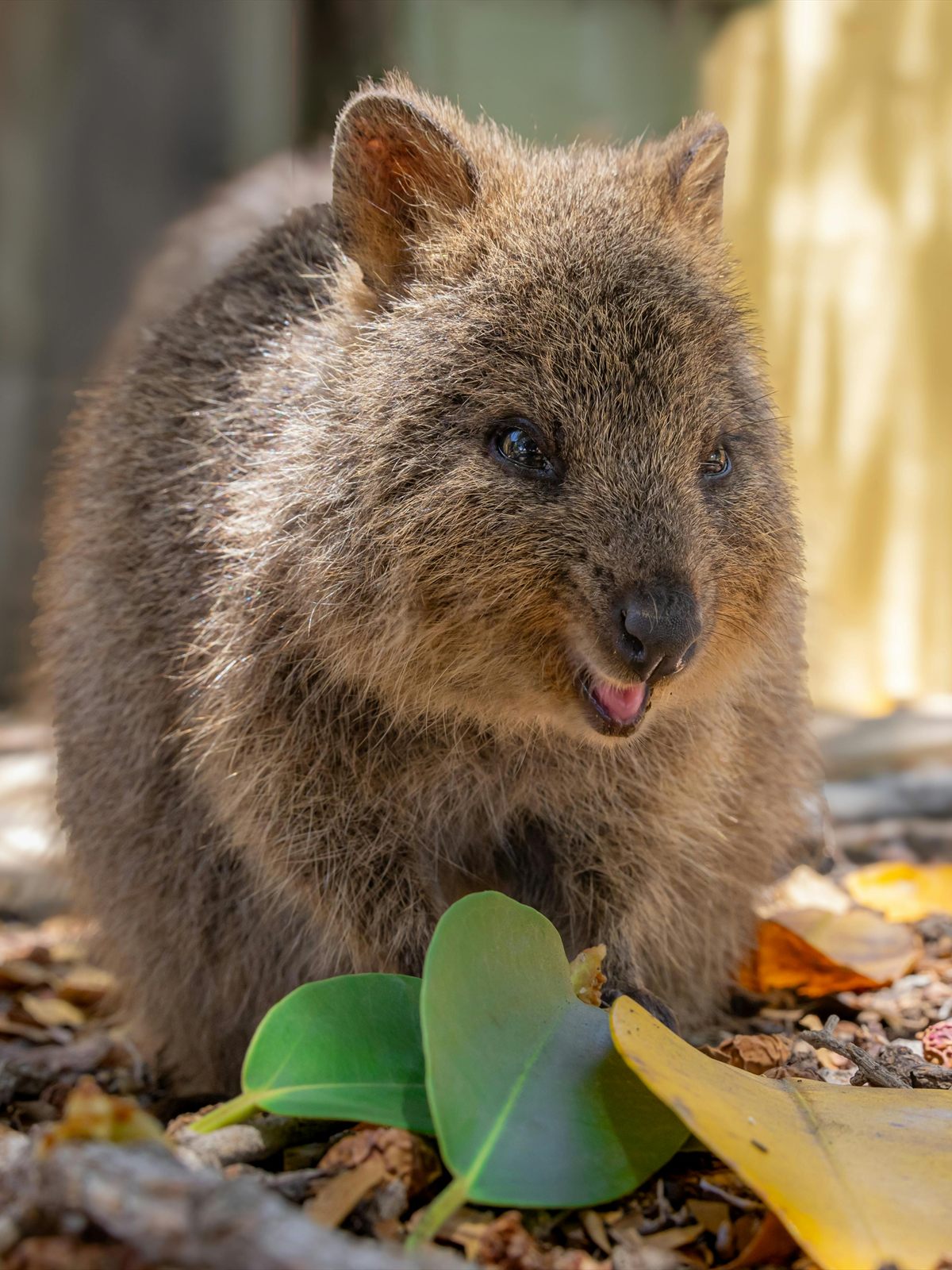
QUOKKA
DESCRIPTION
The quokka is a small marsupial native to Australia, known for its friendly demeanor and photogenic smile. It is often referred to as the 'world's happiest animal' due to its cheerful appearance.
FUN FACTS
- Quokkas can survive without drinking water for long periods | They are known to approach humans and are often photographed | Quokkas have a unique ability to climb trees to reach food
QUICK INFO
Lifespan10-15 years in the wild, up to 20 in captivity
Average Weight2.5-5 kg
Average Length40-54 cm
Diet TypeHerbivore
Social Structuregroup — they often live in small groups but can also be solitary.
Activity PatternNocturnal
Breeding SeasonYear-round, with peaks in spring and summer
- Habitat
- Quokkas inhabit dense vegetation and scrubland, often found in coastal regions and islands. They prefer areas with plenty of cover for shelter and foraging.
- Biomes
- Mediterranean, Coastal
- Native Range
- The quokka is native to Australia, particularly found on Rottnest Island and some parts of the mainland.
- Continent
- Australia
- Countries
- Australia
- Diet
- Quokkas are herbivores that primarily feed on grasses, leaves, and fruits. They are known to graze on a variety of vegetation in their habitat.
- Diet Type
- Herbivore
- Favorite Food
- grasses, leaves, fruits
- Social Structure
- group — they often live in small groups but can also be solitary.
- Activity Pattern
- Nocturnal
- Group Size
- 2-10
- Territorial
- 0

 VU
VU
2.5-5 kg
Weight
40-54 cm
Length
- Coloration
- brown to grey fur with a lighter underbelly
- Sexual Dimorphism
- males are generally larger than females
- Lifespan
- 10-15 years in the wild, up to 20 in captivity
- Gestation Period
- 27-30 days
- Offspring per Birth
- 1
- Sexual Maturity
- 1 year
- Breeding Season
- Year-round, with peaks in spring and summer
LC
Least Concern
IUCN Red List Status
- Population Status
- The quokka population is currently stable but localized, with some areas experiencing declines.
- Wild Population Estimate
- 10,000-15,000
- Population Trend
- Stable
- Endangered
- 0
- Threats
- Main threats include habitat loss, predation by introduced species, and competition for food. Conservation efforts are in place to protect their habitats.
- Conservation Program
- Rottnest Island Authority conservation programs
- Predators
- foxes, cats, and birds of prey
- Defense Mechanisms
- Quokkas can use their agility to escape predators and may also freeze in place to avoid detection.
- Found in Zoos
- Uncommon