


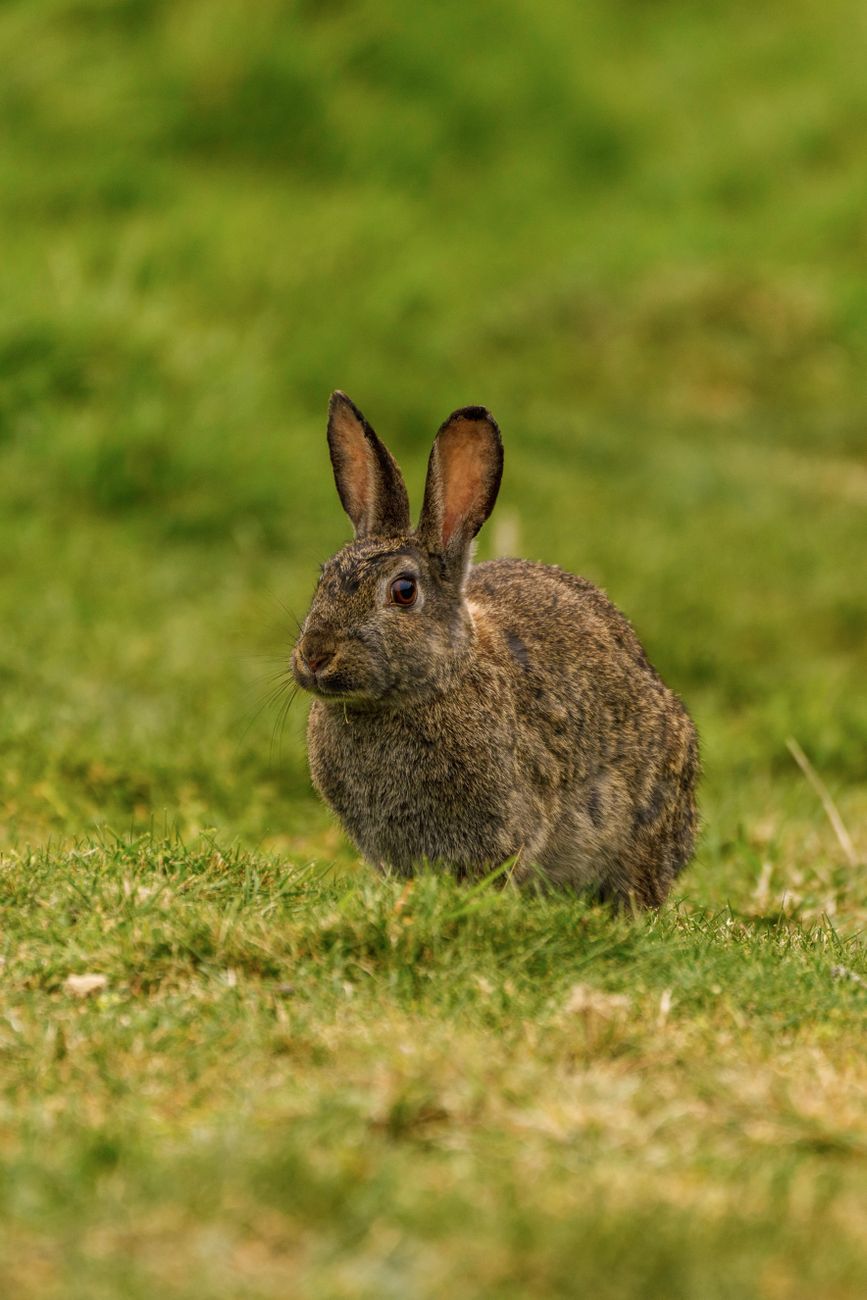
RABBIT
Oryctolagus cuniculus
DESCRIPTION
Rabbit is commonly known as Bunny and Cottontail. These small mammals are characterized by their long ears, short fluffy tails, and strong hind legs, which allow them to make quick escapes from predators. They are social animals that often live in groups, creating complex burrow systems in their natural habitats.
FUN FACTS
- Rabbits have a unique digestive system that allows them to eat their own feces to extract more nutrients from their food
- This process, known as coprophagy, is essential for their health and well-being
- | Rabbits can jump up to three times their body length in a single leap, thanks to their powerful hind legs
- This ability helps them evade predators and navigate their environment effectively
QUICK INFO
Lifespan5-10 years in the wild, up to 12 years in captivit
Average Weight1.5-2.5 kg
Average Length30-50 cm
Diet TypeHerbivore
Social StructureRabbits are social animals that often live in groups, providing safety in numbers. They establish hierarchies within their groups, with dominant individuals having priority access to food and mates.
Activity PatternCrepuscular
Breeding SeasonSpring to early summer
- Habitat
- Rabbits are found in a variety of habitats, including meadows, forests, grasslands, and wetlands. They prefer areas with plenty of cover to hide from predators and access to food sources.
- Biomes
- Grassland, Forest, Wetland
- Native Range
- Rabbits are native to Europe, North America, and parts of Asia and Africa.
- Continent
- Europe, North America, Asia, Africa
- Countries
- United States, Canada, United Kingdom, France, Australia
- Diet
- Rabbits are herbivores, primarily feeding on grass, leaves, and vegetables. They have a unique digestive system that allows them to extract nutrients from fibrous plant material efficiently.
- Diet Type
- Herbivore
- Favorite Food
- grass, clover, vegetables
- Social Structure
- Rabbits are social animals that often live in groups, providing safety in numbers. They establish hierarchies within their groups, with dominant individuals having priority access to food and mates.
- Activity Pattern
- Crepuscular
- Group Size
- 5-20
- Territorial
- 0
 CR
CR
 LC
LC
 LC
LC
1.5-2.5 kg
Weight
30-50 cm
Length
- Coloration
- fur can vary from brown, gray, to white, often with a mix of colors
- Sexual Dimorphism
- males are generally larger than females
- Lifespan
- 5-10 years in the wild, up to 12 years in captivit
- Gestation Period
- 30-33 days
- Offspring per Birth
- 3-12
- Sexual Maturity
- 3-6 months
- Breeding Season
- Spring to early summer
LC
Least Concern
IUCN Red List Status
- Population Status
- Rabbits are widespread and generally have stable populations, although some species are threatened.
- Wild Population Estimate
- Unknown
- Population Trend
- Stable
- Endangered
- 0
- Threats
- Main threats to rabbits include habitat loss, predation, and disease. In some areas, they are also hunted for sport or food.
- Predators
- Foxes, hawks, owls, snakes, domestic cats and dogs
- Defense Mechanisms
- Rabbits rely on their speed and agility to escape predators, often using zigzag patterns to evade capture.
- Compatible Animals
- Guinea pigs, other rabbits, certain birds
- Found in Zoos
- Common