


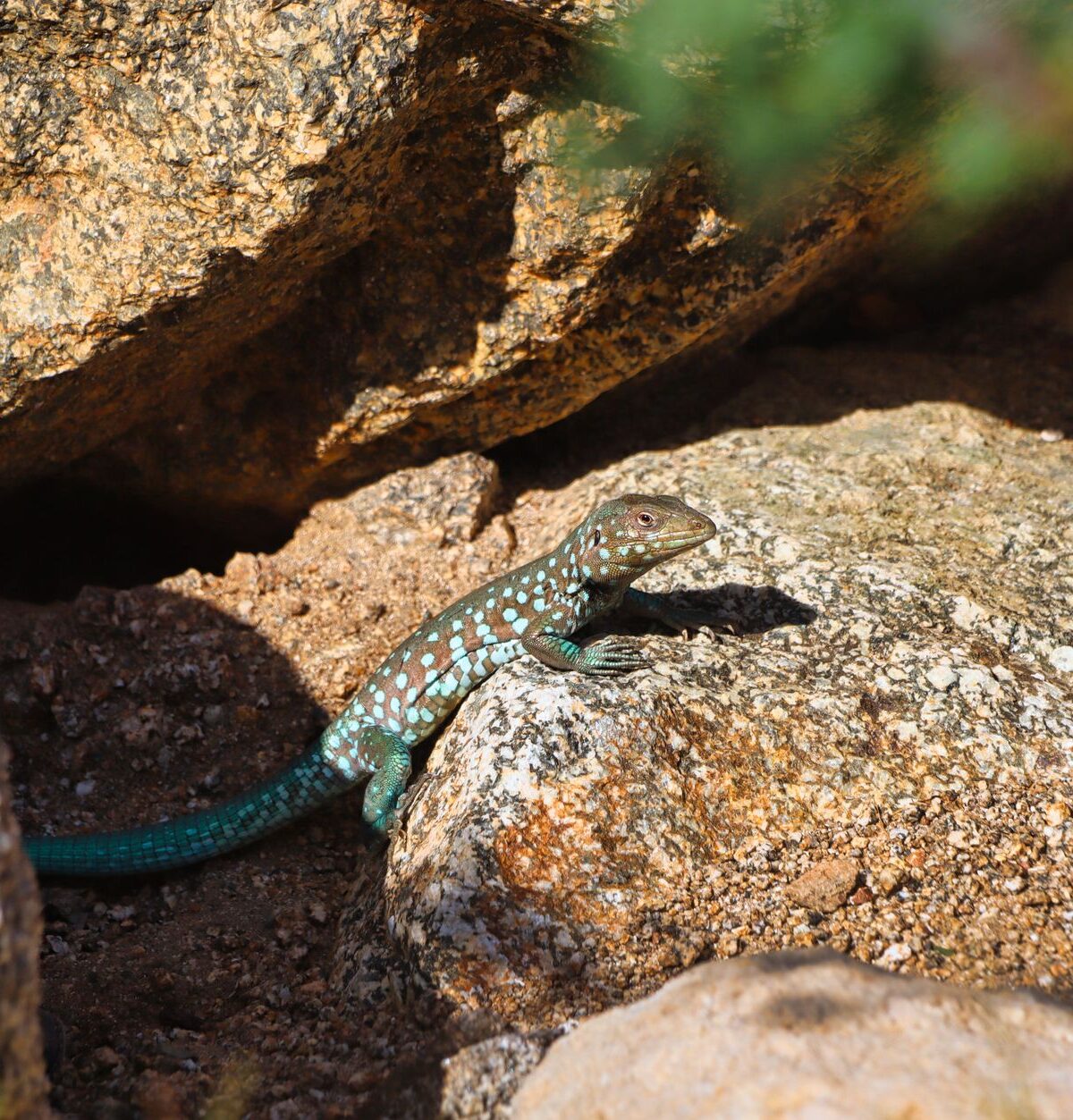
RAINBOW WHIPTAIL LIZARD
Aspidoscelis velox
DESCRIPTION
Rainbow Whiptail Lizard (Aspidoscelis velox) is a strikingly colorful lizard known for its vibrant blue and green hues, which can vary among individuals. This species is primarily found in arid and semi-arid regions, where it exhibits a fast and agile behavior, often darting across the ground in search of food. Its ecological role includes being both a predator of insects and a prey item for various larger animals, contributing to the balance of its habitat.
FUN FACTS
- Rainbow Whiptail Lizards are parthenogenetic, meaning that females can reproduce without mating, producing genetically identical offspring
- This unique reproductive strategy allows them to thrive in environments where males are scarce or absent.| These lizards are known for their impressive speed, capable of running quickly to evade predators, making them one of the fastest lizards in their habitat
QUICK INFO
Lifespan5-10 years in the wild
Average Length15-20 cm
Diet TypeInsectivore
Social Structuresolitary
Activity PatternDiurnal
Breeding SeasonSpring to early summer
- Habitat
- These lizards thrive in dry, sandy areas, often found in grasslands, scrublands, and open forests. They prefer habitats with plenty of sun exposure and places to hide from predators.
- Biomes
- Desert, Grassland
- Native Range
- The native range of the Rainbow Whiptail Lizard includes parts of the southwestern United States and northern Mexico.
- Continent
- North America
- Countries
- United States, Mexico
- Diet
- Rainbow Whiptail Lizards primarily feed on insects and other small invertebrates, showcasing their role as insectivores in their ecosystem.
- Diet Type
- Insectivore
- Favorite Food
- insects, particularly ants and beetles
- Social Structure
- solitary
- Activity Pattern
- Diurnal
- Group Size
- 1
- Territorial
- 0
 VU
VU
 LC
LC
15-20 cm
Length
- Coloration
- vibrant blue and green with a slender body
- Sexual Dimorphism
- males tend to be more colorful than females
- Lifespan
- 5-10 years in the wild
- Offspring per Birth
- 2-10
- Sexual Maturity
- 1-2 years
- Breeding Season
- Spring to early summer
LC
Least Concern
IUCN Red List Status
- Population Status
- The population of Rainbow Whiptail Lizards is currently stable, with no significant declines reported.
- Population Trend
- Stable
- Endangered
- 0
- Threats
- Main threats include habitat loss due to urban development and agricultural expansion. However, they are not currently facing significant threats that would impact their overall population.
- Predators
- birds of prey, snakes, and larger mammals
- Defense Mechanisms
- They rely on their speed and agility to escape predators, often using quick burrowing or hiding in vegetation.
- Found in Zoos
- Uncommon