


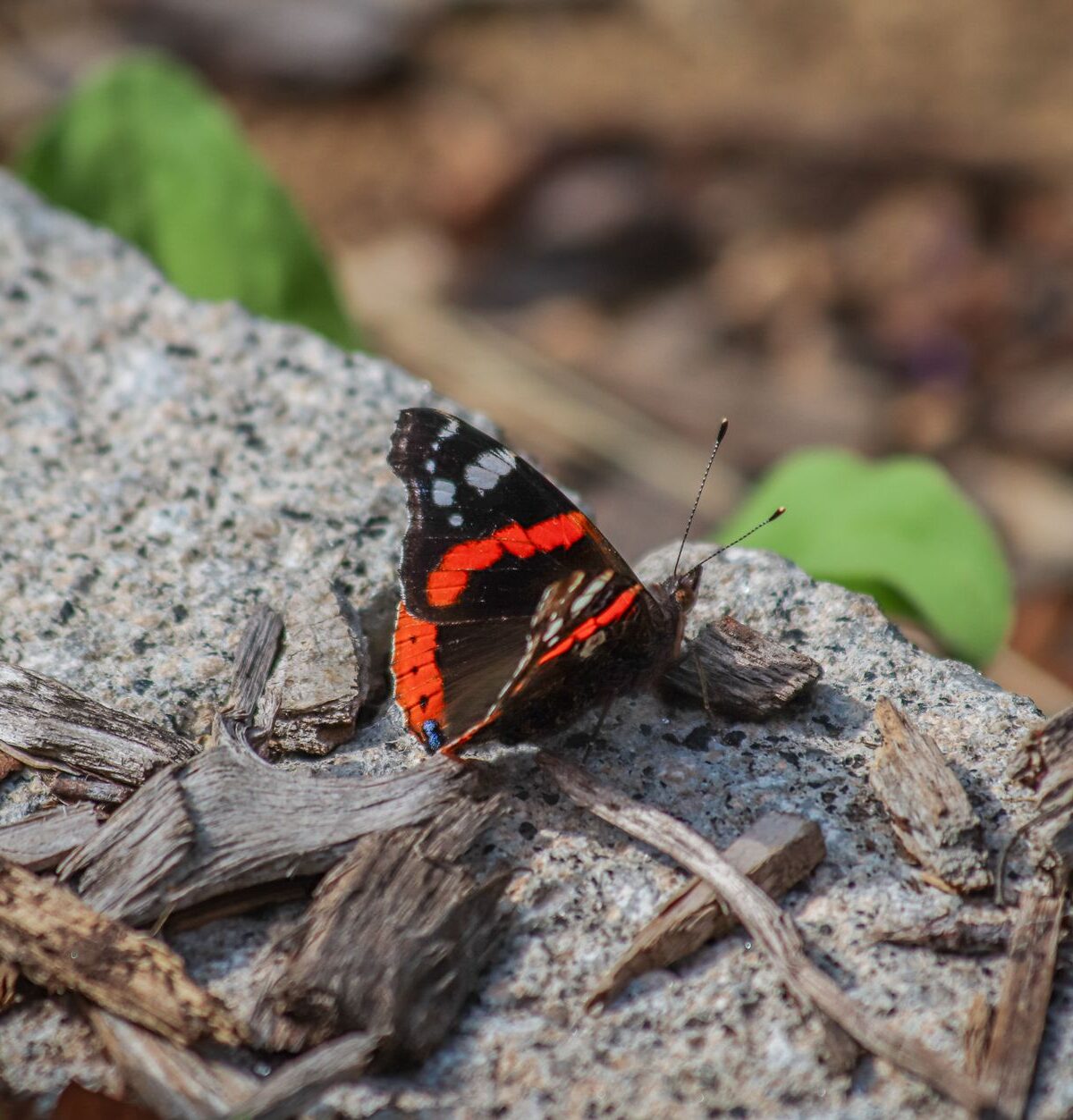
RED ADMIRAL BUTTERFLY
DESCRIPTION
Also called the Red Admiral, this butterfly is known for its striking black wings adorned with bright orange and white markings. The upper side of its wings features a distinctive pattern that makes it easily recognizable, while the underside is more muted, providing camouflage against predators. Red Admirals are known for their strong, agile flight and are often seen basking in the sun or feeding on nectar from flowers.
FUN FACTS
- Red Admirals are known for their long migratory journeys, sometimes traveling thousands of miles to find suitable habitats
- They can often be seen basking in the sun with their wings open, which helps them regulate their body temperature and attract mates.|The larvae of the Red Admiral feed on stinging nettles, which provide them with a level of protection due to the plant's unpleasant taste to potential predators
- This relationship highlights the importance of specific host plants in the life cycle of butterflies
QUICK INFO
Lifespan1-2 years in the wild
Average Weight0.5-1 g
Average Length5.5-6.5 cm
Diet TypeHerbivore
Social Structuresolitary, though they may be seen in small groups around food sources
Activity PatternDiurnal
Breeding SeasonSpring to early summer
- Habitat
- Red Admirals thrive in a variety of habitats, including gardens, woodlands, and meadows. They prefer areas with abundant flowering plants for feeding and suitable host plants for their larvae.
- Biomes
- Temperate Forest, Grassland
- Native Range
- The Red Admiral Butterfly is native to Europe, Asia, and North America, with some populations migrating to warmer regions during winter.
- Continent
- North America, Europe, Asia
- Countries
- United States, Canada, United Kingdom, Germany, France
- Diet
- Red Admirals primarily feed on nectar from a variety of flowering plants. They are also known to consume tree sap and rotting fruit.
- Diet Type
- Herbivore
- Favorite Food
- Nectar from flowers
- Social Structure
- solitary, though they may be seen in small groups around food sources
- Activity Pattern
- Diurnal
- Group Size
- 1-5
- Territorial
- 1
 VU
VU
 EN
EN
0.5-1 g
Weight
5.5-6.5 cm
Length
- Coloration
- Black wings with orange and white markings
- Sexual Dimorphism
- Males and females have similar coloration, but females are generally larger.
- Lifespan
- 1-2 years in the wild
- Offspring per Birth
- 20-100 eggs
- Sexual Maturity
- 4-6 weeks
- Breeding Season
- Spring to early summer
LC
Least Concern
IUCN Red List Status
- Population Status
- The population of Red Admirals is generally stable, though local fluctuations can occur due to environmental factors.
- Wild Population Estimate
- Unknown
- Population Trend
- Stable
- Endangered
- 0
- Threats
- Main threats include habitat loss due to urbanization and pesticide use. Climate change may also impact their migratory patterns and food availability.
- Predators
- Birds, spiders, and other insects are known predators of the Red Admiral Butterfly.
- Defense Mechanisms
- They use camouflage and mimicry to avoid predation, and their strong flight can help them escape threats.
- Found in Zoos
- Uncommon