


RED-BELLIED MACAW
Orthopsittaca manilatus
DESCRIPTION
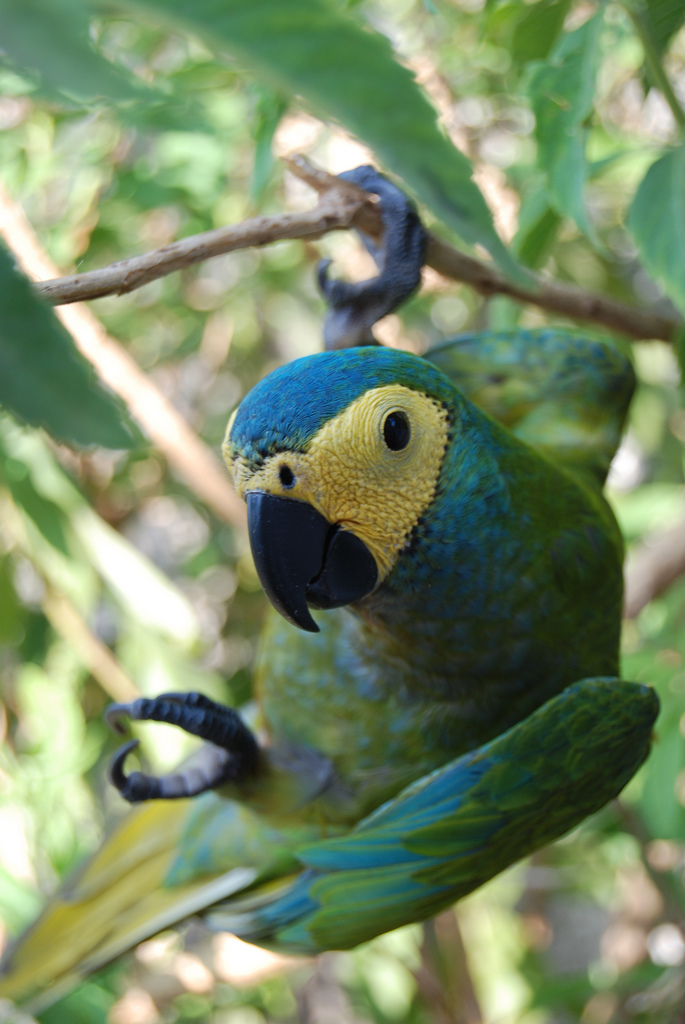
Red-bellied Macaw (Orthopsittaca manilatus) is a striking parrot known for its vibrant green plumage and distinctive red belly. This medium-sized macaw exhibits a long tail and a strong, curved beak, which it uses to crack open hard seeds and nuts. In the wild, these birds are often seen in pairs or small groups, engaging in playful behavior and vocalizations that contribute to their social nature.
FUN FACTS
- Red-bellied Macaws are known for their playful nature and intelligence, often engaging in acrobatic displays while foraging
- They have a unique ability to mimic sounds, which can include human speech and environmental noises, making them fascinating companions in captivity.|These macaws are also known for their strong pair bonds, often mating for life
- During courtship, they perform elaborate displays and vocalizations to strengthen their bond and attract a mate
QUICK INFO
Lifespan20-30 years in the wild, up to 50 in captivity
Average Weight200-300 g
Average Length40-45 cm
Diet TypeHerbivore
Social Structurepair or small group, often seen in pairs or small family groups
Activity PatternDiurnal
Breeding SeasonSpring (September-November)
- Habitat
- This species inhabits tropical and subtropical forests, particularly in areas with abundant fruiting trees. They prefer regions near water sources, which provide both food and nesting sites.
- Biomes
- Tropical Rainforest, Subtropical Forest
- Native Range
- The Red-bellied Macaw is native to parts of South America, specifically found in regions of Brazil, Bolivia, and Paraguay.
- Continent
- South America
- Countries
- Brazil, Bolivia, Paraguay
- Diet
- The Red-bellied Macaw primarily feeds on seeds, fruits, and nuts, favoring those that are abundant in its habitat. They are known to forage in the canopy of trees, using their strong beaks to access food sources.
- Diet Type
- Herbivore
- Favorite Food
- seeds, fruits, nuts
- Social Structure
- pair or small group, often seen in pairs or small family groups
- Activity Pattern
- Diurnal
- Group Size
- 2-10
- Territorial
- 0
 VU
VU
 LC
LC
 EN
EN
200-300 g
Weight
40-45 cm
Length
- Coloration
- primarily green with a red belly and blue wings
- Lifespan
- 20-30 years in the wild, up to 50 in captivity
- Offspring per Birth
- 1-3
- Sexual Maturity
- 2-3 years
- Breeding Season
- Spring (September-November)
LC
Least Concern
IUCN Red List Status
- Population Status
- The population of Red-bellied Macaws is currently stable, but they face habitat loss due to deforestation.
- Wild Population Estimate
- unknown
- Population Trend
- Stable
- Endangered
- 0
- Threats
- Main threats include habitat destruction due to logging and agricultural expansion. Additionally, they are sometimes captured for the pet trade, which can impact local populations.
- Predators
- large birds of prey, snakes, and mammals such as monkeys may pose threats to eggs and young macaws.
- Defense Mechanisms
- They use their strong beaks and vocalizations to deter potential threats.
- Compatible Animals
- other macaws, parrots, and compatible bird species
- Found in Zoos
- Uncommon