


RED-BILLED CURRASOW
Crax blumenbachii
DESCRIPTION
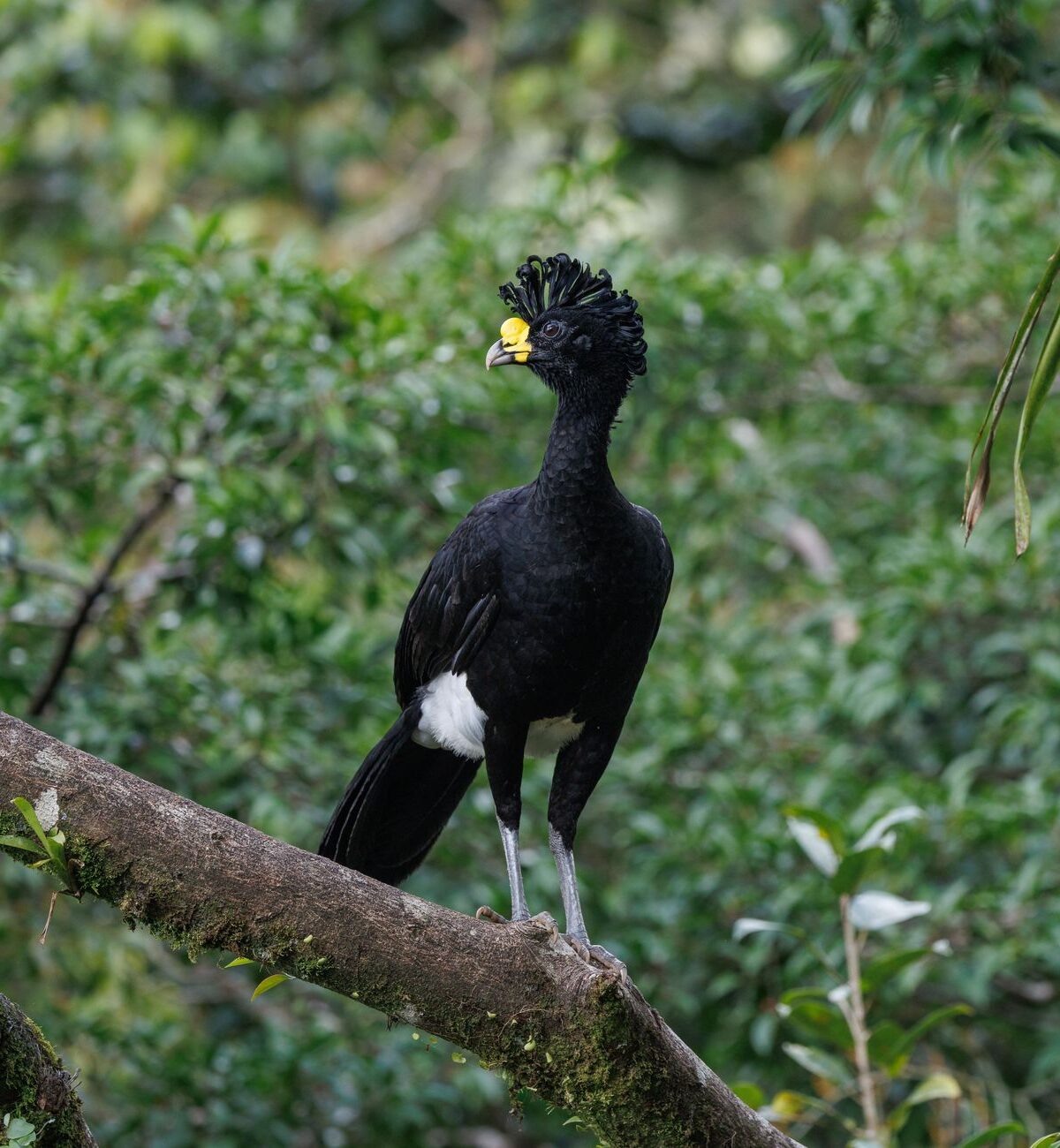
Red-billed Currasow (Crax blumenbachii) is a large, striking bird known for its distinctive red bill and dark plumage. This species exhibits a unique courtship display, where males perform elaborate dances to attract females. They are primarily found in the understory of tropical rainforests, where they play a crucial role in seed dispersal and maintaining the health of their ecosystem.
FUN FACTS
- Red-billed Currasows are known for their unique vocalizations, which include a series of low, booming calls that can be heard over long distances
- These calls are an important part of their social interactions and mating rituals.|In some cultures, the Red-billed Currasow is considered a symbol of the rainforest and is featured in local folklore, highlighting its significance in the ecosystem and cultural heritage
QUICK INFO
Lifespan15-20 years in the wild, up to 30 in captivity
Average Weight2.5-3.5 kg
Average Length70-80 cm
Diet TypeOmnivore
Social StructureThey are typically found in pairs or small family groups, often consisting of a mated pair and their offspring.
Activity PatternDiurnal
Breeding SeasonSpring (March-May)
- Habitat
- This species inhabits lowland tropical rainforests, often near water sources. They prefer dense vegetation that provides cover and foraging opportunities.
- Biomes
- Tropical Rainforest
- Native Range
- The Red-billed Currasow is native to the Amazon Basin, specifically found in parts of Brazil, Colombia, and Peru.
- Continent
- South America
- Countries
- Brazil, Colombia, Peru
- Diet
- Red-billed Currasows primarily feed on fruits, seeds, and small invertebrates. They are known to forage on the forest floor, using their strong beaks to dig through leaf litter.
- Diet Type
- Omnivore
- Favorite Food
- fruits, seeds, small invertebrates
- Social Structure
- They are typically found in pairs or small family groups, often consisting of a mated pair and their offspring.
- Activity Pattern
- Diurnal
- Group Size
- 2-6
- Territorial
- 1
 VU
VU
 LC
LC
2.5-3.5 kg
Weight
70-80 cm
Length
- Coloration
- The plumage is predominantly black with a glossy sheen, and the bill is bright red, which contrasts with the dark feathers.
- Sexual Dimorphism
- Males are generally larger and have more vibrant coloration compared to females.
- Lifespan
- 15-20 years in the wild, up to 30 in captivity
- Offspring per Birth
- 2-4
- Sexual Maturity
- 2-3 years
- Breeding Season
- Spring (March-May)
EN
Endangered
IUCN Red List Status
- Population Status
- The population of Red-billed Currasow is currently declining due to habitat loss and hunting.
- Wild Population Estimate
- 10,000-20,000
- Population Trend
- Decreasing
- Endangered
- 1
- Threats
- Main threats include deforestation for agriculture and logging, as well as hunting for bushmeat. These activities have significantly reduced their habitat and population numbers.
- Conservation Program
- Various conservation programs are in place to protect their habitat and raise awareness about their plight.
- Predators
- Large birds of prey, snakes, and mammals such as jaguars may prey on Red-billed Currasows.
- Defense Mechanisms
- They rely on their cryptic coloration and the dense forest cover to avoid detection by predators.
- Found in Zoos
- Uncommon