


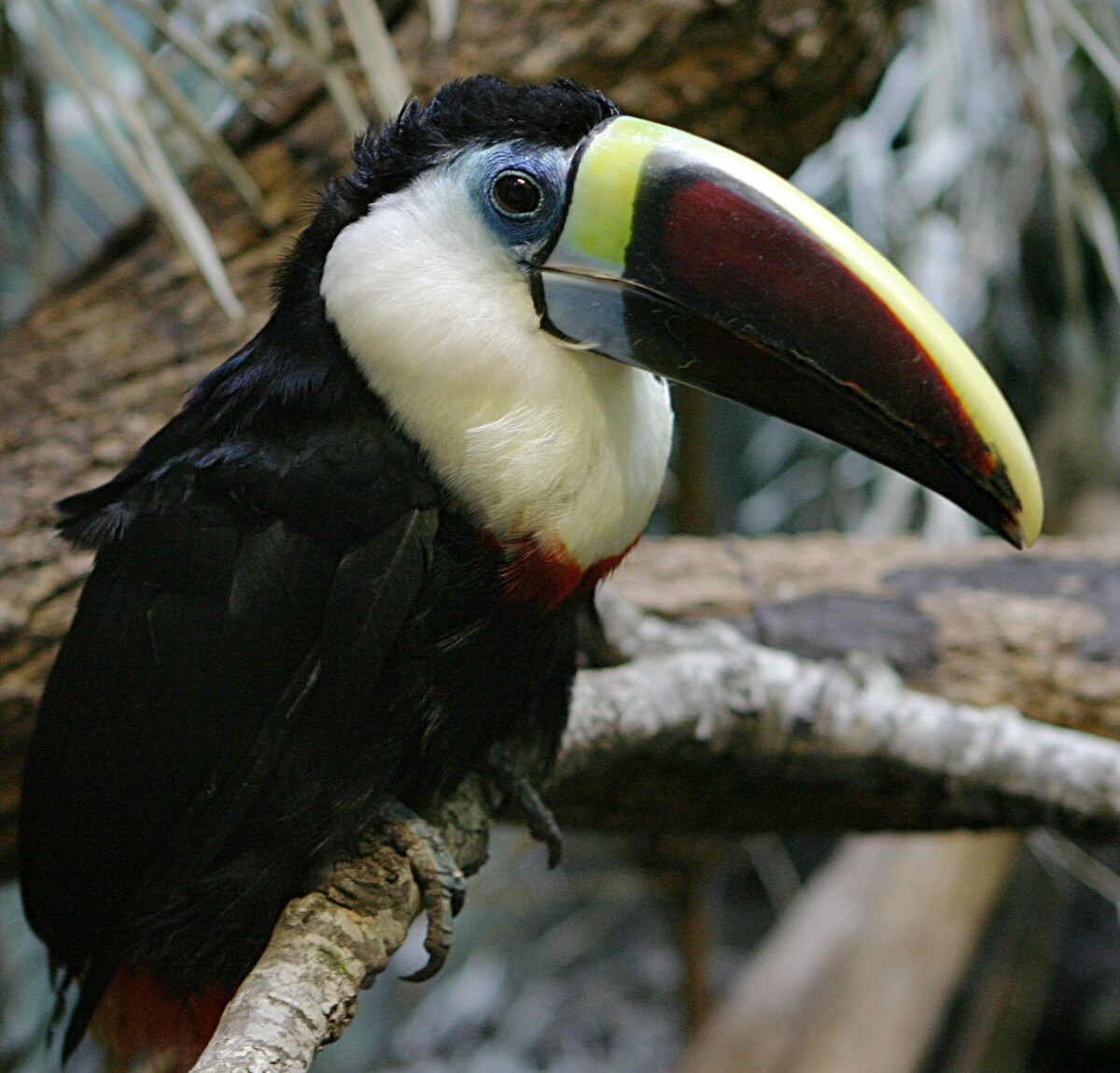
RED-BILLED TOUCAN
Ramphastos tucanus
DESCRIPTION
The Red-billed Toucan is a striking bird known for its large, colorful bill, which can be up to one-third of its body length. Its plumage is primarily black with bright yellow and orange accents, particularly around the throat and chest. These birds are social and often found in small groups, displaying playful behavior as they interact with one another and their environment.
FUN FACTS
- The Red-billed Toucan's bill, while large and colorful, is surprisingly lightweight due to its hollow structure, allowing the bird to maneuver easily through the trees
- Additionally, these toucans play a crucial role in their ecosystem as seed dispersers, helping to maintain the health of their forest habitats by spreading the seeds of the fruits they consume
QUICK INFO
Lifespan20-25 years in the wild, up to 30 years in captivi
Average Weight500-600 g
Average Length55-65 cm
Diet TypeOmnivore
Social StructureThey are often found in pairs or small groups, displaying a social structure that encourages interaction and cooperation.
Activity PatternDiurnal
Breeding SeasonSpring (March-May)
- Habitat
- Red-billed Toucans inhabit tropical and subtropical forests, often favoring areas with abundant fruiting trees. They are typically found in the canopy layer, where they can easily access their food sources.
- Biomes
- Tropical Rainforest, Subtropical Forest
- Native Range
- The native range of the Red-billed Toucan includes parts of Central and South America, particularly from southern Mexico to northern Argentina.
- Continent
- North America, South America
- Countries
- Mexico, Belize, Guatemala, Honduras, Nicaragua, Costa Rica, Panama, Colombia, Venezuela, Ecuador, Peru, Brazil, Bolivia, Argentina
- Diet
- Red-billed Toucans primarily feed on fruits, but they also consume insects and small vertebrates. Their strong bills allow them to reach and manipulate food in the canopy of trees.
- Diet Type
- Omnivore
- Favorite Food
- Fruits, particularly figs
- Social Structure
- They are often found in pairs or small groups, displaying a social structure that encourages interaction and cooperation.
- Activity Pattern
- Diurnal
- Group Size
- 2-6
- Territorial
- 0
 LC
LC
 VU
VU
500-600 g
Weight
55-65 cm
Length
- Coloration
- Primarily black with bright yellow and orange on the throat and chest, and a distinctive red bill.
- Lifespan
- 20-25 years in the wild, up to 30 years in captivi
- Offspring per Birth
- 2-4
- Sexual Maturity
- 3-4 years
- Breeding Season
- Spring (March-May)
LC
Least Concern
IUCN Red List Status
- Population Status
- The population of Red-billed Toucans is currently stable, but they face habitat loss due to deforestation.
- Wild Population Estimate
- 50,000-100,000
- Population Trend
- Stable
- Endangered
- 0
- Threats
- Main threats include habitat destruction due to logging and agricultural expansion. Additionally, they are sometimes captured for the pet trade.
- Predators
- Snakes, large birds of prey, and mammals such as jaguars may prey on Red-billed Toucans, particularly when they are nesting.
- Defense Mechanisms
- They often rely on their ability to blend into the foliage and their social behavior to warn each other of potential threats.
- Compatible Animals
- Other toucan species, small primates, various birds
- Found in Zoos
- Common