


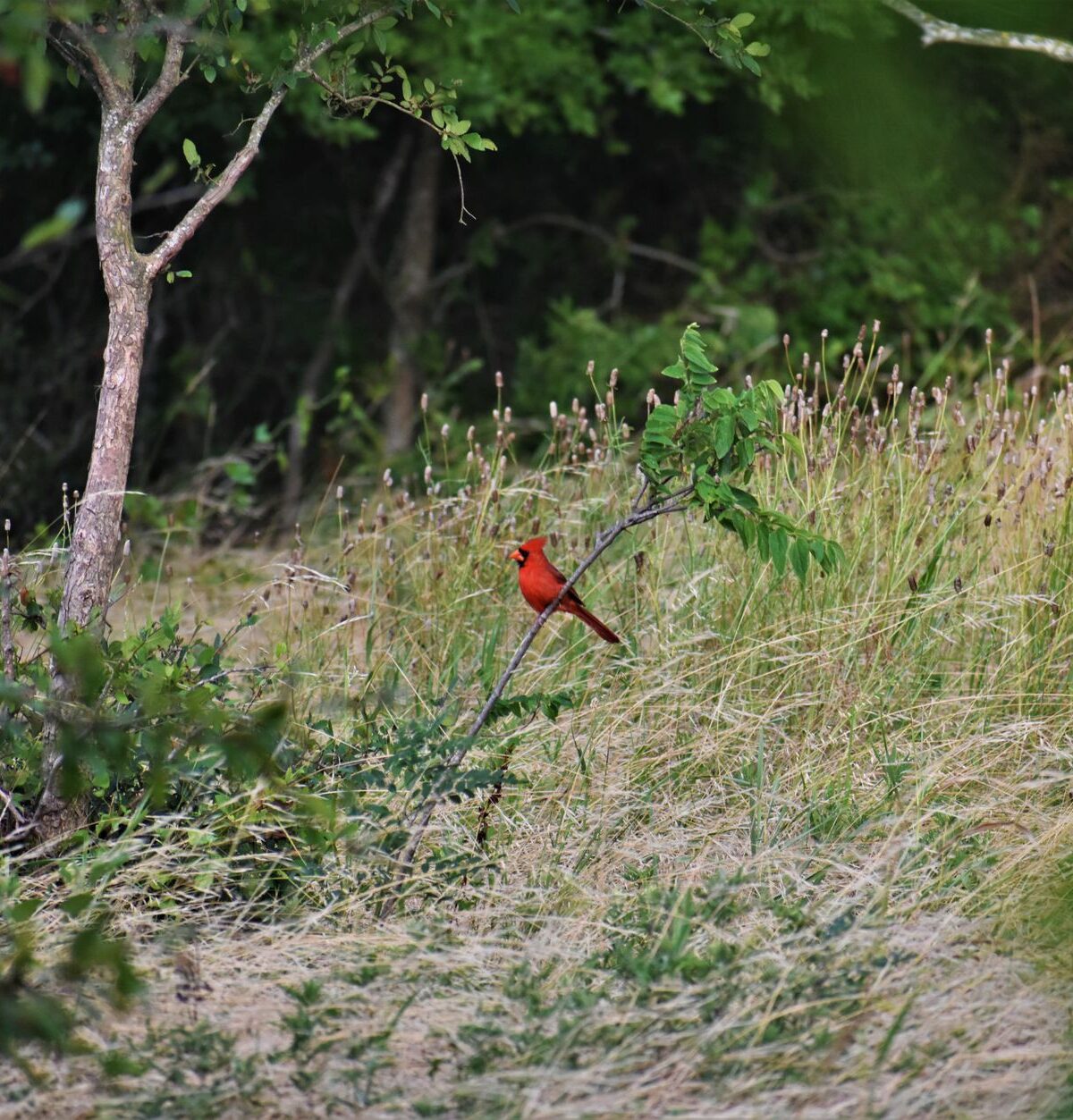
RED CARDINAL
DESCRIPTION
Also called the Northern Cardinal, the Red Cardinal is a striking bird known for its vibrant red plumage in males and a more subdued brownish color in females. These birds are easily recognizable by their distinctive crest and black mask around the face. Red Cardinals are often found in gardens, woodlands, and shrublands, where they are known for their melodious songs and territorial behavior.
FUN FACTS
- Red Cardinals are the state bird of seven U.S
- states, making them a symbol of beauty and resilience in American culture
- They are also known for their unique songs, which can vary significantly between individuals, allowing them to communicate effectively with one another.|In addition to their striking appearance, Red Cardinals are often associated with various cultural meanings, including being seen as a symbol of hope and renewal
- Many people believe that seeing a cardinal is a sign from a loved one who has passed away, adding to their mystique and popularity
QUICK INFO
Lifespan3-5 years in the wild, up to 15 years in captivity
Average Weight42-48 g
Average Length21-23 cm
Diet TypeOmnivore
Social Structurepair, typically monogamous during the breeding season
Activity PatternDiurnal
Breeding SeasonSpring (March-July)
- Habitat
- Red Cardinals thrive in a variety of habitats, including woodlands, gardens, and shrubby areas. They prefer environments with dense vegetation for nesting and foraging.
- Biomes
- Temperate Forest, Urban
- Native Range
- The native range of the Red Cardinal extends across eastern and central North America.
- Continent
- North America
- Countries
- United States, Canada, Mexico
- Diet
- Red Cardinals primarily eat seeds, fruits, and insects. They are particularly fond of sunflower seeds and berries.
- Diet Type
- Omnivore
- Favorite Food
- seeds, fruits
- Social Structure
- pair, typically monogamous during the breeding season
- Activity Pattern
- Diurnal
- Group Size
- 1-2
- Territorial
- 1
 CR
CR
 LC
LC
 LC
LC
42-48 g
Weight
21-23 cm
Length
- Coloration
- males are bright red, females are brown with reddish tinges
- Sexual Dimorphism
- males are more brightly colored than females
- Lifespan
- 3-5 years in the wild, up to 15 years in captivity
- Offspring per Birth
- 2-5
- Sexual Maturity
- 6 months
- Breeding Season
- Spring (March-July)
LC
Least Concern
IUCN Red List Status
- Population Status
- The population of Red Cardinals is currently stable and widespread.
- Wild Population Estimate
- 100 million
- Population Trend
- Stable
- Endangered
- 0
- Threats
- Main threats include habitat loss and predation by domestic cats. However, they are generally adaptable and thrive in urban environments.
- Predators
- hawks, cats, snakes, raccoons
- Defense Mechanisms
- Red Cardinals use their loud calls to warn of danger and may dive at predators to defend their territory.
- Compatible Animals
- none
- Found in Zoos
- Common