


RED-FACED SPIDER MONKEY
Ateles paniscus
DESCRIPTION
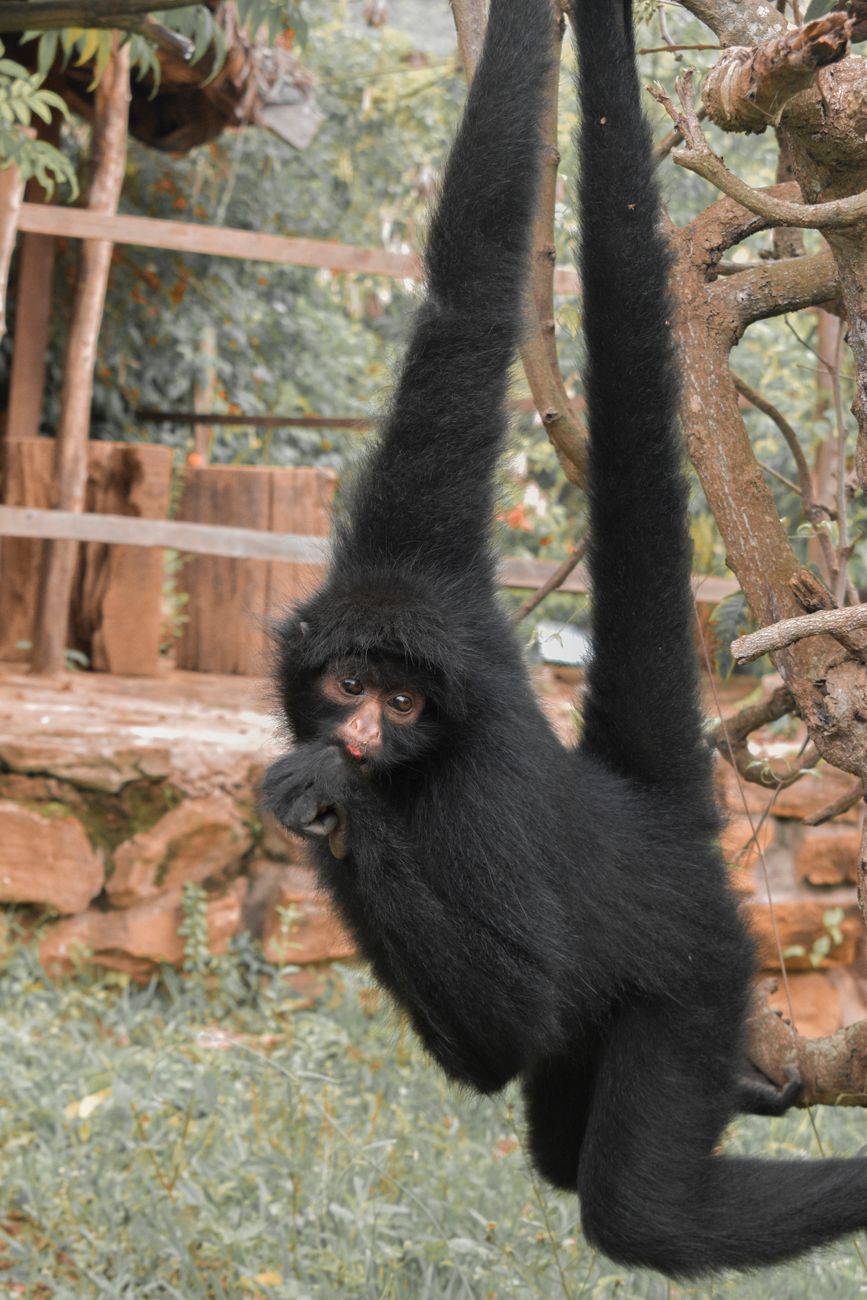
Red-faced Spider Monkey (Ateles paniscus) is a large primate known for its distinctive reddish face and long limbs. This species exhibits a prehensile tail, which aids in its arboreal lifestyle, allowing it to navigate the treetops of its rainforest habitat with agility. Socially, they are known for their complex group dynamics, often forming large troops that communicate through a variety of vocalizations and gestures.
FUN FACTS
- Red-faced Spider Monkeys are known for their acrobatic skills, often swinging from branch to branch with remarkable speed and agility
- Their prehensile tails are so strong that they can use them to hang from branches while using their hands to forage for food
- | These monkeys have a unique social structure where they engage in grooming behaviors that help strengthen social bonds within the group
- They are also known to exhibit playful behaviors, which are essential for the development of young monkeys and the maintenance of group cohesion
QUICK INFO
Lifespan20-25 years in the wild, up to 30 in captivity
Average Weight15-19 kg
Average Length50-70 cm
Diet TypeHerbivore
Social StructureThey live in large groups, typically consisting of 15-30 individuals, which fosters social bonds and cooperative behaviors.
Activity PatternDiurnal
Breeding SeasonYear-round, with peaks depending on local conditions
- Habitat
- Red-faced Spider Monkeys inhabit tropical rainforests, often found in the canopy layer where they can easily access their food sources. They prefer areas with abundant fruiting trees and dense foliage for shelter.
- Biomes
- Tropical Rainforest
- Native Range
- They are native to the tropical forests of South America, particularly in the Amazon Basin.
- Continent
- South America
- Countries
- Brazil, Colombia, Venezuela, Guyana, Suriname
- Diet
- They primarily consume fruits, leaves, and flowers, showcasing a preference for ripe fruits when available. This frugivorous diet plays a crucial role in seed dispersal within their ecosystem.
- Diet Type
- Herbivore
- Favorite Food
- Fruits, leaves
- Social Structure
- They live in large groups, typically consisting of 15-30 individuals, which fosters social bonds and cooperative behaviors.
- Activity Pattern
- Diurnal
- Group Size
- 15-30
- Territorial
- 1
 VU
VU
 NT
NT
15-19 kg
Weight
50-70 cm
Length
- Coloration
- They have a dark brown to black body with a distinctive red or orange face and lighter underparts.
- Sexual Dimorphism
- Males are generally larger than females.
- Lifespan
- 20-25 years in the wild, up to 30 in captivity
- Gestation Period
- 230 days
- Offspring per Birth
- 1
- Sexual Maturity
- 4-5 years
- Breeding Season
- Year-round, with peaks depending on local conditions
EN
Endangered
IUCN Red List Status
- Population Status
- The population is currently declining due to habitat loss and hunting.
- Wild Population Estimate
- Less than 10,000
- Population Trend
- Decreasing
- Endangered
- 1
- Threats
- Main threats include deforestation for agriculture and logging, as well as hunting for bushmeat. These pressures have significantly reduced their habitat and population numbers.
- Predators
- Large birds of prey, jaguars, and humans are known to pose threats to Red-faced Spider Monkeys.
- Defense Mechanisms
- They rely on their agility and ability to escape into the treetops to avoid predators.
- Found in Zoos
- Uncommon