


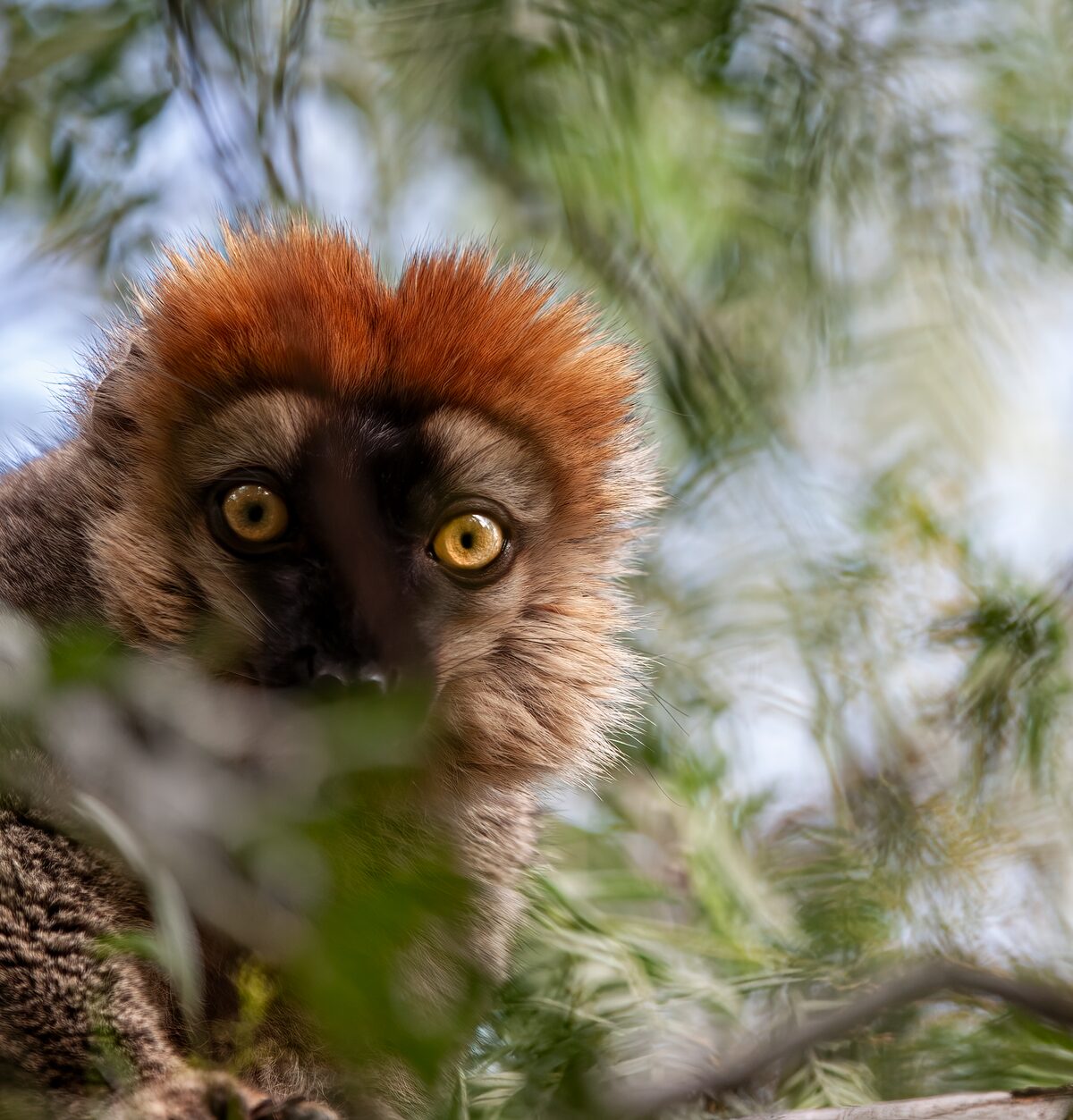
RED-FRONTED LEMUR
Eulemur rufifrons
DESCRIPTION
Red-Fronted Lemur (Eulemur rufifrons) is commonly known as the Rufous-fronted Lemur. This species is characterized by its striking reddish-brown fur on the face and forehead, contrasting with its darker body. They are social animals, often found in groups, and are known for their vocalizations and playful behavior, which play a crucial role in their social interactions.
FUN FACTS
- Red-Fronted Lemurs are known for their unique social structures, where females often dominate males in group hierarchies
- They also have a fascinating way of communicating, using a variety of vocalizations to express different emotions and alerts, which helps maintain group cohesion and coordination.| These lemurs are also notable for their adaptability to different forest types, allowing them to thrive in both primary and secondary forests
- Their diet varies seasonally, reflecting the availability of fruits and leaves, showcasing their role in seed dispersal within their ecosystem
QUICK INFO
Lifespan15-20 years in the wild, up to 25 in captivity
Average Weight2.5-3.5 kg
Average Length40-50 cm
Diet TypeHerbivore
Social Structuregroup — they live in social groups that can range from 3 to 15 individuals.
Activity PatternDiurnal
Breeding SeasonSpring (September-November)
- Habitat
- Red-Fronted Lemurs inhabit tropical and subtropical forests, particularly in areas with dense vegetation. They are arboreal, spending most of their time in trees.
- Biomes
- Tropical Rainforest
- Native Range
- This species is native to Madagascar, specifically found in the eastern rainforests.
- Continent
- Africa
- Countries
- Madagascar
- Diet
- They primarily consume fruits, leaves, and flowers, showcasing a preference for ripe fruits when available.
- Diet Type
- Herbivore
- Favorite Food
- fruits, leaves
- Social Structure
- group — they live in social groups that can range from 3 to 15 individuals.
- Activity Pattern
- Diurnal
- Group Size
- 3-15
- Territorial
- 1
 LC
LC
2.5-3.5 kg
Weight
40-50 cm
Length
- Coloration
- reddish-brown fur with a darker body and a distinctive face pattern
- Sexual Dimorphism
- males are generally larger than females
- Lifespan
- 15-20 years in the wild, up to 25 in captivity
- Gestation Period
- 120 days
- Offspring per Birth
- 1-2
- Sexual Maturity
- 2-3 years
- Breeding Season
- Spring (September-November)
VU
Vulnerable
IUCN Red List Status
- Population Status
- The population is currently considered vulnerable due to habitat loss and hunting.
- Wild Population Estimate
- 10,000-20,000
- Population Trend
- Decreasing
- Endangered
- 1
- Threats
- Main threats include deforestation due to agriculture and logging, as well as hunting for bushmeat. These factors have significantly impacted their habitat and population numbers.
- Conservation Program
- Conservation efforts include habitat protection and community education programs.
- Predators
- Main predators include Madagascar's native raptors and snakes, as well as domestic dogs.
- Defense Mechanisms
- They use vocalizations to warn others of danger and can also flee into the trees to escape predators.
- Found in Zoos
- Uncommon