


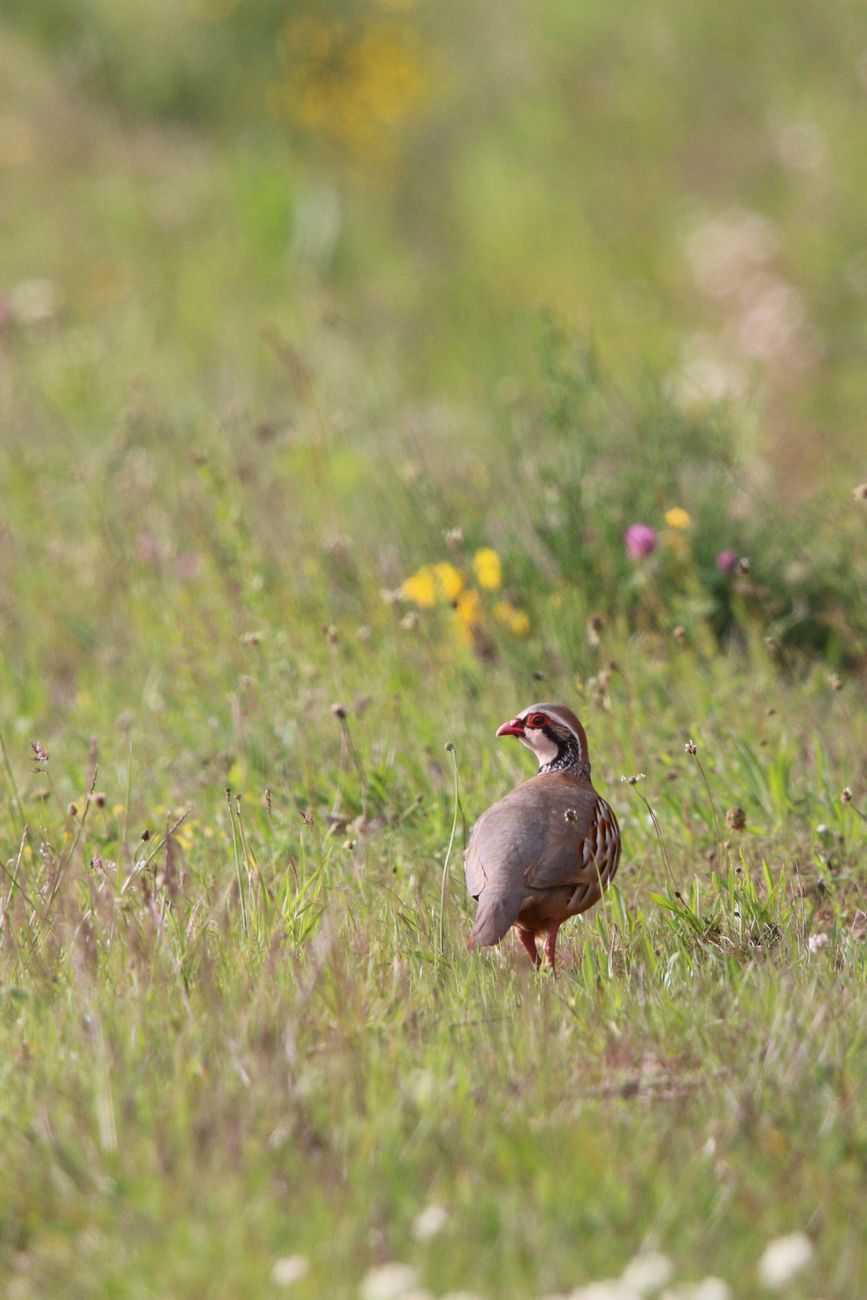
RED-LEGGED PARTRIDGE
Alectoris rufa
DESCRIPTION
Red-legged Partridge (Alectoris rufa) is commonly known as the European Partridge. This medium-sized bird is characterized by its distinctive reddish-brown legs and a grayish-brown body with a white throat and a black line running from the beak to the eye. They are ground-dwelling birds that prefer to run rather than fly when threatened, often relying on their camouflage to avoid predators.
FUN FACTS
- Red-legged Partridges are known for their distinctive call, which sounds like a series of sharp 'chack' notes, often heard during the breeding season
- They are also popular game birds in Europe, often hunted for sport, and are known for their strong flight capabilities despite their preference for running.| These birds have a unique social structure, often forming coveys that can help protect them from predators
- During the breeding season, males perform elaborate displays to attract females, showcasing their vibrant plumage and vocal abilities
QUICK INFO
Lifespan3-5 years in the wild, up to 10 years in captivity
Average Weight0.5-0.7 kg
Average Length30-32 cm
Diet TypeOmnivore
Social Structuregroup — they often form small flocks or coveys, especially outside of the breeding season.
Activity PatternDiurnal
Breeding SeasonSpring (March-May)
- Habitat
- These birds inhabit open grasslands, farmland, and scrubby areas, often favoring regions with low vegetation for cover. They are commonly found in hilly or undulating terrains.
- Biomes
- Temperate Forest, Grassland, Agricultural
- Native Range
- The native range of the Red-legged Partridge includes parts of southern Europe, particularly in countries like France, Spain, and Italy.
- Continent
- Europe
- Countries
- France, Spain, Italy, Portugal, Greece
- Diet
- Red-legged Partridges primarily feed on seeds, grains, and green vegetation, but they also consume insects and small invertebrates, especially during the breeding season.
- Diet Type
- Omnivore
- Favorite Food
- seeds, grains, green vegetation
- Social Structure
- group — they often form small flocks or coveys, especially outside of the breeding season.
- Activity Pattern
- Diurnal
- Group Size
- 5-20
- Territorial
- 0

 LC
LC
0.5-0.7 kg
Weight
30-32 cm
Length
- Coloration
- The plumage is generally grayish-brown with a distinctive reddish-brown patch on the face and neck, and the legs are bright red.
- Sexual Dimorphism
- Males are typically larger and have more vibrant coloration than females.
- Lifespan
- 3-5 years in the wild, up to 10 years in captivity
- Offspring per Birth
- 8-15 eggs
- Sexual Maturity
- 1 year
- Breeding Season
- Spring (March-May)
LC
Least Concern
IUCN Red List Status
- Population Status
- The population of Red-legged Partridges is generally stable, although local declines have been noted in some areas due to habitat loss.
- Wild Population Estimate
- 1,000,000-2,000,000
- Population Trend
- Stable
- Endangered
- 0
- Threats
- Main threats include habitat destruction due to agricultural intensification and predation by introduced species. Additionally, hunting can impact local populations.
- Predators
- Foxes, birds of prey (such as hawks and eagles), and domestic cats.
- Defense Mechanisms
- They rely on their camouflage to blend into their surroundings and prefer to run rather than fly when threatened.
- Found in Zoos
- Uncommon