


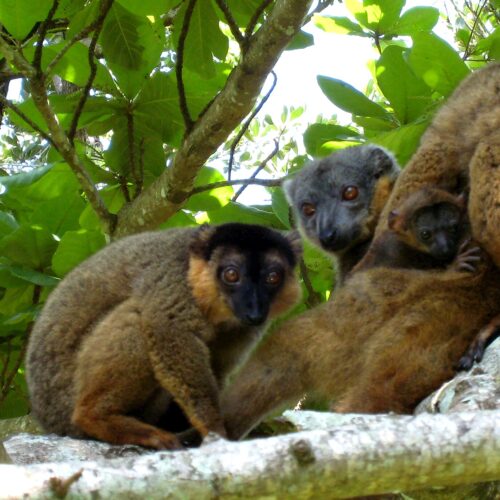
RED LEMUR
Eulemur rubriventer
DESCRIPTION
The Red Lemur, or Eulemur rubriventer, is a medium-sized primate characterized by its striking reddish-brown fur and distinctive black face. They exhibit a high level of social interaction, often seen grooming each other and engaging in vocalizations to communicate. Ecologically, they play a crucial role in their habitat by aiding in seed dispersal, which helps maintain the health of their forest environment.
FUN FACTS
- Red Lemurs are known for their unique vocalizations, which can include a variety of calls used for communication within their groups
- These calls can be heard over long distances, helping to maintain group cohesion
- | They are one of the few lemur species that exhibit sexual dimorphism, with males being larger and having more pronounced coloration differences compared to females
- This trait is thought to play a role in mating displays and social interactions
QUICK INFO
Lifespan15-20 years in the wild, up to 25 in captivity
Average Weight2.5-3.5 kg
Average Length40-50 cm
Diet TypeHerbivore
Social StructureThey typically live in groups, which can vary in size but often consist of a matriarchal structure.
Activity PatternDiurnal
Breeding SeasonSpring (September-November)
- Habitat
- Red Lemurs inhabit tropical and subtropical forests, particularly in areas with dense vegetation. They are arboreal, spending most of their time in trees, which provide both food and shelter.
- Biomes
- Tropical Rainforest
- Native Range
- Endemic to Madagascar, specifically found in the eastern rainforests of the island.
- Continent
- Africa
- Countries
- Madagascar
- Diet
- Red Lemurs primarily consume fruits, leaves, and flowers, with a preference for ripe fruits when available. They are known to forage in the canopy of trees, using their keen sense of smell to locate food.
- Diet Type
- Herbivore
- Favorite Food
- fruits, leaves, flowers
- Social Structure
- They typically live in groups, which can vary in size but often consist of a matriarchal structure.
- Activity Pattern
- Diurnal
- Group Size
- 5-15
- Territorial
- 1
2.5-3.5 kg
Weight
40-50 cm
Length
- Coloration
- Reddish-brown fur with a black face and white markings.
- Sexual Dimorphism
- Males are generally larger than females.
- Lifespan
- 15-20 years in the wild, up to 25 in captivity
- Gestation Period
- 120 days
- Offspring per Birth
- 1-2
- Sexual Maturity
- 2-3 years
- Breeding Season
- Spring (September-November)
EN
Endangered
IUCN Red List Status
- Population Status
- The population is currently declining due to habitat loss and hunting.
- Wild Population Estimate
- 10,000-20,000
- Population Trend
- Decreasing
- Endangered
- 1
- Threats
- The main threats to Red Lemurs include deforestation due to agriculture and logging, as well as hunting for bushmeat. These pressures have led to significant habitat loss and fragmentation.
- Conservation Program
- Several conservation programs are in place, including habitat restoration and protection efforts in Madagascar.
- Predators
- Main predators include Madagascar's native raptors, such as the Madagascar Harrier Hawk, and introduced species like domestic dogs.
- Defense Mechanisms
- They use vocalizations to warn others of danger and can also flee quickly into the trees to escape predators.
- Found in Zoos
- Uncommon