


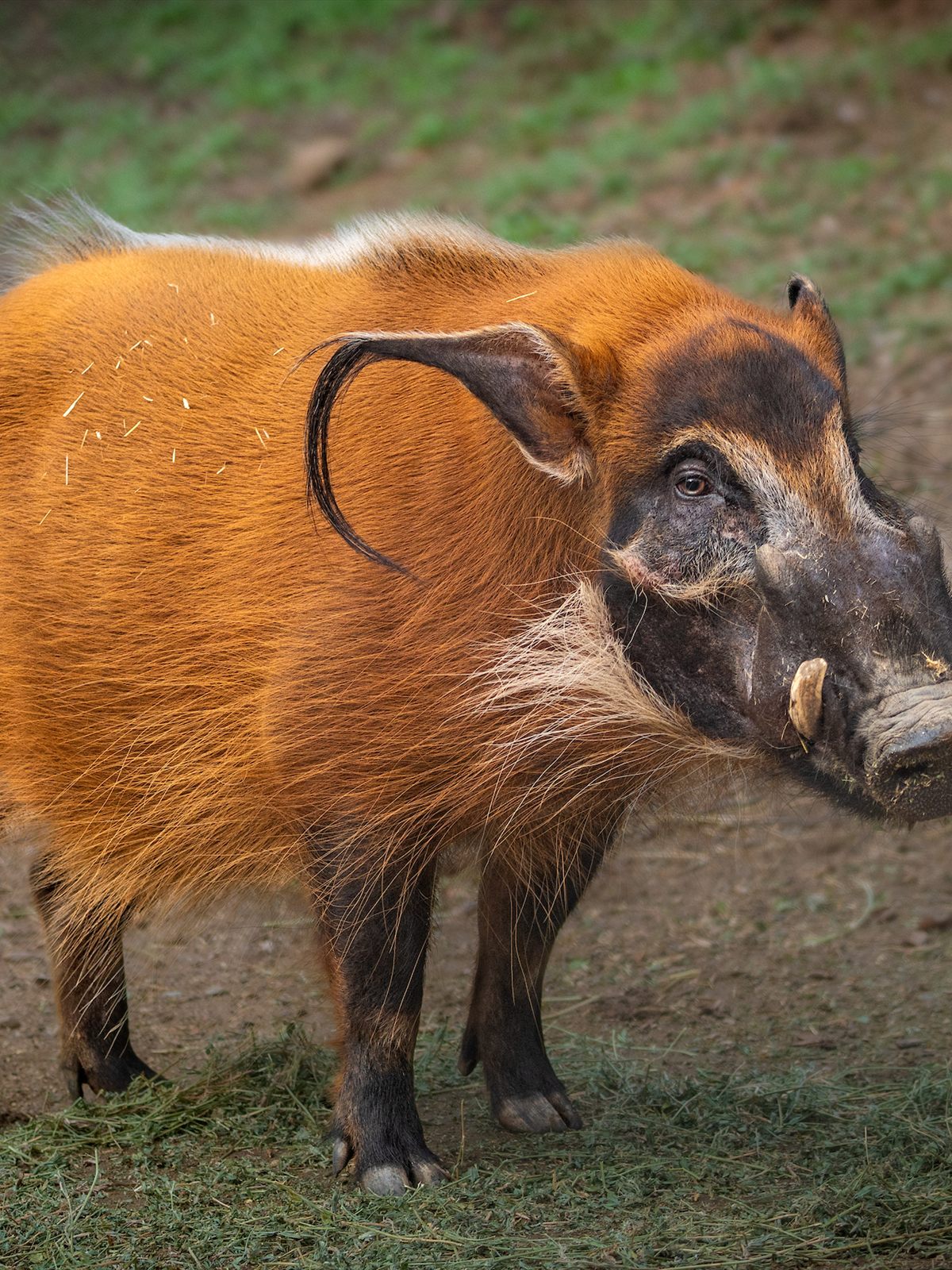
RED RIVER HOG
Potamochoerus porcus
DESCRIPTION
The Red River Hog is a wild pig native to the forests and savannas of West and Central Africa. It is known for its striking reddish-brown fur and distinctive facial markings.
FUN FACTS
- Red River Hogs are excellent swimmers | They have a unique ability to dig up roots and tubers | Their social structure is matriarchal
QUICK INFO
Lifespan10-15 years in the wild, up to 20 in captivity
Average Weight50-150 kg
Average Length1.2-1.8 m
Diet TypeOmnivore
Social StructureGroup — they typically live in small family groups or sounders.
Activity PatternNocturnal
Breeding SeasonYear-round, with peaks depending on region
- Habitat
- They inhabit dense forests, swamps, and savannas, often near water sources. They prefer areas with thick underbrush for cover.
- Biomes
- Tropical Rainforest, Savanna
- Native Range
- West and Central Africa
- Continent
- Africa
- Countries
- Angola, Cameroon, Central African Republic, Democratic Republic of the Congo, Gabon, Nigeria
- Diet
- Red River Hogs are omnivorous, feeding on a variety of plant materials, fruits, and small animals. They use their snouts to root in the ground for food.
- Diet Type
- Omnivore
- Favorite Food
- roots, tubers, fruits
- Social Structure
- Group — they typically live in small family groups or sounders.
- Activity Pattern
- Nocturnal
- Group Size
- 5-15
- Territorial
- 0
 VU
VU
50-150 kg
Weight
1.2-1.8 m
Length
- Coloration
- Reddish-brown fur with white facial markings and stripes
- Sexual Dimorphism
- Males are generally larger than females.
- Lifespan
- 10-15 years in the wild, up to 20 in captivity
- Gestation Period
- 120 days
- Offspring per Birth
- 1-6
- Sexual Maturity
- 1-2 years
- Breeding Season
- Year-round, with peaks depending on region
LC
Least Concern
IUCN Red List Status
- Population Status
- Population is currently stable, but habitat loss poses a threat.
- Wild Population Estimate
- Unknown
- Population Trend
- Stable
- Endangered
- 0
- Threats
- Main threats include habitat destruction due to agriculture and hunting. They are also sometimes hunted for bushmeat.
- Predators
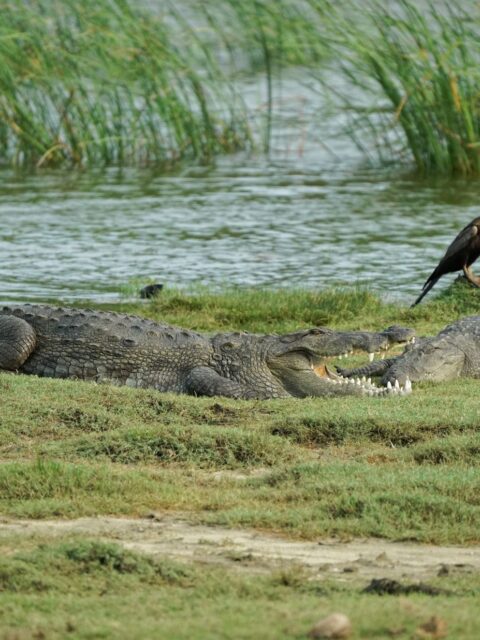
- Large carnivores such as lions and crocodiles, as well as humans.
- Defense Mechanisms
- They can run quickly and use their tusks for defense when threatened.
- Found in Zoos
- Common