


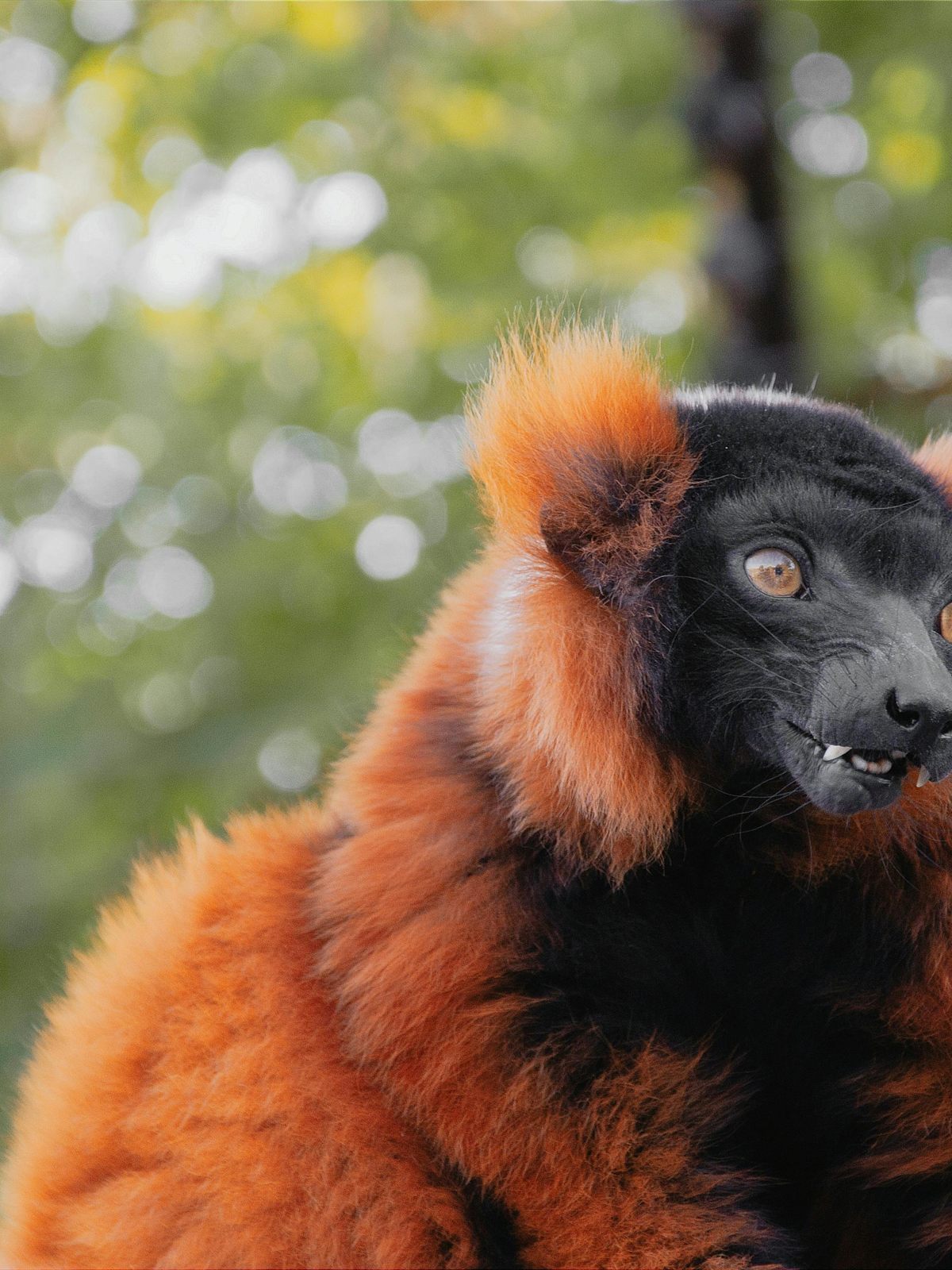
RED RUFFED LEMUR
Varecia rubra
DESCRIPTION
The Red Ruffed Lemur is a large primate native to Madagascar, characterized by its striking reddish-brown fur and black face. They are known for their loud vocalizations and social behavior, often living in groups that communicate through a variety of calls. In the wild, they play a crucial role in their ecosystem as seed dispersers, helping to maintain the health of their forest habitat.
FUN FACTS
- Red Ruffed Lemurs are known for their unique social structure, where females often dominate the group, which is rare among primates
- They are also one of the few lemur species that are fully arboreal, spending almost their entire lives in the trees, which helps them avoid ground predators
QUICK INFO
Lifespan15-20 years in the wild, up to 30 in captivity
Average Weight3-4 kg
Average Length1-1.5 m
Diet TypeHerbivore
Social StructureGroup, typically consisting of 5-10 individuals led by a dominant female.
Activity PatternDiurnal
Breeding SeasonSpring (September-November)
- Habitat
- These lemurs inhabit the rainforests of Madagascar, where they are arboreal and spend most of their time in the trees. They prefer areas with abundant fruiting trees and dense foliage for shelter.
- Biomes
- Tropical Rainforest
- Native Range
- Endemic to Madagascar, specifically found in the eastern rainforests of the island.
- Continent
- Africa
- Countries
- Madagascar
- Diet
- Red Ruffed Lemurs primarily consume fruits, leaves, and flowers, with a preference for ripe fruits. They are known to be particularly fond of figs and other tropical fruits.
- Diet Type
- Herbivore
- Favorite Food
- Fruits, especially figs
- Social Structure
- Group, typically consisting of 5-10 individuals led by a dominant female.
- Activity Pattern
- Diurnal
- Group Size
- 5-10
- Territorial
- 1
 EN
EN
3-4 kg
Weight
1-1.5 m
Length
- Coloration
- Reddish-brown fur with a black face and white markings.
- Sexual Dimorphism
- Males are generally slightly larger than females.
- Lifespan
- 15-20 years in the wild, up to 30 in captivity
- Gestation Period
- 90-100 days
- Offspring per Birth
- 1-3
- Sexual Maturity
- 2-3 years
- Breeding Season
- Spring (September-November)
EN
Endangered
IUCN Red List Status
- Population Status
- The population is currently declining due to habitat loss and hunting.
- Wild Population Estimate
- 10,000-20,000
- Population Trend
- Decreasing
- Endangered
- 1
- Threats
- The main threats to the Red Ruffed Lemur include deforestation due to agriculture and logging, as well as hunting for bushmeat. These pressures have led to significant habitat loss and fragmentation.
- Conservation Program
- The Madagascar Biodiversity Partnership works to protect the habitats of the Red Ruffed Lemur.
- Predators
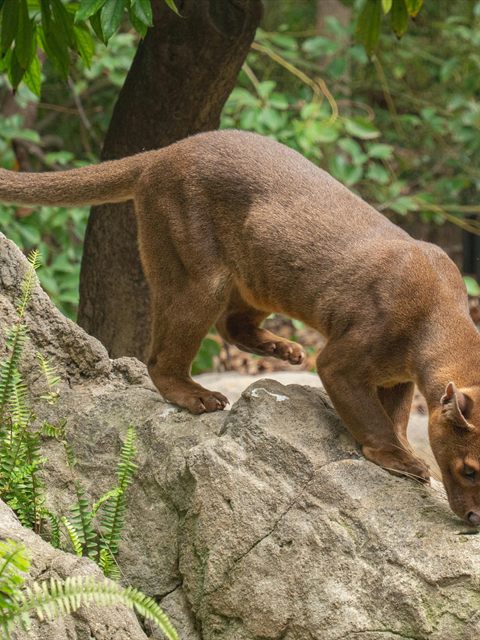
- Fossa, Madagascar's largest carnivorous mammal, is a primary predator, along with various birds of prey.
- Defense Mechanisms
- They use loud vocalizations to warn others of danger and can also flee into the treetops to escape predators.
- Compatible Animals
- Other lemur species, various birds, and small mammals in a zoo setting.
- Found in Zoos
- Uncommon