


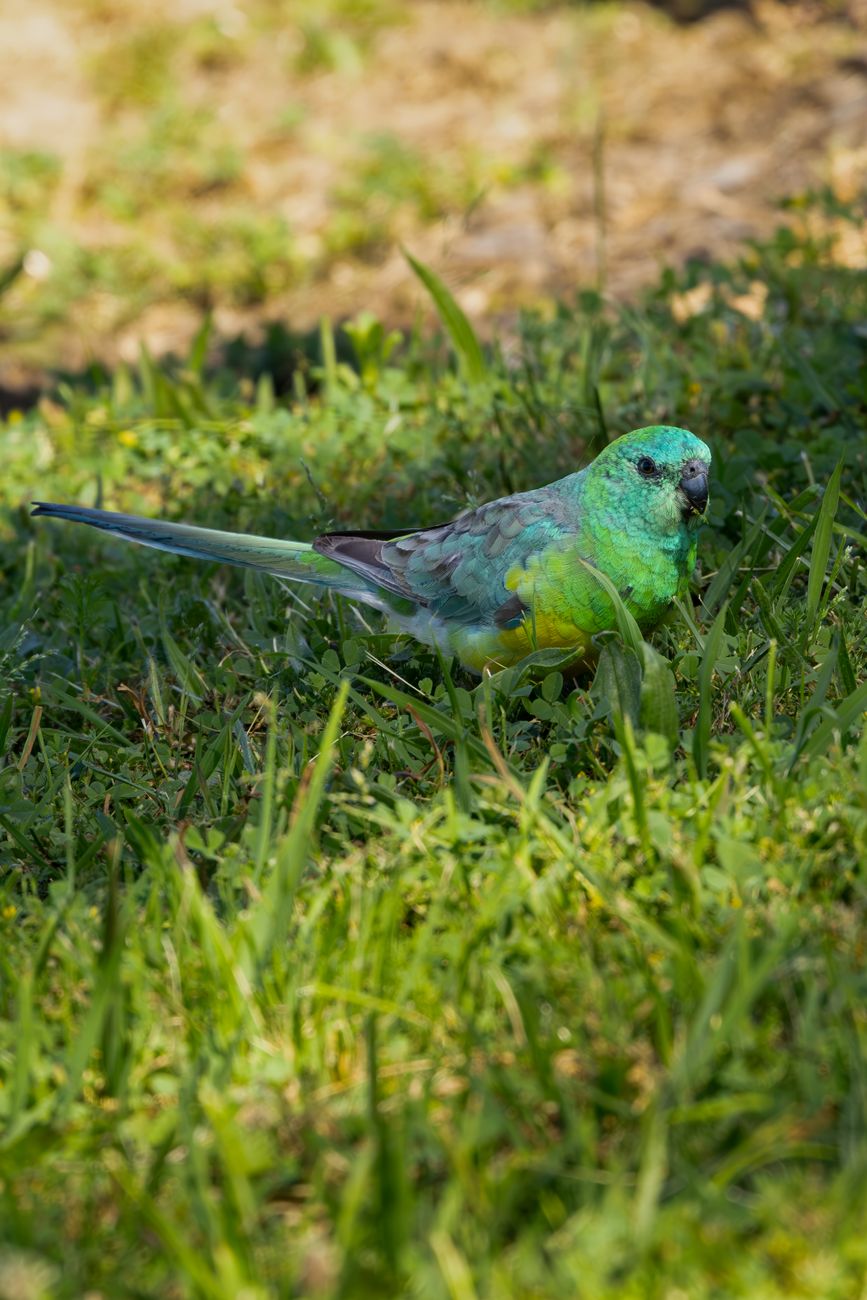
RED-RUMPED PARROT
Psephotus haematonotus
DESCRIPTION
Red-rumped Parrot (Psephotus haematonotus) is commonly known as the Australian Parakeet and Grass Parakeet. This small to medium-sized parrot exhibits vibrant plumage, with males showcasing a striking red rump and a greenish-yellow body, while females are generally more subdued in color. They are social birds often found in pairs or small flocks, inhabiting open woodlands and grasslands where they forage for seeds and grasses.
FUN FACTS
- Red-rumped Parrots are known for their acrobatic flying skills, often performing aerial displays that showcase their agility and speed
- They are also popular pets due to their playful nature and ability to mimic sounds, making them engaging companions.|These parrots have a unique social structure, often forming strong pair bonds that can last for life
- During the breeding season, they engage in elaborate courtship displays, which include mutual preening and synchronized flying
QUICK INFO
Lifespan10-15 years in the wild, up to 20 years in captivi
Average Weight80-100 g
Average Length25-30 cm
Diet TypeHerbivore
Social StructureThey are typically found in pairs or small groups, often forming loose flocks outside of the breeding season.
Activity PatternDiurnal
Breeding SeasonSpring to early summer (September to January)
- Habitat
- Red-rumped Parrots thrive in open woodlands, grasslands, and scrublands. They prefer areas with scattered trees and shrubs that provide both food and nesting sites.
- Biomes
- Grassland, Savanna, Woodland
- Native Range
- They are native to eastern and southern Australia, including Tasmania.
- Continent
- Australia
- Countries
- Australia, Tasmania
- Diet
- They primarily feed on seeds, grains, and grasses, often foraging on the ground. Their diet can also include fruits and flowers when available.
- Diet Type
- Herbivore
- Favorite Food
- seeds, grains
- Social Structure
- They are typically found in pairs or small groups, often forming loose flocks outside of the breeding season.
- Activity Pattern
- Diurnal
- Group Size
- 2-20
- Territorial
- 1

 VU
VU
80-100 g
Weight
25-30 cm
Length
- Coloration
- Males are bright green with a red rump and blue wings, while females are more muted with a yellowish-green body.
- Sexual Dimorphism
- Males are more colorful than females, with distinct red rumps.
- Lifespan
- 10-15 years in the wild, up to 20 years in captivi
- Offspring per Birth
- 3-6
- Sexual Maturity
- 1 year
- Breeding Season
- Spring to early summer (September to January)
LC
Least Concern
IUCN Red List Status
- Population Status
- The population is currently stable, with no major declines reported.
- Wild Population Estimate
- 100,000+
- Population Trend
- Stable
- Endangered
- 0
- Threats
- Main threats include habitat loss due to land clearing and agriculture. They are also vulnerable to predation by introduced species such as cats and foxes.
- Predators
- Cats, foxes, birds of prey
- Defense Mechanisms
- They often rely on their ability to fly quickly and their social behavior to evade predators.
- Compatible Animals
- other small parrots, finches
- Found in Zoos
- Common