


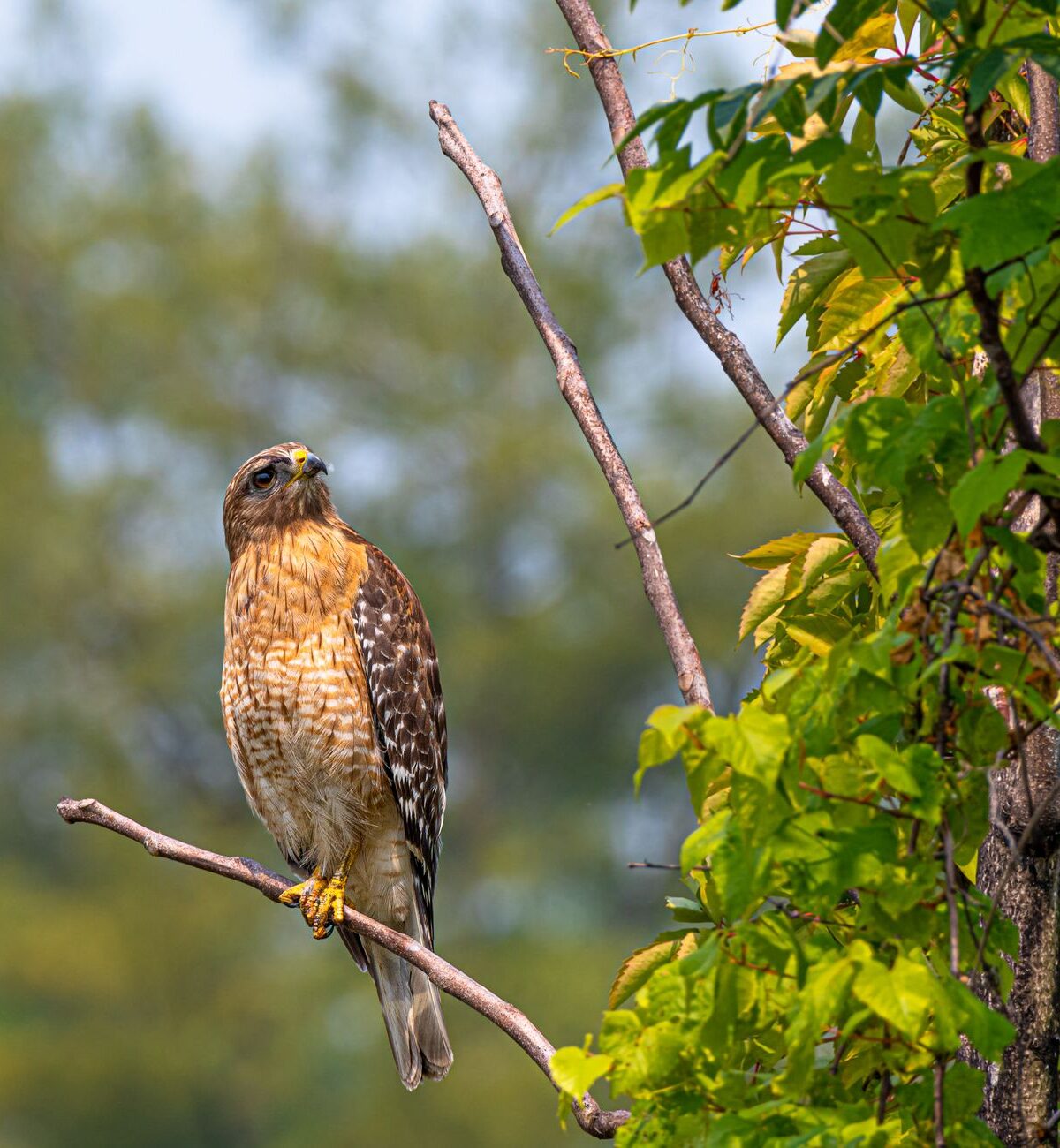
RED-SHOULDERED HAWK
Buteo lineatus
DESCRIPTION
Red-Shouldered Hawk (Buteo lineatus) is a medium-sized raptor known for its distinctive reddish-brown shoulders and a strikingly patterned plumage. This bird exhibits a unique call that sounds like a series of high-pitched whistles, often heard in its woodland habitats. Red-Shouldered Hawks are skilled hunters, often seen perched on low branches or soaring above forests, where they hunt for small mammals and birds.
FUN FACTS
- Red-Shouldered Hawks are known for their unique vocalizations, which can be heard during courtship and territorial displays
- Their calls are often described as sounding like a series of high-pitched whistles, making them easily identifiable in their natural habitat
- | These hawks are also known for their hunting technique, which often involves a combination of soaring and gliding, allowing them to cover large areas while searching for prey
- They have excellent eyesight, enabling them to spot small animals from great distances
QUICK INFO
Lifespan10-15 years in the wild, up to 20 years in captivi
Average Weight0.5-1.0 kg
Average Length40-60 cm
Diet TypeCarnivore
Social Structurepair, typically monogamous during breeding season
Activity PatternDiurnal
Breeding SeasonSpring (March-May)
- Habitat
- Red-Shouldered Hawks prefer deciduous and mixed forests, often near water sources such as rivers and swamps. They require large trees for nesting and open areas for hunting.
- Biomes
- Temperate Forest, Wetland
- Native Range
- They are found across eastern and western North America, with some populations residing in southern Canada and parts of Mexico.
- Continent
- North America
- Countries
- United States, Canada, Mexico
- Diet
- They primarily feed on small mammals, birds, and amphibians, often hunting from a perch or while in flight.
- Diet Type
- Carnivore
- Favorite Food
- small mammals, birds, amphibians
- Social Structure
- pair, typically monogamous during breeding season
- Activity Pattern
- Diurnal
- Group Size
- 1-2
- Territorial
- 1
 LC
LC
0.5-1.0 kg
Weight
40-60 cm
Length
- Coloration
- reddish-brown shoulders, dark brown back, and white underparts with dark streaks
- Sexual Dimorphism
- females are generally larger than males
- Lifespan
- 10-15 years in the wild, up to 20 years in captivi
- Offspring per Birth
- 2-4
- Sexual Maturity
- 1-2 years
- Breeding Season
- Spring (March-May)
LC
Least Concern
IUCN Red List Status
- Population Status
- The population is currently stable, with some local increases noted in certain areas.
- Wild Population Estimate
- 100,000-200,000
- Population Trend
- Stable
- Endangered
- 0
- Threats
- Main threats include habitat loss due to deforestation and urban development, as well as pesticide use that affects their prey. Climate change may also impact their habitat and food availability.
- Predators
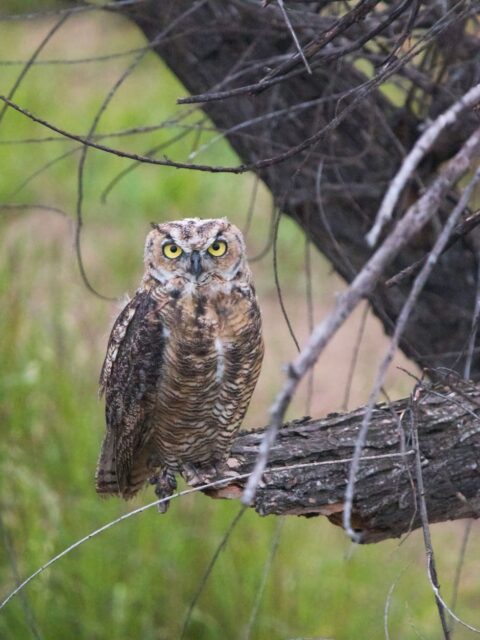
- Great Horned Owls, larger raptors, and humans can pose threats to Red-Shouldered Hawks, especially to their eggs and young.
- Defense Mechanisms
- They will aggressively defend their nests and can dive at potential threats to deter them.
- Found in Zoos
- Uncommon