


RED-WINGED PARROT
Aprosmictus erythropterus
DESCRIPTION
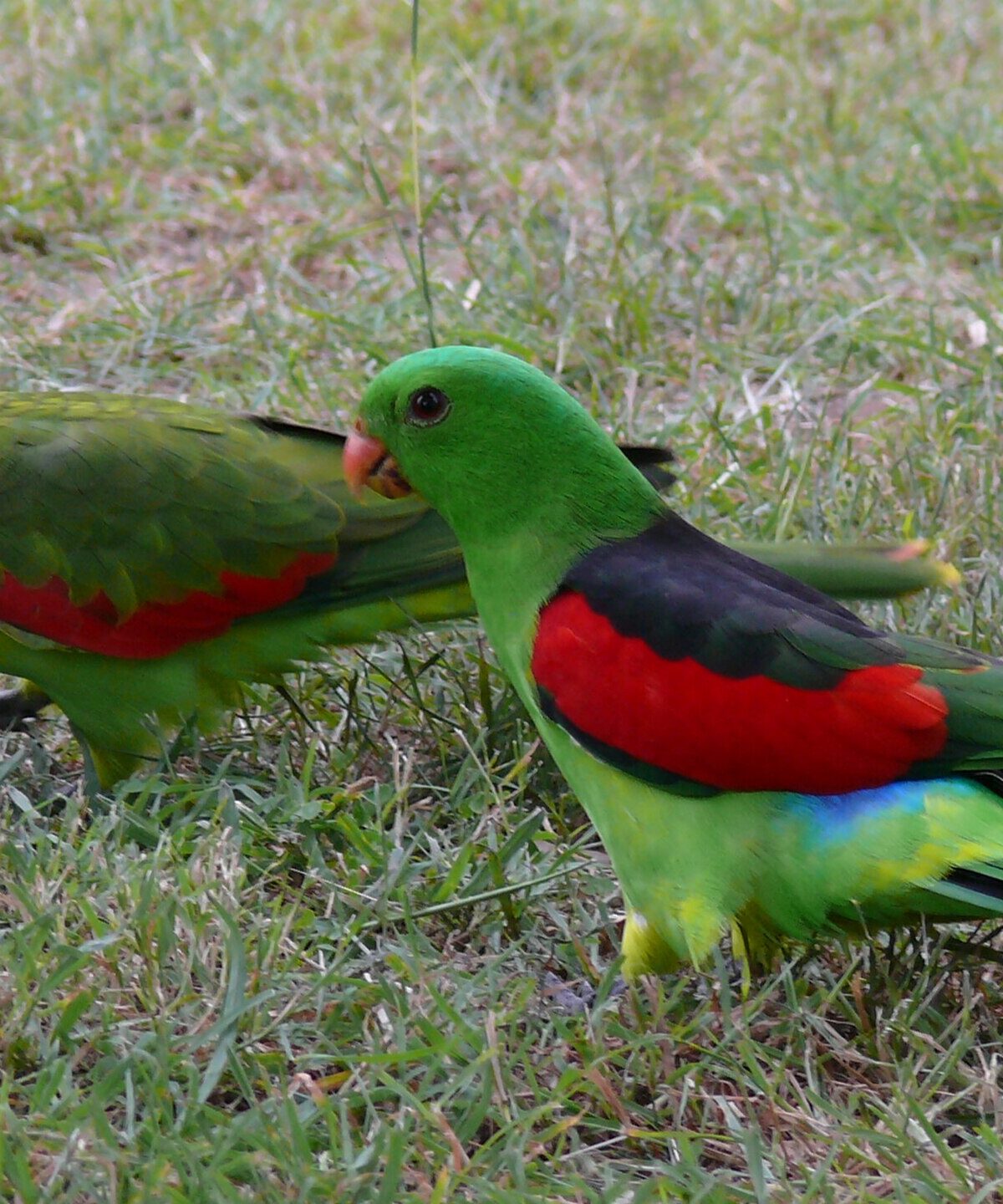
Red-winged Parrot (Aprosmictus erythropterus) is commonly known as the Erythropterus and Red-winged Parakeet. This medium-sized parrot is characterized by its vibrant green plumage, with striking red wing patches that are particularly prominent during flight. They are social birds often found in pairs or small groups, exhibiting playful behavior and a variety of vocalizations, which they use to communicate with each other in their natural habitats.
FUN FACTS
- Red-winged Parrots are known for their playful antics and intelligence, often engaging in acrobatic displays while foraging
- They have a unique ability to mimic sounds from their environment, including other bird calls and even human-made noises, showcasing their adaptability and social nature
QUICK INFO
Lifespan15-20 years in the wild, up to 30 in captivity
Average Weight120-150 g
Average Length25-30 cm
Diet TypeHerbivore
Social StructureThey are typically found in pairs or small groups, showcasing a social structure that promotes interaction and bonding.
Activity PatternDiurnal
Breeding SeasonSpring to early summer
- Habitat
- Red-winged Parrots inhabit open woodlands, savannas, and forest edges. They prefer areas with abundant food sources and nesting sites, often near water bodies.
- Biomes
- Savanna, Tropical Rainforest
- Native Range
- They are native to northern Australia and parts of New Guinea.
- Continent
- Australia, Oceania
- Countries
- Australia, Papua New Guinea
- Diet
- They primarily feed on seeds, fruits, and flowers, foraging in trees and shrubs. Their diet is supplemented with various plant materials, making them important seed dispersers in their ecosystem.
- Diet Type
- Herbivore
- Favorite Food
- seeds, fruits, flowers
- Social Structure
- They are typically found in pairs or small groups, showcasing a social structure that promotes interaction and bonding.
- Activity Pattern
- Diurnal
- Group Size
- 2-10
- Territorial
- 0
 LC
LC
120-150 g
Weight
25-30 cm
Length
- Coloration
- Vibrant green body with bright red wing patches and a yellowish underbelly.
- Sexual Dimorphism
- Males and females are similar in appearance, but males tend to have slightly brighter coloration.
- Lifespan
- 15-20 years in the wild, up to 30 in captivity
- Offspring per Birth
- 2-4
- Sexual Maturity
- 1-2 years
- Breeding Season
- Spring to early summer
LC
Least Concern
IUCN Red List Status
- Population Status
- The population is currently stable, with no immediate threats to their numbers.
- Wild Population Estimate
- 50,000-100,000
- Population Trend
- Stable
- Endangered
- 0
- Threats
- Main threats include habitat loss due to deforestation and agricultural expansion. They are also sometimes captured for the pet trade, which can impact local populations.
- Predators
- Natural predators include birds of prey and snakes, which may target their nests or young.
- Defense Mechanisms
- They rely on their ability to fly quickly and their social behavior to evade predators.
- Compatible Animals
- Other small to medium-sized parrots, finches
- Found in Zoos
- Uncommon