


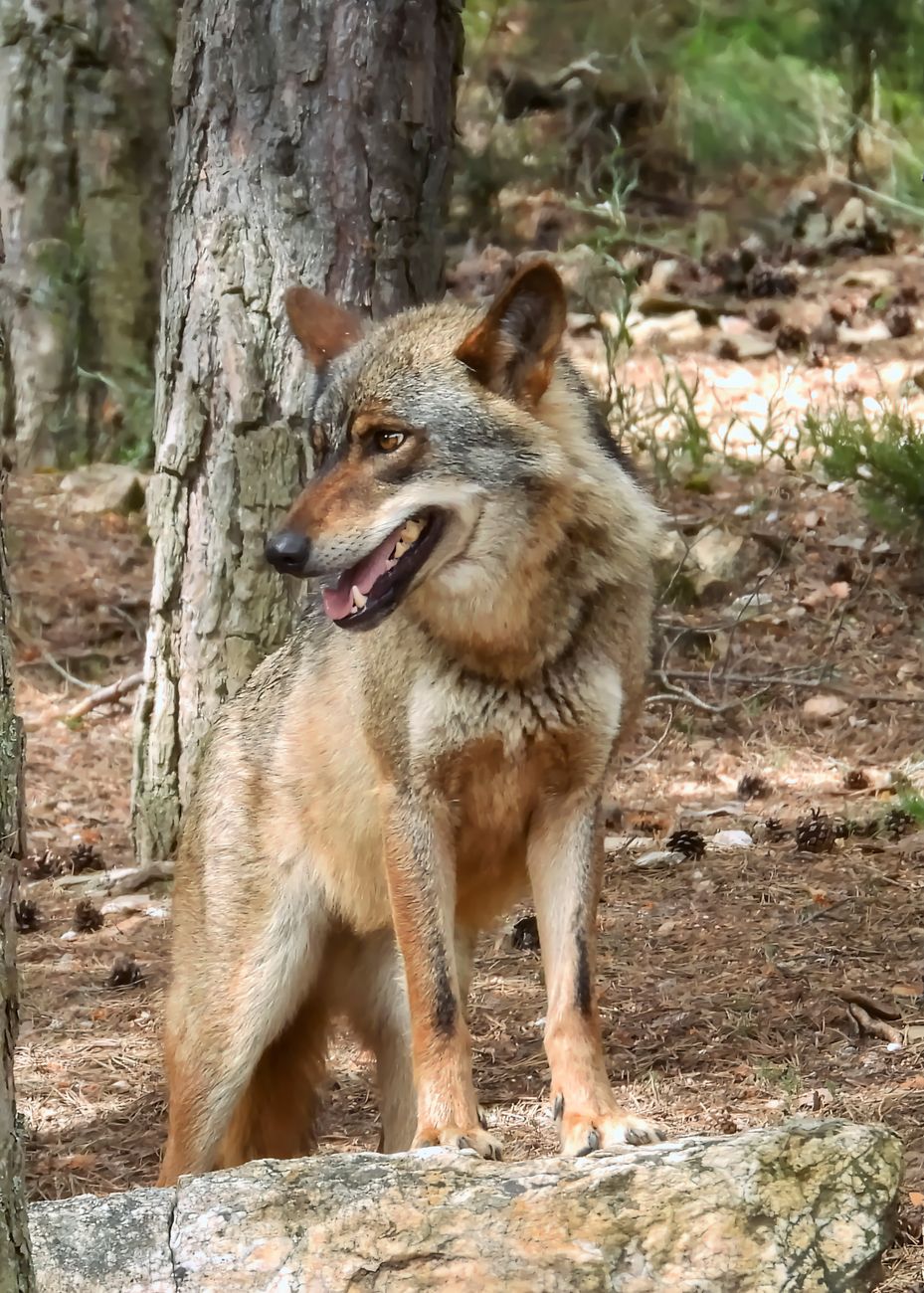
RED WOLF
Canis rufus
DESCRIPTION
Red Wolf (Canis rufus) is a medium-sized canid with a slender build, long legs, and a bushy tail. Its fur is typically a mix of reddish-brown, gray, and black, providing excellent camouflage in its natural habitat. Red Wolves are known for their vocalizations, which include howls, barks, and growls, and they play a crucial role in their ecosystem as apex predators, helping to control populations of prey species.
FUN FACTS
- Red Wolves are one of the most endangered canids in the world, with a population that dwindled to just a few dozen individuals in the 1970s
- Conservation efforts have been crucial in preventing their extinction, and they are now being reintroduced into their historical range
- | Unlike many other wolf species, Red Wolves have a unique vocalization that sounds more like a high-pitched howl, which they use to communicate with their pack members
- This distinct call is an important part of their social structure and helps maintain group cohesion
QUICK INFO
Lifespan7-10 years in the wild, up to 15 years in captivit
Average Weight23-45 kg
Average Length1.2-1.5 m
Diet TypeCarnivore
Social StructureThey usually form monogamous pairs and raise their young together, often with the help of older siblings.
Activity PatternCrepuscular
Breeding SeasonWinter (January-March)
- Habitat
- Red Wolves inhabit a variety of environments, including swamps, forests, and coastal prairies. They prefer areas with dense vegetation for cover and proximity to water sources.
- Biomes
- Temperate Forest, Wetlands, Grassland
- Native Range
- Historically, Red Wolves roamed the southeastern United States, but their range has significantly decreased due to habitat loss and hunting.
- Continent
- North America
- Countries
- United States
- Diet
- Red Wolves primarily hunt small to medium-sized mammals, including deer, rabbits, and rodents. They are opportunistic feeders and will scavenge when necessary.
- Diet Type
- Carnivore
- Favorite Food
- deer, rabbits
- Social Structure
- They usually form monogamous pairs and raise their young together, often with the help of older siblings.
- Activity Pattern
- Crepuscular
- Group Size
- 2-8
- Territorial
- 1
 LC
LC
23-45 kg
Weight
1.2-1.5 m
Length
0.6-0.8 m at shoulder
Height (Shoulder)
- Coloration
- reddish-brown with black and gray markings
- Sexual Dimorphism
- males are generally larger than females
- Lifespan
- 7-10 years in the wild, up to 15 years in captivit
- Gestation Period
- 63 days
- Offspring per Birth
- 4-6
- Sexual Maturity
- 2 years
- Breeding Season
- Winter (January-March)
CR
Critically Endangered
IUCN Red List Status
- Population Status
- The Red Wolf population is critically low, with ongoing conservation efforts to increase their numbers.
- Wild Population Estimate
- 20-30
- Population Trend
- Decreasing
- Endangered
- 1
- Threats
- Main threats to Red Wolves include habitat destruction, vehicle collisions, and hybridization with coyotes. These factors have contributed to their drastic decline in numbers.
- Conservation Program
- The Red Wolf Recovery Program aims to restore the population through breeding and reintroduction efforts.
- Predators
- Humans are the primary threat, but young wolves may be vulnerable to larger predators such as bears and mountain lions.
- Defense Mechanisms
- Red Wolves use vocalizations and pack behavior to defend their territory and deter potential threats.
- Compatible Animals
- none
- Found in Zoos
- Uncommon