


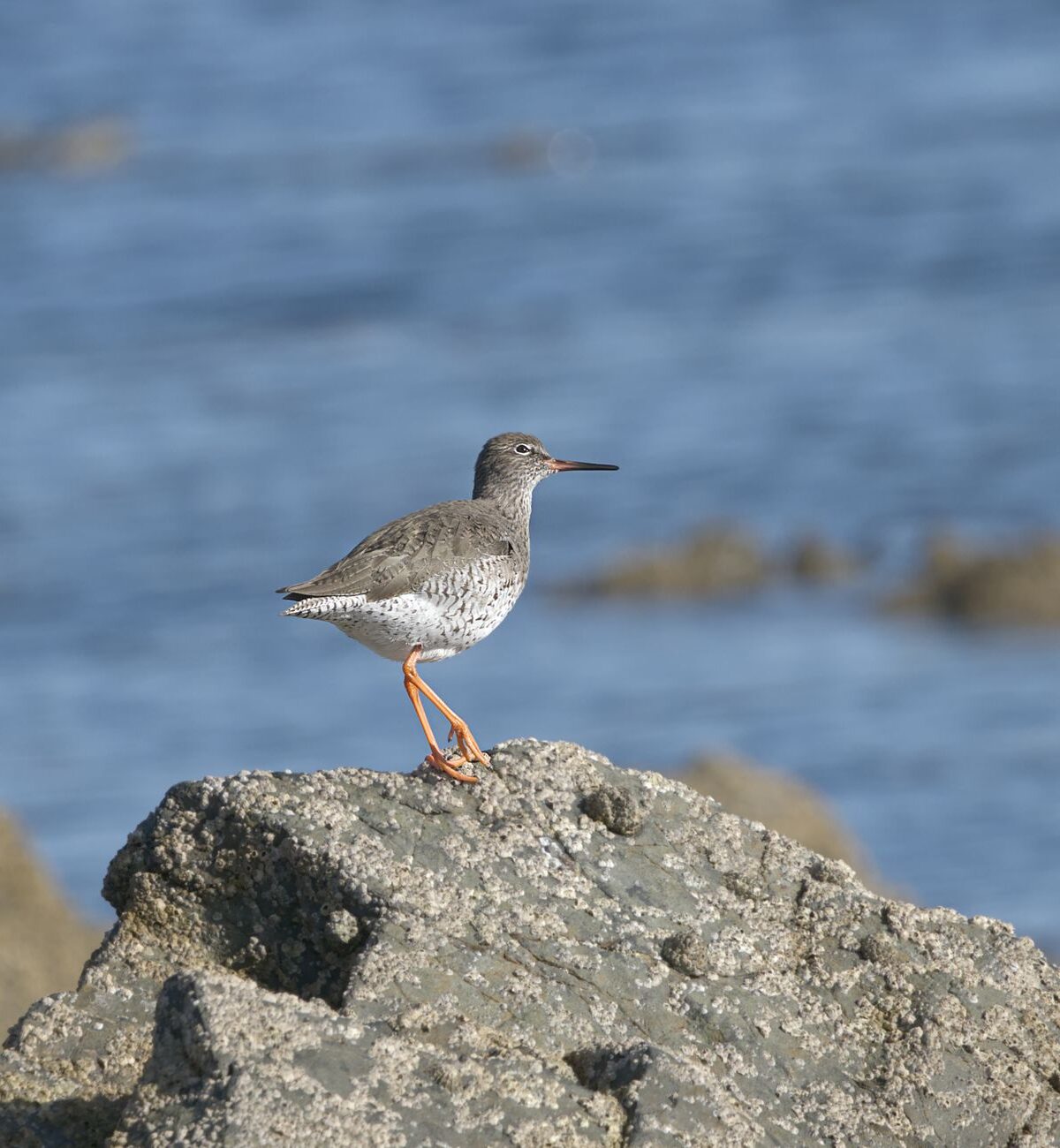
REDSHANK
Tringa totanus
DESCRIPTION
Also called Common Redshank and Eurasian Redshank, Redshank (Tringa totanus) is a medium-sized wading bird known for its long legs and distinctive red-orange coloration on the legs and underparts. It has a grayish-brown upper body with a white belly and a characteristic long, straight bill. Redshanks are often found in wetlands and coastal areas, where they forage for food and are known for their loud, distinctive calls.
FUN FACTS
- Redshanks are known for their distinctive call, which sounds like a series of sharp 'tew-tew' notes, often heard during the breeding season
- They are also remarkable for their ability to adapt to various wetland habitats, making them a common sight in both natural and man-made environments.|During migration, Redshanks can travel long distances, sometimes flying over 1,000 kilometers non-stop
- Their migratory patterns are influenced by weather conditions, and they often return to the same breeding sites year after year
QUICK INFO
Lifespan10-15 years in the wild
Average Weight150-250 g
Average Length28-33 cm
Diet TypeOmnivore
Social Structuregroup — often seen in flocks, especially outside the breeding season
Activity PatternDiurnal
Breeding SeasonSpring (April-June)
- Habitat
- Redshanks inhabit a variety of wetland environments, including marshes, mudflats, and estuaries. They prefer areas with shallow water and abundant vegetation for foraging and nesting.
- Biomes
- Wetlands, Coastal
- Native Range
- Redshanks are found across Europe and parts of Asia, migrating to Africa during the winter months.
- Continent
- Europe, Asia, Africa
- Countries
- United Kingdom, France, Germany, Russia, India
- Diet
- Redshanks primarily feed on invertebrates, including insects, worms, and crustaceans, which they find by probing in mud and shallow water. They may also consume small fish and plant material.
- Diet Type
- Omnivore
- Favorite Food
- invertebrates, worms, crustaceans
- Social Structure
- group — often seen in flocks, especially outside the breeding season
- Activity Pattern
- Diurnal
- Group Size
- 5-50
- Territorial
- 1

 VU
VU
 LC
LC
150-250 g
Weight
28-33 cm
Length
- Coloration
- grayish-brown upper body with red-orange legs and white belly
- Lifespan
- 10-15 years in the wild
- Offspring per Birth
- 3-4
- Sexual Maturity
- 2-3 years
- Breeding Season
- Spring (April-June)
LC
Least Concern
IUCN Red List Status
- Population Status
- The population of Redshanks is currently stable, although some local declines have been noted.
- Wild Population Estimate
- 200,000-300,000
- Population Trend
- Stable
- Endangered
- 0
- Threats
- Main threats to Redshanks include habitat loss due to land reclamation and pollution, as well as disturbance from human activities. Climate change also poses a potential risk to their breeding and feeding grounds.
- Predators
- Foxes, birds of prey, and domestic cats are known predators of Redshank eggs and chicks.
- Defense Mechanisms
- Redshanks often use distraction displays to lead predators away from their nests, and they can be quite vocal when threatened.
- Found in Zoos
- Rare