


REINDEER
Rangifer tarandus
DESCRIPTION
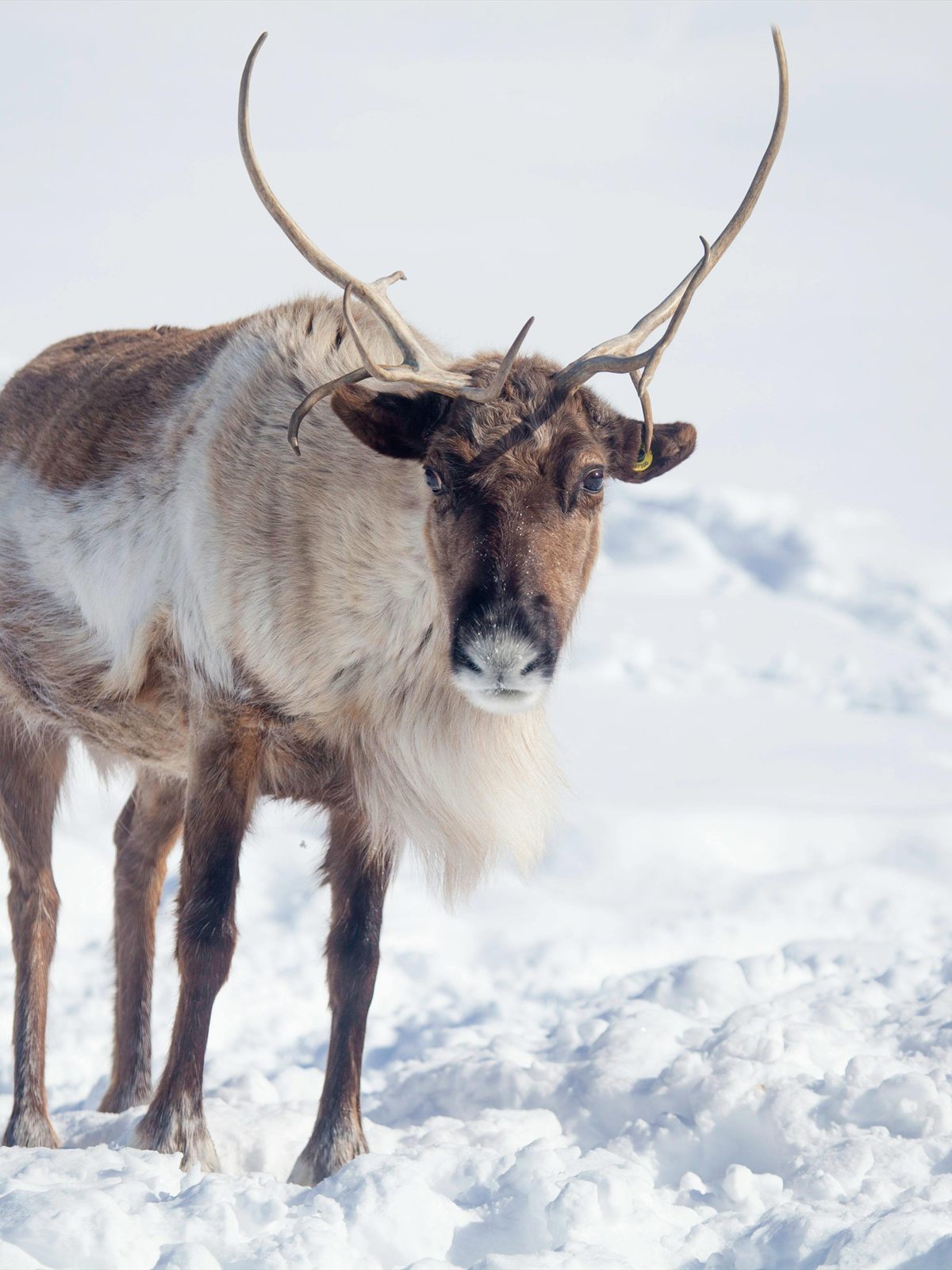
Reindeer, also known as caribou in North America, are large herbivorous mammals adapted to cold environments. They are known for their distinctive antlers, which are present in both males and females, and their ability to migrate long distances.
FUN FACTS
- Reindeer are the only deer species where both males and females grow antlers | They can run at speeds of up to 50 km/h | Reindeer have a unique adaptation in their eyes that allows them to see in low light conditions
QUICK INFO
Lifespan10-15 years in the wild, up to 20 in captivity
Average Weight80-180 kg
Average Length1.2-2.0 m
Diet TypeHerbivore
Social Structuregroup — they often travel in herds for protection and social interaction
Activity PatternDiurnal
Breeding SeasonAutumn (September-November)
- Habitat
- Reindeer inhabit tundra and boreal forest regions, where they can find ample food sources and shelter. They are well-adapted to cold climates and often migrate to find suitable grazing areas.
- Biomes
- Tundra, Boreal Forest
- Native Range
- Reindeer are native to the Arctic and subarctic regions of Europe, Asia, and North America.
- Continent
- Europe, Asia, North America
- Countries
- Norway, Sweden, Finland, Russia, Canada, United States (Alaska)
- Diet
- Reindeer primarily feed on a variety of vegetation, including grasses, leaves, and lichens. They are particularly known for their consumption of reindeer lichen, which is a crucial food source during winter.
- Diet Type
- Herbivore
- Favorite Food
- lichens, grasses, leaves
- Social Structure
- group — they often travel in herds for protection and social interaction
- Activity Pattern
- Diurnal
- Group Size
- 10-1000
- Territorial
- 0
 LC
LC
 LC
LC
80-180 kg
Weight
1.2-2.0 m
Length
0.9-1.2 m at shoulder
Height (Shoulder)
- Coloration
- brown to grayish coat with lighter underparts
- Sexual Dimorphism
- males are generally larger than females
- Lifespan
- 10-15 years in the wild, up to 20 in captivity
- Gestation Period
- 230 days
- Offspring per Birth
- 1
- Sexual Maturity
- 1-2 years
- Breeding Season
- Autumn (September-November)
LC
Least Concern
IUCN Red List Status
- Population Status
- The population of reindeer is variable, with some herds stable while others are declining due to environmental changes.
- Wild Population Estimate
- 2 million
- Population Trend
- Stable
- Endangered
- 0
- Threats
- Main threats include habitat loss due to climate change, industrial development, and predation. Overhunting and competition with livestock also pose significant challenges.
- Conservation Program
- Various conservation programs exist to monitor and protect reindeer populations, particularly in areas affected by climate change.
- Predators
- wolves, bears, and humans
- Defense Mechanisms
- Reindeer use their speed and agility to escape predators, and they often form large herds for safety.
- Compatible Animals
- none
- Found in Zoos
- Uncommon