


RESPLENDENT QUETZAL
Pharomachrus mocinno
DESCRIPTION
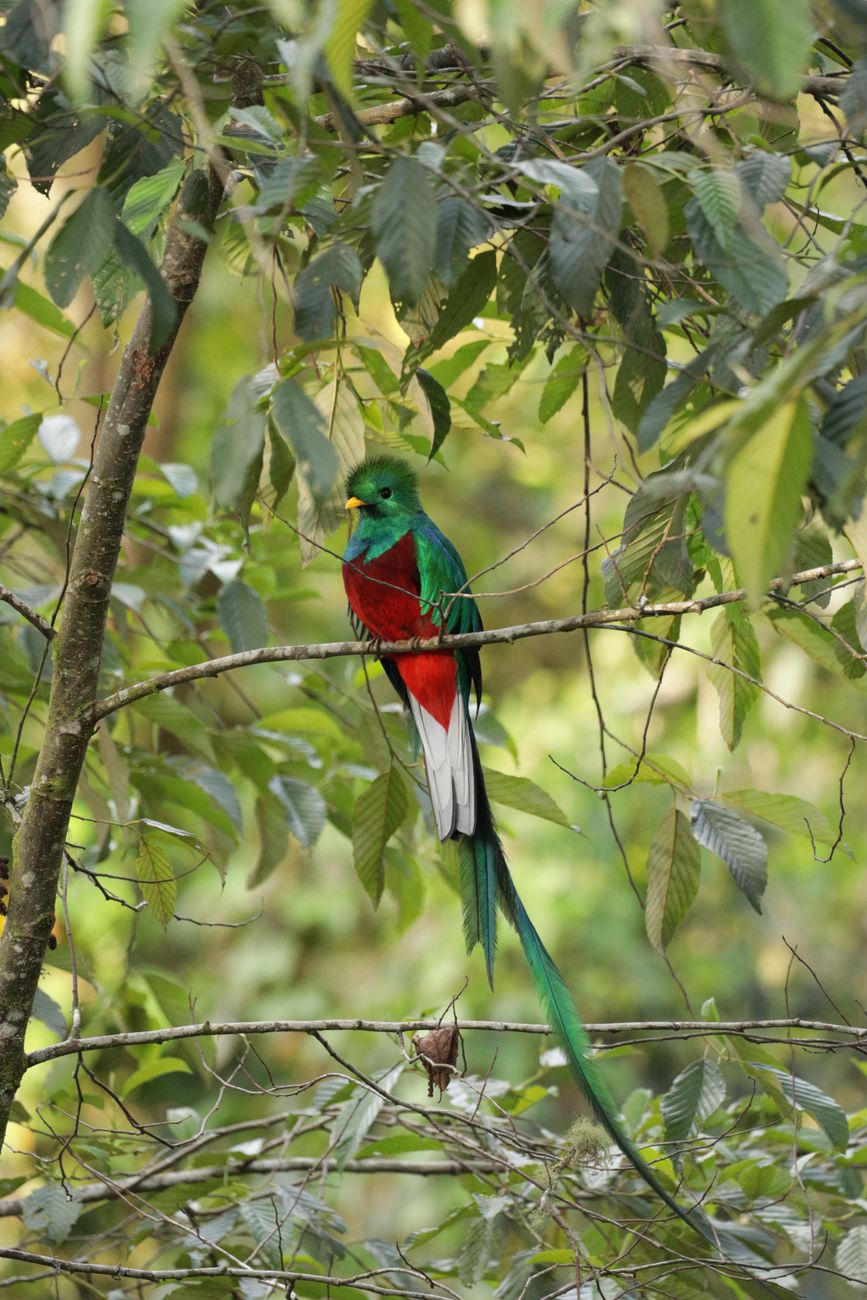
Resplendent Quetzal (Pharomachrus mocinno) is commonly known as the Quetzal, a strikingly beautiful bird characterized by its vibrant green and red plumage. Males are particularly notable for their long tail feathers, which can reach up to 1 meter in length, and their iridescent coloration that shimmers in sunlight. This species is primarily found in the cloud forests of Central America, where it plays a crucial role in the ecosystem as a seed disperser, particularly for the avocado tree.
FUN FACTS
- The Resplendent Quetzal is the national bird of Guatemala and is a symbol of freedom and beauty in many Central American cultures
- Interestingly, the Quetzal's feathers were historically used by the Maya and Aztec civilizations to adorn their headdresses and ceremonial garments, making them highly prized and valuable.| Resplendent Quetzals are known for their unique nesting habits, often choosing to nest in tree cavities or abandoned woodpecker holes
- The female lays her eggs in these secluded spots, providing a safe environment for her young until they are ready to fledge
QUICK INFO
Lifespan15-20 years in the wild
Average Weight100-140 g
Average Length35-40 cm
Diet TypeOmnivore
Social Structurepair
Activity PatternDiurnal
Breeding SeasonSpring (March-May)
- Habitat
- This species inhabits humid montane forests and cloud forests, often at elevations between 1,200 and 2,400 meters. It prefers areas with dense vegetation and abundant fruiting trees.
- Biomes
- Tropical Rainforest, Cloud Forest
- Native Range
- The Resplendent Quetzal is native to Central America, ranging from southern Mexico to western Panama.
- Continent
- North America, Central America
- Countries
- Mexico, Guatemala, Honduras, El Salvador, Costa Rica, Panama
- Diet
- The Resplendent Quetzal primarily feeds on fruits, insects, and small vertebrates. Its diet is particularly rich in fruits from trees such as wild avocados and other berries.
- Diet Type
- Omnivore
- Favorite Food
- fruits, insects
- Social Structure
- pair
- Activity Pattern
- Diurnal
- Group Size
- 1-2
- Territorial
- 1
 CR
CR
 LC
LC
100-140 g
Weight
35-40 cm
Length
- Coloration
- vibrant green body with a red breast and white wing markings
- Sexual Dimorphism
- males have longer tail feathers and more vibrant coloration than females
- Lifespan
- 15-20 years in the wild
- Offspring per Birth
- 2-3
- Sexual Maturity
- 2-3 years
- Breeding Season
- Spring (March-May)
LC
Least Concern
IUCN Red List Status
- Population Status
- The population of Resplendent Quetzals is currently considered stable, although habitat loss poses a threat.
- Wild Population Estimate
- 50,000-100,000
- Population Trend
- Stable
- Endangered
- 0
- Threats
- Main threats include habitat destruction due to deforestation and agricultural expansion. Additionally, hunting and capture for the pet trade have also impacted local populations.
- Predators
- hawks, snakes, and larger birds of prey
- Defense Mechanisms
- Resplendent Quetzals rely on their cryptic coloration to blend into the foliage, making them less visible to predators.
- Found in Zoos
- Uncommon