


RETICULATE COLLARED LIZARD
Crotaphytus reticulatus
DESCRIPTION
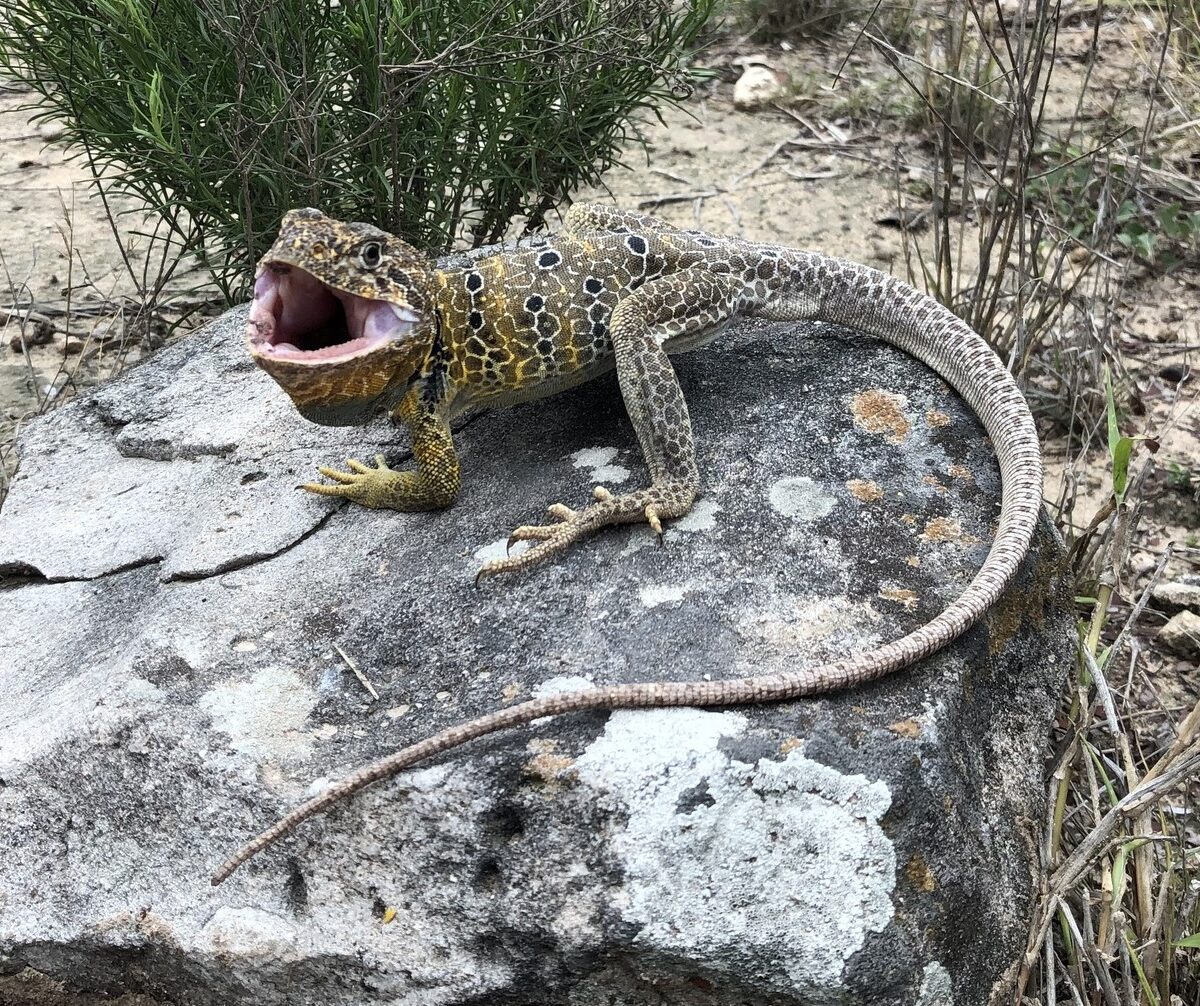
Reticulate Collared Lizard (Crotaphytus reticulatus) is a striking species known for its vibrant coloration and distinctive patterns. It typically exhibits a combination of green, blue, and yellow hues, with a reticulated pattern that provides excellent camouflage among rocky terrains. This lizard is diurnal, often seen basking in the sun or actively foraging during the day, and it inhabits arid environments where it can quickly dart between rocks and vegetation.
FUN FACTS
- Reticulate Collared Lizards are known for their impressive speed, capable of running quickly to escape predators or catch prey
- They also exhibit fascinating social behaviors, including head-bobbing displays during mating rituals, which help establish dominance among males.| These lizards have a unique ability to change their color slightly based on temperature and mood, allowing them to blend into their surroundings more effectively
- This adaptation not only aids in camouflage but also helps regulate their body temperature in the hot desert environment
QUICK INFO
Lifespan5-10 years in the wild, up to 15 in captivity
Average Weight50-100 g
Average Length20-30 cm
Diet TypeInsectivore
Social Structuresolitary, typically found alone or in pairs during the breeding season
Activity PatternDiurnal
Breeding SeasonSpring (April-June)
- Habitat
- This species thrives in rocky, arid habitats such as deserts and scrublands. It prefers areas with plenty of sun exposure and places to hide from predators.
- Biomes
- Desert, Scrubland
- Native Range
- The Reticulate Collared Lizard is native to the southwestern United States and northern Mexico.
- Continent
- North America
- Countries
- United States, Mexico
- Diet
- The Reticulate Collared Lizard primarily feeds on insects and other small invertebrates. It is known to actively hunt its prey, showcasing agility and speed.
- Diet Type
- Insectivore
- Favorite Food
- crickets, beetles, grasshoppers
- Social Structure
- solitary, typically found alone or in pairs during the breeding season
- Activity Pattern
- Diurnal
- Group Size
- 1-2
- Territorial
- 1
 VU
VU
 LC
LC
50-100 g
Weight
20-30 cm
Length
- Coloration
- vibrant green and blue with a reticulated pattern
- Sexual Dimorphism
- males are generally more colorful than females
- Lifespan
- 5-10 years in the wild, up to 15 in captivity
- Offspring per Birth
- 3-10
- Sexual Maturity
- 1-2 years
- Breeding Season
- Spring (April-June)
LC
Least Concern
IUCN Red List Status
- Population Status
- The population of Reticulate Collared Lizard is currently stable, though habitat loss poses a potential threat.
- Wild Population Estimate
- unknown
- Population Trend
- Stable
- Endangered
- 0
- Threats
- Main threats include habitat destruction due to urban development and agriculture. Additionally, climate change may impact their arid habitats.
- Predators
- birds of prey, snakes, larger lizards
- Defense Mechanisms
- They can quickly escape into crevices and use their speed to evade predators.
- Found in Zoos
- Uncommon