


REUNION CHAMELEON
Calumma borbonicum
DESCRIPTION
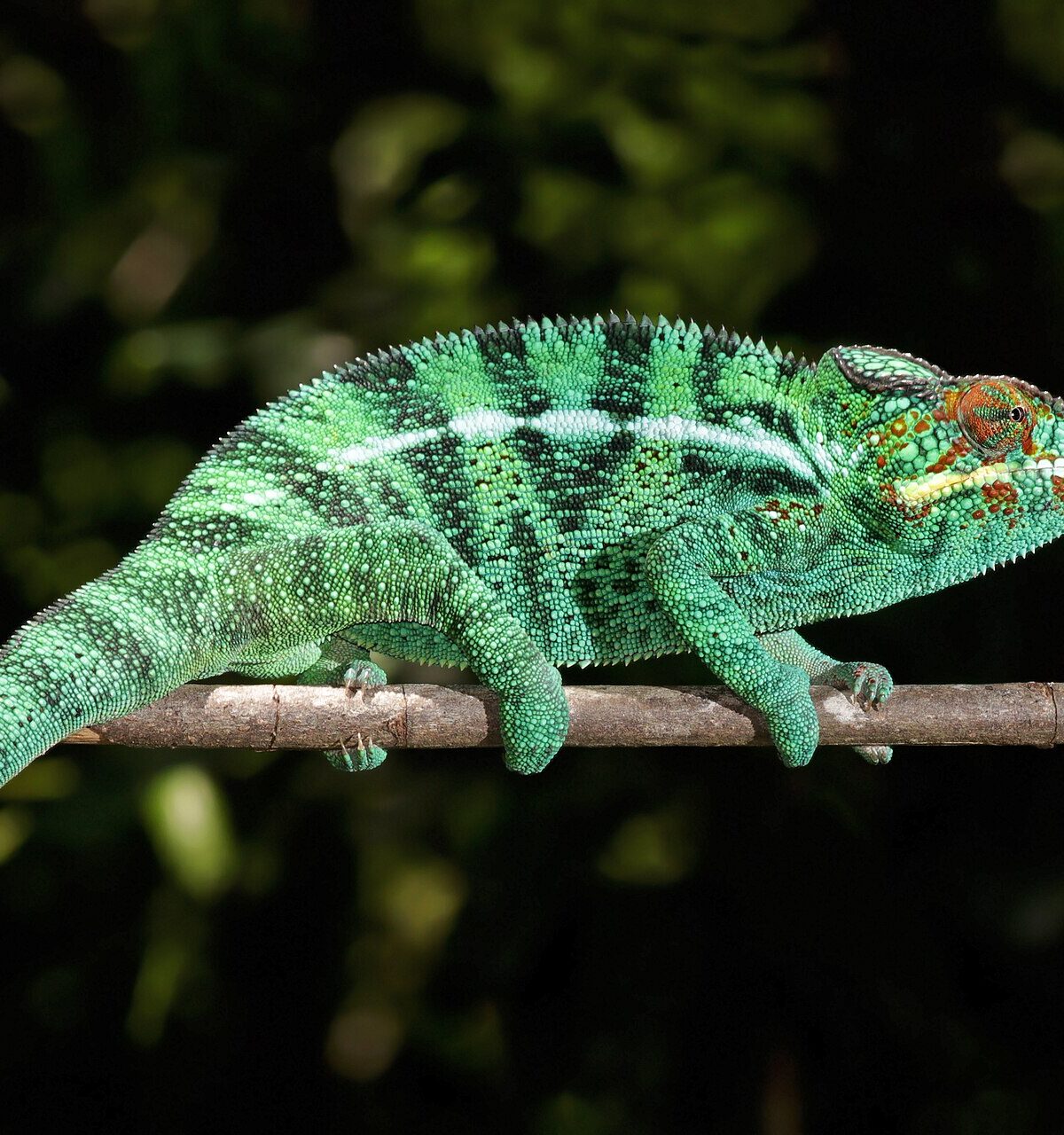
Reunion Chameleon (Calumma borbonicum) is a small, colorful lizard endemic to the island of Réunion. It exhibits a range of vibrant colors, including greens, yellows, and browns, which help it blend into its forested habitat. This species is primarily arboreal, spending much of its time in trees and shrubs, where it uses its prehensile tail and zygodactylous feet to navigate its environment.
FUN FACTS
- Reunion Chameleons are known for their remarkable ability to change color, which is not just for camouflage but also for communication with other chameleons
- This color change can reflect their mood, health, and even temperature regulation
- | Unlike many other reptiles, chameleons have a unique structure in their eyes that allows them to move each eye independently, giving them a nearly 360-degree field of vision
- This adaptation is crucial for spotting predators and prey in their complex forest environment
QUICK INFO
Lifespan5-7 years in the wild.
Average Length15-25 cm
Diet TypeInsectivore
Social Structuresolitary, with males and females coming together only for mating.
Activity PatternDiurnal
Breeding SeasonSpring (September-November)
- Habitat
- This species inhabits humid, tropical forests and shrublands, often found in areas with dense vegetation. They prefer locations with plenty of cover to aid in their camouflage and hunting.
- Biomes
- Tropical Rainforest
- Native Range
- Endemic to the island of Réunion in the Indian Ocean.
- Continent
- Africa
- Countries
- Réunion
- Diet
- Reunion Chameleons primarily feed on insects and other small invertebrates. They use their long, sticky tongues to capture prey from a distance.
- Diet Type
- Insectivore
- Favorite Food
- insects
- Social Structure
- solitary, with males and females coming together only for mating.
- Activity Pattern
- Diurnal
- Group Size
- 1-2
- Territorial
- 1
 VU
VU
 LC
LC
15-25 cm
Length
- Coloration
- Vibrant greens, yellows, and browns, often with patterns that help them blend into their surroundings.
- Sexual Dimorphism
- Males are typically more colorful and larger than females.
- Lifespan
- 5-7 years in the wild.
- Sexual Maturity
- 6-12 months
- Breeding Season
- Spring (September-November)
EN
Endangered
IUCN Red List Status
- Population Status
- The population is currently declining due to habitat loss and other environmental pressures.
- Wild Population Estimate
- unknown
- Population Trend
- Decreasing
- Endangered
- 1
- Threats
- Main threats include habitat destruction due to deforestation and urbanization, as well as climate change. Invasive species also pose a risk to their survival.
- Conservation Program
- Conservation efforts are underway to protect their natural habitat and raise awareness about their plight.
- Predators
- Birds of prey, snakes, and larger reptiles are known to prey on Reunion Chameleons.
- Defense Mechanisms
- They rely on camouflage to avoid detection by predators, and can also display aggressive postures when threatened.
- Found in Zoos
- Rare