


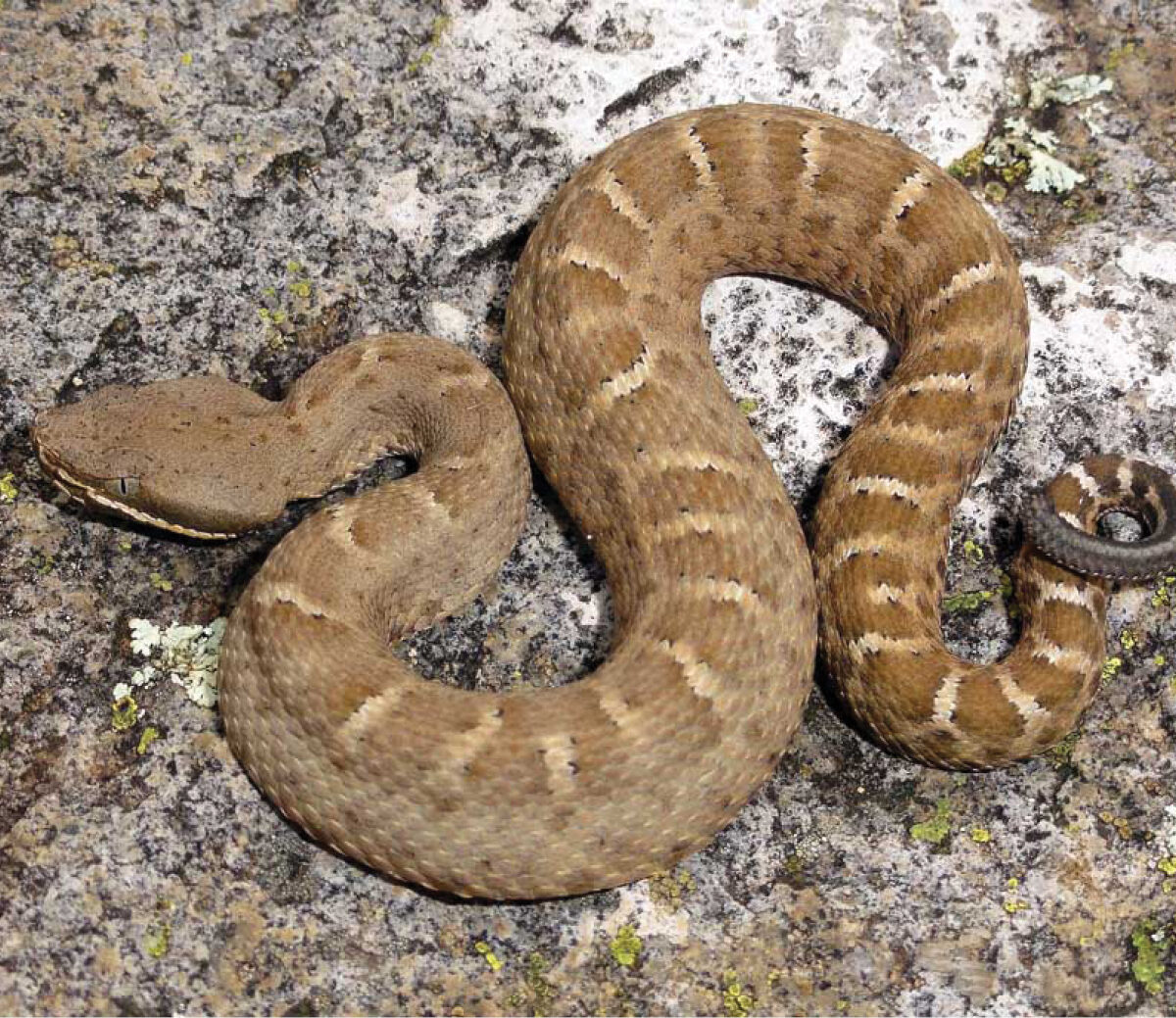
RIDGENOSE RATTLESNAKE
Crotalus willardi
DESCRIPTION
Ridgenose Rattlesnake (Crotalus willardi) is a small to medium-sized rattlesnake known for its distinctive ridge-like scales on its nose, which give it a unique appearance. This species typically exhibits a color pattern of gray or brown with darker bands, providing excellent camouflage in its rocky desert habitat. Behaviorally, it is primarily nocturnal, hunting for prey during the cooler hours of the night and often found in rocky outcrops or underbrush.
FUN FACTS
- Ridgenose Rattlesnakes are known for their unique nasal scales, which help them navigate through rocky terrain and burrow into the ground
- They are also one of the few rattlesnake species that can be found at high elevations, adapting well to cooler climates.| Despite their venomous nature, Ridgenose Rattlesnakes are often considered less dangerous to humans than other rattlesnake species, as they tend to avoid confrontation and will only strike when provoked
QUICK INFO
Lifespan10-20 years in the wild, up to 25 in captivity
Average Weight0.5-1.5 kg
Average Length0.6-1.2 m
Diet TypeCarnivore
Social Structuresolitary
Activity PatternNocturnal
Breeding SeasonSpring (March-May)
- Habitat
- This species inhabits arid and semi-arid regions, often favoring rocky hillsides and canyons where it can find shelter and hunting grounds. They are typically found at elevations ranging from 1,200 to 2,400 meters.
- Biomes
- Desert, Grassland
- Native Range
- Ridgenose Rattlesnakes are native to the southwestern United States and northwestern Mexico.
- Continent
- North America
- Countries
- United States, Mexico
- Diet
- Ridgenose Rattlesnakes primarily feed on small mammals, birds, and lizards, using their venom to immobilize prey before consumption.
- Diet Type
- Carnivore
- Favorite Food
- small mammals, birds, lizards
- Social Structure
- solitary
- Activity Pattern
- Nocturnal
- Group Size
- 1
- Territorial
- 1
 VU
VU

0.5-1.5 kg
Weight
0.6-1.2 m
Length
- Coloration
- gray or brown with darker bands
- Sexual Dimorphism
- males are generally smaller than females
- Lifespan
- 10-20 years in the wild, up to 25 in captivity
- Gestation Period
- 6-7 months
- Offspring per Birth
- 3-12
- Sexual Maturity
- 2-3 years
- Breeding Season
- Spring (March-May)
LC
Least Concern
IUCN Red List Status
- Population Status
- The population of Ridgenose Rattlesnakes is currently stable, but habitat loss poses a potential threat.
- Wild Population Estimate
- unknown
- Population Trend
- Stable
- Endangered
- 0
- Threats
- Main threats include habitat destruction due to urban development and agriculture, as well as road mortality. Additionally, they face pressure from illegal collection for the pet trade.
- Predators
- birds of prey, coyotes, larger snakes
- Defense Mechanisms
- Ridgenose Rattlesnakes use their cryptic coloration for camouflage and will rattle their tails as a warning when threatened.
- Found in Zoos
- Uncommon