


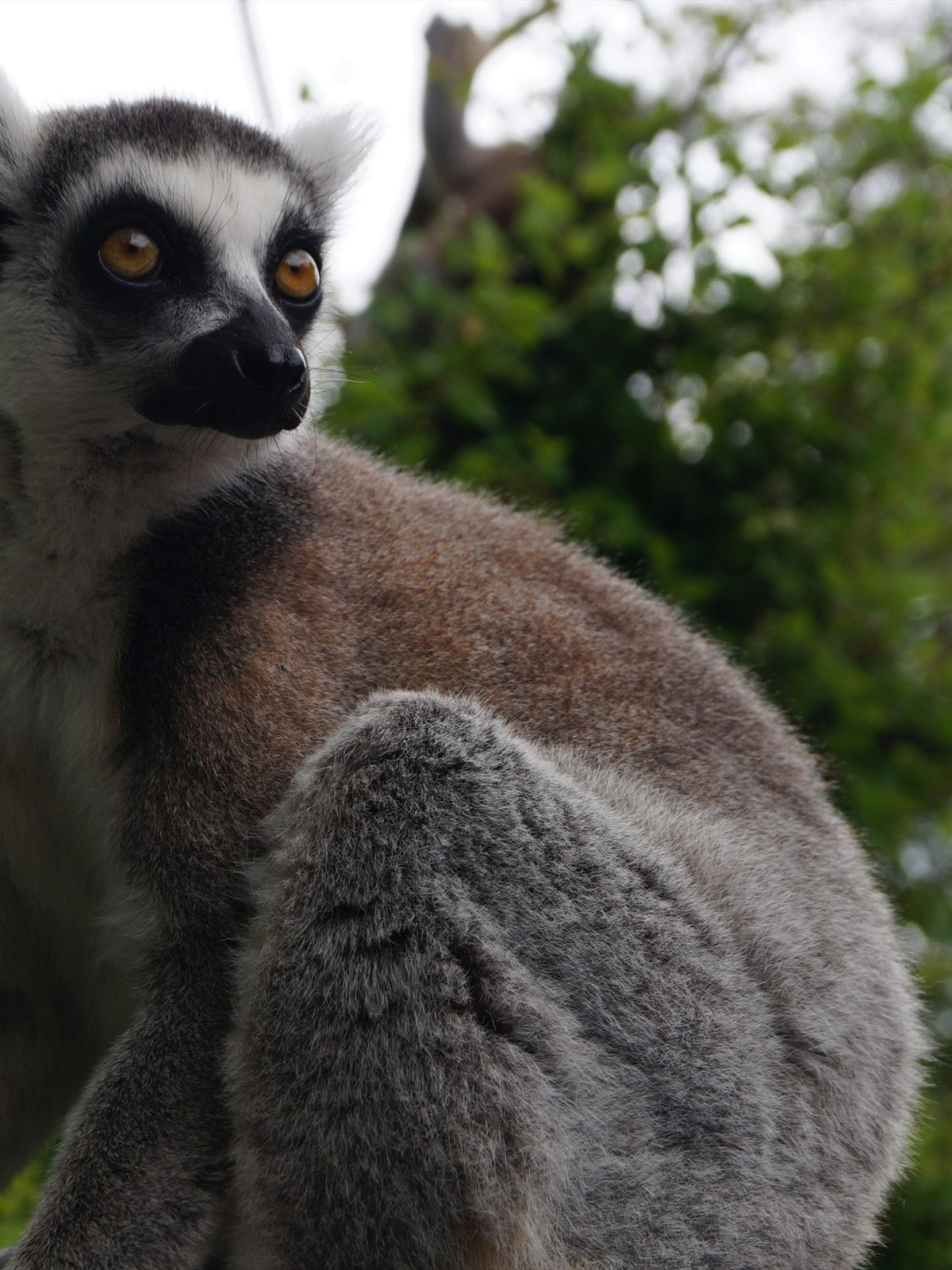
RING TAILED LEMUR
DESCRIPTION
Also called Lemur and Ringtail Lemur, the Ring Tailed Lemur is a medium-sized primate known for its distinctive long, striped tail that is often held aloft. They have a grayish coat with white facial markings and large, expressive eyes, which contribute to their charismatic appearance. Socially, they are highly active and live in matriarchal groups, displaying complex social behaviors and strong bonds among members.
FUN FACTS
- Ring Tailed Lemurs are known for their unique social structure, where females are dominant over males, which is quite rare among primates
- They also have a distinctive way of communicating, using scent marking and vocal calls to convey messages to their group, making them one of the most socially complex primates in Madagascar.| These lemurs are famous for their sunbathing behavior, where they sit upright with their arms outstretched to soak up the sun's rays
- This behavior not only helps them regulate their body temperature but also strengthens social bonds within the group
QUICK INFO
Lifespan15-20 years in the wild, up to 30 in captivity
Average Weight2.5-3.5 kg
Average Length40-50 cm
Diet TypeOmnivore
Social StructureGroup, typically matriarchal with females leading the group and having priority access to resources.
Activity PatternDiurnal
Breeding SeasonSpring (September-November)
- Habitat
- Ring Tailed Lemurs inhabit dry deciduous forests, scrublands, and spiny forests. They are highly adaptable and can also be found in areas altered by human activity.
- Biomes
- Dry Forest, Scrubland
- Native Range
- Endemic to Madagascar, primarily found in the southern regions of the island.
- Continent
- Africa
- Countries
- Madagascar
- Diet
- Ring Tailed Lemurs primarily eat fruits, leaves, and flowers, but they also consume insects and small animals occasionally. Their diet varies seasonally based on food availability.
- Diet Type
- Omnivore
- Favorite Food
- Fruits, leaves
- Social Structure
- Group, typically matriarchal with females leading the group and having priority access to resources.
- Activity Pattern
- Diurnal
- Group Size
- 5-30
- Territorial
- 1
 EN
EN
 LC
LC
2.5-3.5 kg
Weight
40-50 cm
Length
- Coloration
- Grayish body with black and white facial markings and a long, striped tail.
- Sexual Dimorphism
- Males are generally larger than females.
- Lifespan
- 15-20 years in the wild, up to 30 in captivity
- Gestation Period
- 135 days
- Offspring per Birth
- 1-2
- Sexual Maturity
- 2-3 years
- Breeding Season
- Spring (September-November)
EN
Endangered
IUCN Red List Status
- Population Status
- The population is currently declining due to habitat loss and hunting.
- Wild Population Estimate
- Less than 10,000
- Population Trend
- Decreasing
- Endangered
- 1
- Threats
- Main threats include habitat destruction due to deforestation and hunting for bushmeat. These pressures have led to significant declines in their populations.
- Conservation Program
- Various conservation programs are in place, including habitat protection and community education initiatives.
- Predators
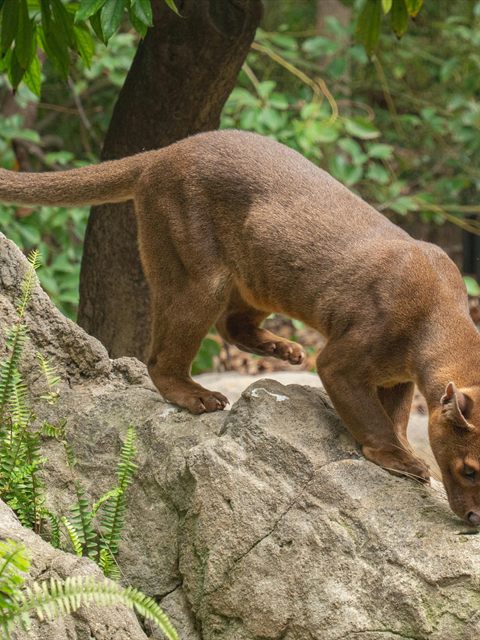
- Main predators include Madagascar's native raptors, fossa, and domestic dogs.
- Defense Mechanisms
- They use vocalizations to warn of predators and can also engage in aggressive displays to deter threats.
- Compatible Animals
- Other lemurs, various small mammals, and birds in zoo settings.
- Found in Zoos
- Common