


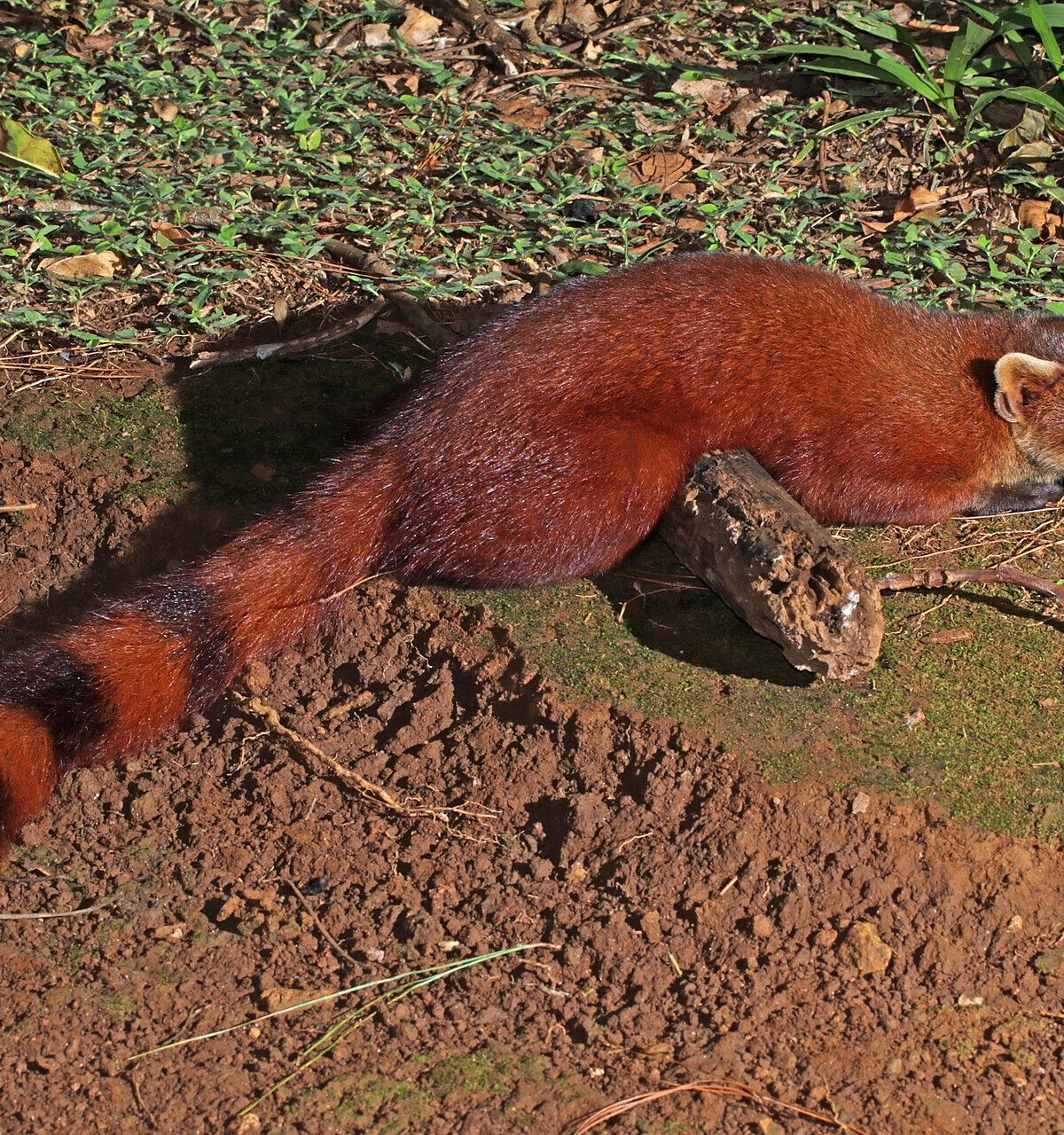
RING-TAILED MONGOOSE
Galidia elegans
DESCRIPTION
Also called Madagascar Mongoose, the Ring-Tailed Mongoose (Galidia elegans) is a small carnivorous mammal native to Madagascar. It has a distinctive long, bushy tail and a slender body, with a coat that is typically a mix of brown and gray, providing excellent camouflage in its forest habitat. This species is known for its agile movements and is often seen foraging for food in the underbrush, displaying both solitary and social behaviors depending on the context.
FUN FACTS
- Ring-Tailed Mongooses are known for their unique social behaviors, including cooperative hunting and grooming, which strengthens social bonds within small groups
- They have a keen sense of smell and are adept at locating food hidden in the forest floor, showcasing their intelligence and adaptability.| These mongooses are also notable for their vocalizations, which include a variety of sounds used for communication, such as warning calls and social interactions
- Their playful nature often leads them to engage in activities that resemble play fighting, which is essential for developing social skills
QUICK INFO
Lifespan5-10 years in the wild, up to 15 years in captivit
Average Weight1.5-2.5 kg
Average Length50-60 cm
Diet TypeCarnivore
Social StructureThey are generally solitary but can form small groups, especially during foraging or when raising young.
Activity PatternDiurnal
Breeding SeasonYear-round, with peaks during the rainy season
- Habitat
- Ring-Tailed Mongooses inhabit a variety of forest types, including dry deciduous forests and humid rainforests. They are often found in areas with dense undergrowth where they can easily hunt and hide.
- Biomes
- Tropical Rainforest, Dry Forest
- Native Range
- Endemic to Madagascar, found in various regions across the island.
- Continent
- Africa
- Countries
- Madagascar
- Diet
- The Ring-Tailed Mongoose primarily feeds on small vertebrates, insects, and fruits. Its diet is diverse, allowing it to adapt to various food sources in its environment.
- Diet Type
- Carnivore
- Favorite Food
- small mammals, insects, fruits
- Social Structure
- They are generally solitary but can form small groups, especially during foraging or when raising young.
- Activity Pattern
- Diurnal
- Group Size
- 1-5
- Territorial
- 1
 VU
VU
1.5-2.5 kg
Weight
50-60 cm
Length
- Coloration
- Brownish-gray fur with a lighter underbelly and a distinctive ringed tail.
- Lifespan
- 5-10 years in the wild, up to 15 years in captivit
- Gestation Period
- 60-70 days
- Offspring per Birth
- 2-4
- Sexual Maturity
- 1-2 years
- Breeding Season
- Year-round, with peaks during the rainy season
LC
Least Concern
IUCN Red List Status
- Population Status
- The population is currently stable, but habitat loss poses a potential threat.
- Wild Population Estimate
- Unknown
- Population Trend
- Stable
- Endangered
- 0
- Threats
- Main threats include habitat destruction due to deforestation and human encroachment. Additionally, they face competition from invasive species.
- Predators
- Birds of prey, larger carnivores, and domestic animals can pose threats to Ring-Tailed Mongooses.
- Defense Mechanisms
- They use their agility and speed to escape predators, and they can also emit loud vocalizations to warn others of danger.
- Found in Zoos
- Uncommon