


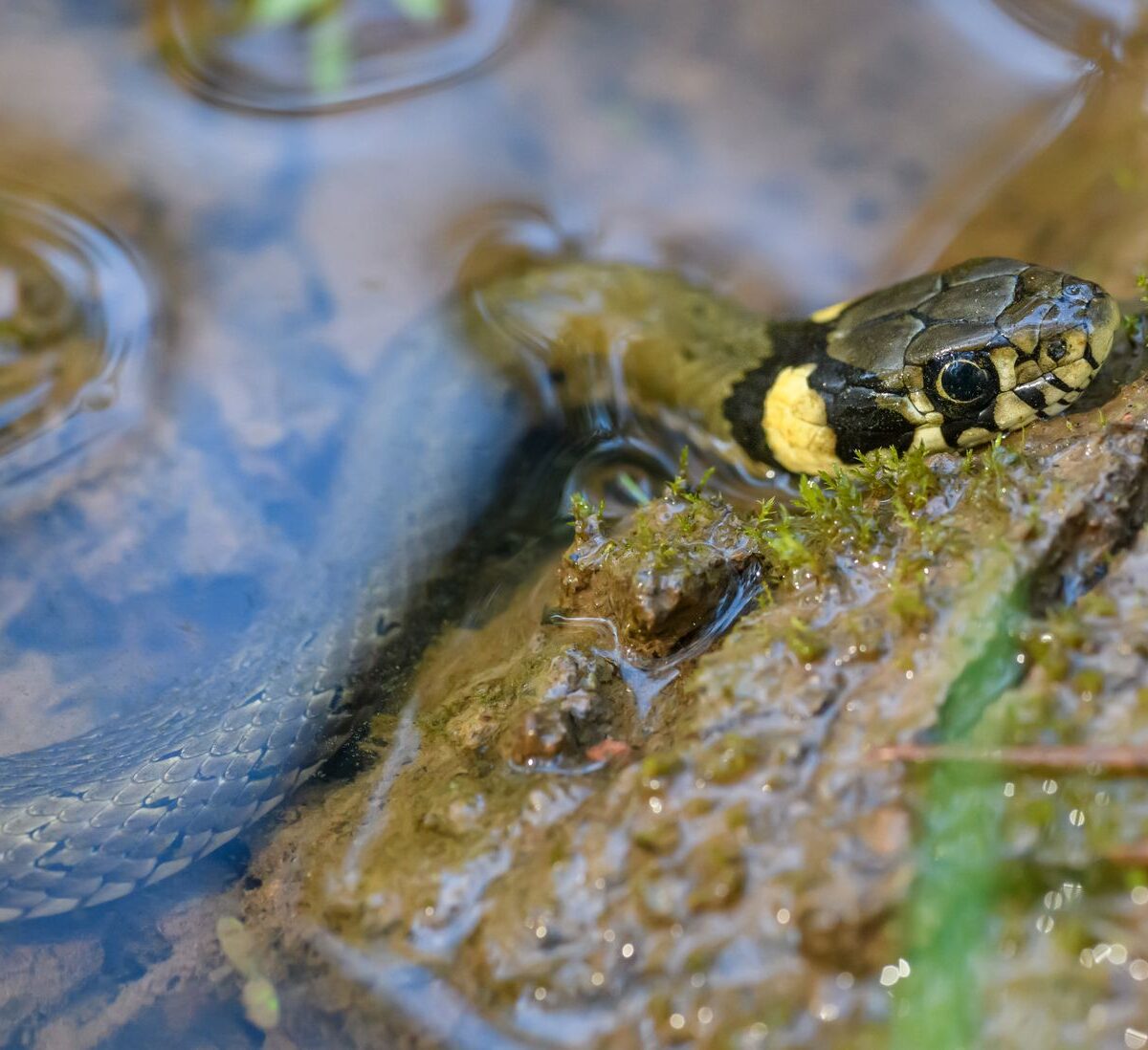
RINGED SNAKE
DESCRIPTION
Also called Water Snake and Grass Snake, the Ringed Snake is a non-venomous species known for its distinctive coloration and pattern. It typically features a series of dark rings or bands across its body, which can vary in color from greenish to brownish. This species is often found near water bodies, where it exhibits a semi-aquatic lifestyle, hunting for prey both in water and on land.
FUN FACTS
- Ringed Snakes are excellent swimmers and can often be seen gliding through the water with ease
- They are also known to be quite docile and will rarely bite unless provoked.|In some cultures, Ringed Snakes are considered symbols of good luck and are often featured in local folklore
- Their striking appearance and behavior make them a favorite among reptile enthusiasts
QUICK INFO
Lifespan10-15 years in the wild, up to 20 in captivity
Average Weight0.5-1 kg
Average Length0.6-1.2 m
Diet TypeCarnivore
Social Structuresolitary, typically found alone except during mating season
Activity PatternDiurnal
Breeding SeasonSpring (April-June)
- Habitat
- Ringed Snakes inhabit a variety of wetland environments, including marshes, ponds, and rivers. They prefer areas with abundant vegetation for cover and hunting.
- Biomes
- Freshwater, Wetlands
- Native Range
- The Ringed Snake is native to Europe and parts of Asia, commonly found in regions with suitable aquatic habitats.
- Continent
- Europe, Asia
- Countries
- United Kingdom, France, Germany, Italy, Poland
- Diet
- Ringed Snakes primarily feed on amphibians, fish, and small mammals. They are skilled hunters, often ambushing their prey.
- Diet Type
- Carnivore
- Favorite Food
- Amphibians, fish
- Social Structure
- solitary, typically found alone except during mating season
- Activity Pattern
- Diurnal
- Group Size
- 1
- Territorial
- 0
 VU
VU
 LC
LC
0.5-1 kg
Weight
0.6-1.2 m
Length
- Coloration
- Typically green or brown with dark bands or rings
- Sexual Dimorphism
- Females are generally larger than males.
- Lifespan
- 10-15 years in the wild, up to 20 in captivity
- Gestation Period
- 60-70 days
- Offspring per Birth
- 5-20
- Sexual Maturity
- 2-3 years
- Breeding Season
- Spring (April-June)
LC
Least Concern
IUCN Red List Status
- Population Status
- The population is currently stable, but local declines may occur due to habitat loss.
- Wild Population Estimate
- Unknown
- Population Trend
- Stable
- Endangered
- 0
- Threats
- Main threats include habitat destruction and pollution of water bodies. These factors can significantly impact their breeding and feeding grounds.
- Predators
- Birds of prey, larger snakes, and mammals such as foxes and raccoons.
- Defense Mechanisms
- When threatened, Ringed Snakes may play dead or release a foul-smelling musk to deter predators.
- Found in Zoos
- Uncommon