


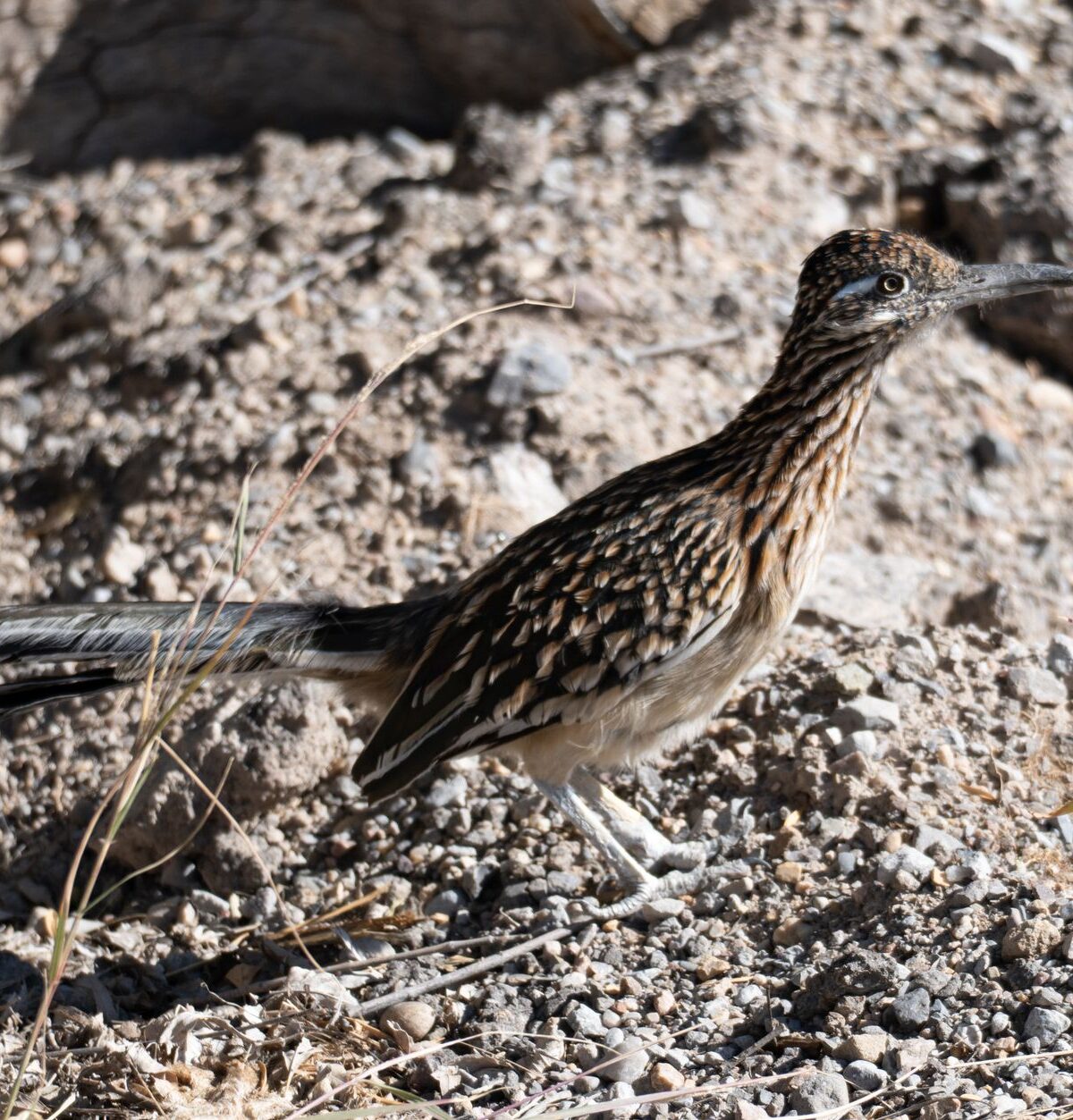
ROADRUNNER
Geococcyx californianus
DESCRIPTION
Roadrunner (Geococcyx californianus) is commonly known as the Greater Roadrunner. This distinctive bird is characterized by its long legs, elongated body, and striking plumage, which features a combination of brown, white, and black streaks. Roadrunners are known for their remarkable speed and agility, often running at speeds of up to 20 miles per hour, and they exhibit a unique behavior of hunting and foraging in open areas, making them a fascinating subject of study in avian ecology.
FUN FACTS
- Roadrunners are capable of running at speeds of up to 20 miles per hour, making them one of the fastest birds on land
- They have a unique courtship display that includes a series of vocalizations and physical displays, such as bowing and tail fanning, to attract mates
QUICK INFO
Lifespanup to 7 years in the wild
Average Weight0.5-0.6 kg
Average Length0.6-0.7 m
Diet TypeCarnivore
Social Structurepair, often seen in monogamous pairs during the breeding season
Activity PatternDiurnal
Breeding SeasonSpring (March-May)
- Habitat
- Roadrunners inhabit arid and semi-arid regions, often found in deserts, scrublands, and open grasslands. They prefer areas with sparse vegetation that allows for easy movement and hunting.
- Biomes
- Desert, Grassland
- Native Range
- The native range of the Roadrunner extends from the southwestern United States down through Mexico.
- Continent
- North America
- Countries
- United States, Mexico
- Diet
- Roadrunners primarily feed on insects, small mammals, and reptiles, showcasing their adaptability in various environments. They are known to hunt and consume rattlesnakes, demonstrating their predatory skills.
- Diet Type
- Carnivore
- Favorite Food
- insects, small mammals, reptiles
- Social Structure
- pair, often seen in monogamous pairs during the breeding season
- Activity Pattern
- Diurnal
- Group Size
- 1-2
- Territorial
- 1
 CR
CR
 LC
LC
0.5-0.6 kg
Weight
0.6-0.7 m
Length
- Coloration
- brown and white streaked plumage with a distinctive crest
- Sexual Dimorphism
- males and females are similar in appearance, but males are generally larger
- Lifespan
- up to 7 years in the wild
- Offspring per Birth
- 2-6
- Sexual Maturity
- 1 year
- Breeding Season
- Spring (March-May)
LC
Least Concern
IUCN Red List Status
- Population Status
- The population of Roadrunners is currently stable, with no significant declines reported.
- Wild Population Estimate
- unknown
- Population Trend
- Stable
- Endangered
- 0
- Threats
- Main threats include habitat loss due to urbanization and agricultural expansion. Additionally, road mortality poses a risk to their populations.
- Predators
- hawks, coyotes, domestic cats
- Defense Mechanisms
- Roadrunners use their speed and agility to escape predators, often running rather than flying.
- Found in Zoos
- Uncommon