


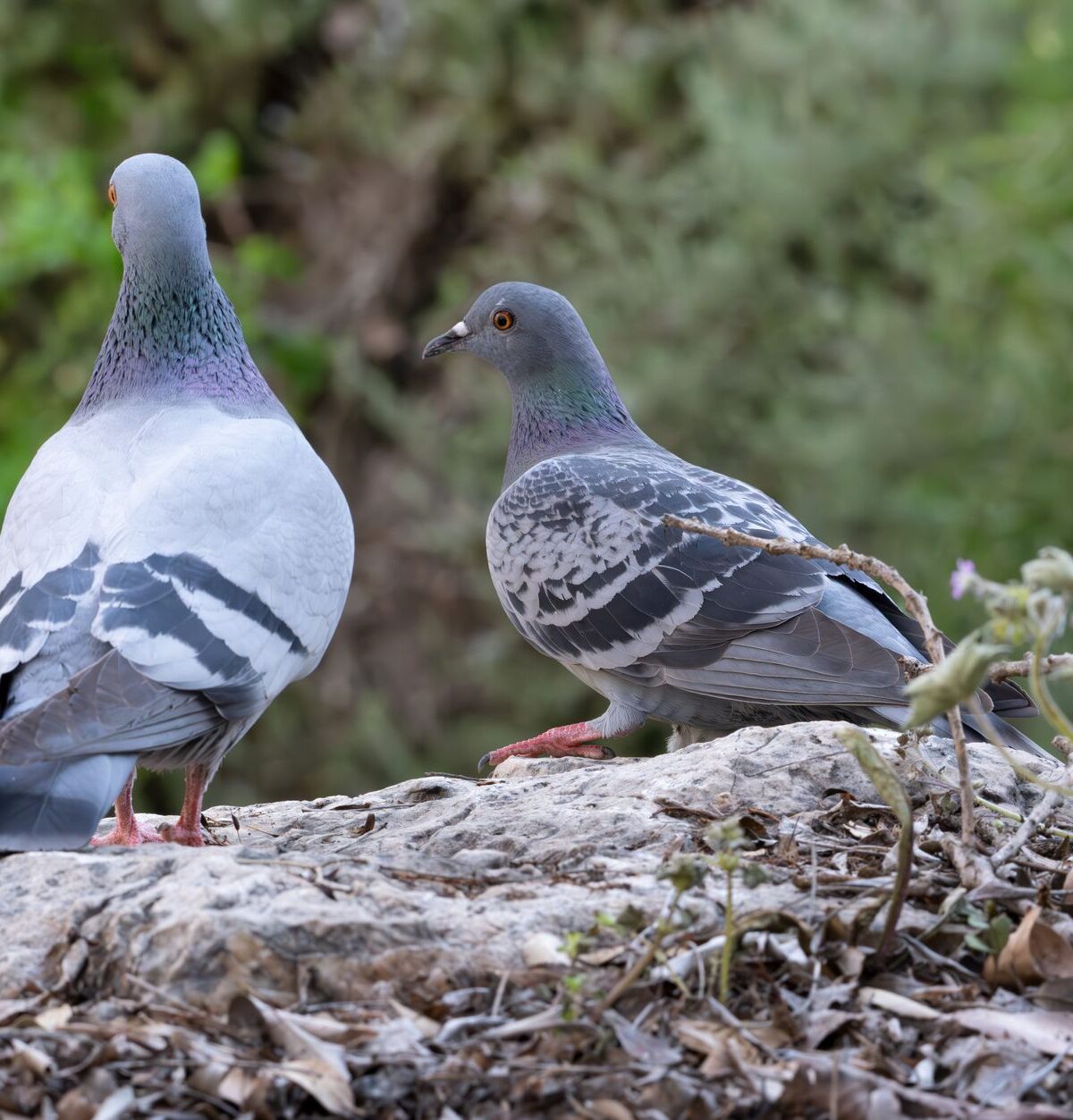
ROCK PIGEON
Columba livia
DESCRIPTION
Rock Pigeon (Columba livia) is commonly known as the Rock Dove and Domestic Pigeon. This species exhibits a variety of colors, including gray, white, and brown, often with iridescent feathers on the neck. They are highly adaptable birds, often found in urban areas, where they exhibit social behaviors such as flocking and cooing, and they are known for their strong homing abilities.
FUN FACTS
- Rock Pigeons have been domesticated for thousands of years, leading to a variety of breeds with different colors and sizes
- They are also known for their remarkable homing ability, which allows them to return to their home lofts from long distances, sometimes over hundreds of miles.|In addition to their homing skills, Rock Pigeons have been used in various roles throughout history, including as messenger birds during wartime
- Their intelligence and adaptability have made them a subject of study in animal behavior and cognition
QUICK INFO
Lifespan3-5 years in the wild, up to 15 years in captivity
Average Weight240-380 g
Average Length30-35 cm
Diet TypeHerbivore
Social StructureThey are typically found in pairs or small groups, often forming larger flocks when foraging.
Activity PatternDiurnal
Breeding SeasonSpring to early summer
- Habitat
- Rock Pigeons thrive in a variety of habitats, including urban areas, cliffs, and agricultural fields. They prefer locations that provide nesting sites and access to food.
- Biomes
- Urban, Temperate Forest, Grassland
- Native Range
- Originally native to Europe, North Africa, and South Asia, Rock Pigeons have been introduced worldwide.
- Continent
- Asia, Europe, Africa, North America, South America, Australia
- Countries
- United States, Canada, United Kingdom, India, Australia
- Diet
- Rock Pigeons primarily feed on seeds, grains, and fruits, often foraging on the ground. They are known to scavenge in urban environments, taking advantage of food scraps.
- Diet Type
- Herbivore
- Favorite Food
- seeds, grains
- Social Structure
- They are typically found in pairs or small groups, often forming larger flocks when foraging.
- Activity Pattern
- Diurnal
- Group Size
- 5-50
- Territorial
- 0
 LC
LC
 CR
CR
240-380 g
Weight
30-35 cm
Length
- Coloration
- Typically gray with two black wing bars and an iridescent neck.
- Sexual Dimorphism
- Males are generally larger and have more vibrant coloration than females.
- Lifespan
- 3-5 years in the wild, up to 15 years in captivity
- Offspring per Birth
- 1-2
- Sexual Maturity
- 5-6 months
- Breeding Season
- Spring to early summer
LC
Least Concern
IUCN Red List Status
- Population Status
- Rock Pigeons are abundant and widespread, with large populations in urban areas.
- Wild Population Estimate
- Unknown, but populations are considered large and stable.
- Population Trend
- Stable
- Endangered
- 0
- Threats
- While generally not threatened, Rock Pigeons can face challenges from habitat loss and pollution. They may also be affected by diseases that can spread in dense populations.
- Predators
- Falcons, hawks, cats, and larger birds of prey are known to prey on Rock Pigeons.
- Defense Mechanisms
- They rely on their ability to fly quickly and evade predators, often taking to the air at the first sign of danger.
- Found in Zoos
- Common