


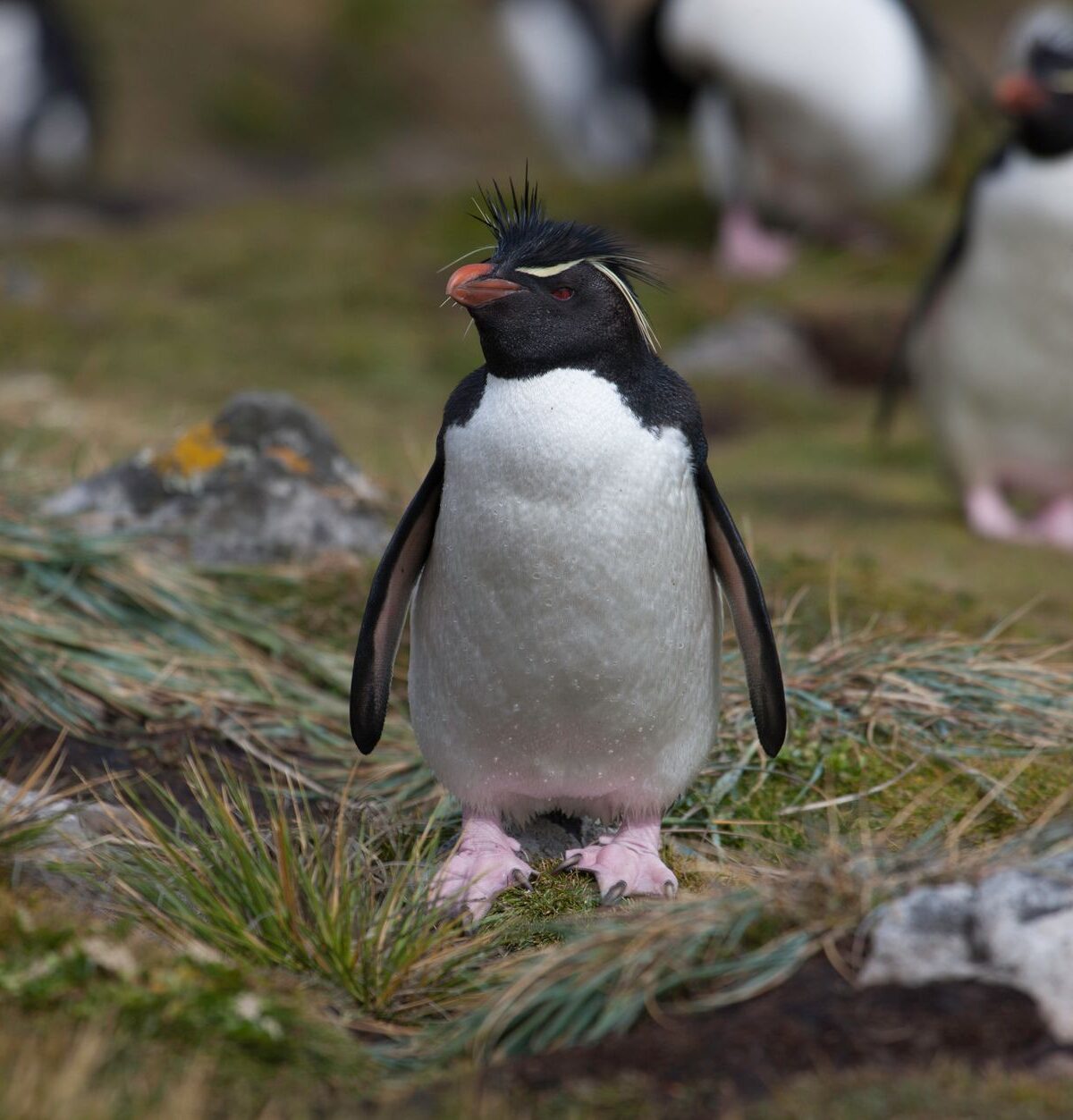
ROCKHOPPER PENGUIN
Eudyptes chrysocome
DESCRIPTION
Rockhopper Penguin (Eudyptes chrysocome) is a small species of penguin known for its distinctive yellow and black crest feathers. They have a robust body with a characteristic red eye and a sharp beak, which aids in their foraging. These penguins are highly social and often breed in large colonies, displaying complex social behaviors during the breeding season.
FUN FACTS
- Rockhopper Penguins are known for their unique hopping movement, which allows them to navigate rocky terrain efficiently
- They are also one of the smallest penguin species, yet they are highly energetic and can swim long distances in search of food.|These penguins have a distinctive call that sounds like a braying donkey, which they use to communicate with each other in their noisy colonies
- Their striking appearance and lively behavior make them a favorite among penguin enthusiasts
QUICK INFO
Lifespan10-15 years in the wild, up to 20 years in captivi
Average Weight1.5-3.5 kg
Average Length50-70 cm
Diet TypePiscivore
Social StructureThey are social birds that breed in large colonies, often forming pairs for the breeding season.
Activity PatternDiurnal
Breeding SeasonSpring to early summer (October to January)
- Habitat
- Rockhopper Penguins inhabit rocky shorelines and sub-Antarctic islands, often nesting in crevices or under vegetation. They prefer areas with access to the ocean for foraging.
- Biomes
- Coastal, Marine
- Native Range
- They are native to the sub-Antarctic islands, including the Falkland Islands, South Georgia, and the Crozet Islands.
- Continent
- South America, Antarctica
- Countries
- Falkland Islands, South Georgia, Crozet Islands
- Diet
- Rockhopper Penguins primarily feed on small fish, krill, and other marine invertebrates. They are adept divers, capable of reaching depths of up to 100 meters in search of food.
- Diet Type
- Piscivore
- Favorite Food
- krill, small fish
- Social Structure
- They are social birds that breed in large colonies, often forming pairs for the breeding season.
- Activity Pattern
- Diurnal
- Group Size
- 100-1,000
- Territorial
- 0

 LC
LC
 LC
LC
1.5-3.5 kg
Weight
50-70 cm
Length
- Coloration
- They have a black back and white belly, with distinctive yellow crest feathers above their eyes.
- Sexual Dimorphism
- Males are generally larger than females.
- Lifespan
- 10-15 years in the wild, up to 20 years in captivi
- Offspring per Birth
- 1-2
- Sexual Maturity
- 3-4 years
- Breeding Season
- Spring to early summer (October to January)
VU
Vulnerable
IUCN Red List Status
- Population Status
- The population is currently stable, but some colonies are experiencing declines due to environmental changes.
- Wild Population Estimate
- 1.5 million
- Population Trend
- Decreasing
- Endangered
- 1
- Threats
- Main threats include climate change, overfishing, and habitat destruction. These factors impact their food supply and breeding success.
- Predators
- Leopard seals, sea lions, and various seabirds may prey on Rockhopper Penguins, especially their eggs and chicks.
- Defense Mechanisms
- They use their agility and speed in water to evade predators, and they can also be aggressive when defending their nests.
- Compatible Animals
- none
- Found in Zoos
- Uncommon